If you’ve ever held a phone that doesn’t smudge fingerprints after a day of use, peeled a perfectly thin layer of packaging film off a snack bag, or read a crisp medical label on a prescription bottle, there’s a good chance a micro gravure roll was behind it. As a supplier of these precision-engineered tools, I spend hours on the phone with printers, packaging engineers, and product designers who ask the same question again and again: what exactly is the printing quality of a micro gravure roll? It’s not a simple answer—because quality here isn’t just “good” or “bad”—it’s a combination of tiny, almost invisible details that turn a rough roll of steel into the backbone of high-precision printing. Micro Gravure Roll
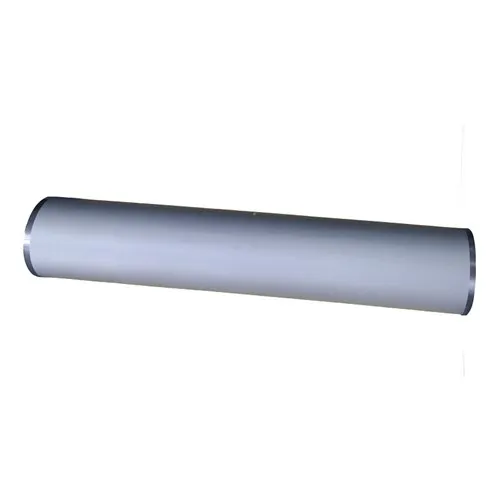
Let’s start with the basics, because most people I talk to don’t realize how small micro gravure cells really are. Unlike flexography, which uses raised plates to transfer ink, or offset lithography, which relies on chemical plates, micro gravure uses a steel roll etched with millions of tiny, uniform cells—each like a microscopic bucket— that carry exactly the right amount of ink to a substrate, whether that’s plastic film, paper, or even thin metal foil. The printing quality here lives in three places: the consistency of those cells, the precision of their arrangement, and how evenly that ink transfers from roll to material.
First, cell volume. A standard micro gravure roll might have cells that are between 5 and 50 cubic micrometers each. That’s so small you could line 10,000 of them up side by side and barely cover the tip of a pin. If even 1% of those cells differ by more than 0.5 cubic micrometers, you’ll see the effect in the print: inconsistent color density, streaks that run the length of the printed roll, or light splotches where too little ink was deposited. Last month, I worked with a flexible packaging company that had switched to a cheaper micro gravure roll from a competitor, and their first run of snack bags had streaks down every 10 inches of film. When we inspected the bad roll under a microscope, we found that half the cells were 12% smaller than the spec they needed—off by a tiny amount, but enough to ruin 10,000 bags. That’s the thing about micro gravure quality: it’s in the tolerance, not the size.
Then there’s cell geometry, which ties directly to print definition. The most common cell shape is a hexagon, because hexagons pack together with almost no dead space between them, meaning every cell can carry ink consistently. But some applications, like printing ultra-fine barcodes for pharmaceuticals or electronics, use triangular or rectangular cells to get sharper edges. Here’s where the engineering matters: if your micro gravure roll has cells with ragged edges from bad etching, the ink spreads unevenly, and barcode scanners can’t read the code. I had a client in the medical device industry last year who was printing 2D barcodes on surgical tool labels, and their scanners were rejecting 20% of the codes because of jagged cell edges on their old roll. We supplied a roll with laser-etched, uniform hexagonal cells, and their rejection rate dropped to less than 0.5%—a difference that saved them over $12,000 a month in scrap.
Even the surface of the roll matters, beyond the cells themselves. A high-quality micro gravure roll has a hard chromium plating that’s polished to a mirror-like finish, but not too smooth. If it’s too smooth, ink doesn’t release from the cells evenly, leaving thin, patchy areas. If it’s too rough, ink builds up between cells, causing blobs on the print. Last quarter, a label printer came to me with a problem on their wine bottle labels: the red ink was smudging on the edges, and they were blaming the label stock. When we tested their old roll, we found the chromium plating was pitted from repeated use, creating tiny bumps that pulled ink away from the cells. A re-chromed, polished roll fixed the smudging immediately.
But wait—quality isn’t just about the roll itself. It’s also about how it’s matched to the printing machine. I’ve seen micro gravure rolls with perfect cell details that produced terrible prints because the doctor blade (the part that scrapes excess ink off the roll between cells) was the wrong angle, or the pressure between the roll and the substrate was too high. That’s why my team doesn’t just sell rolls—we work with clients to calibrate their machines after installation, because a great roll paired with bad settings is like a great tire on a misaligned car: it looks good, but it won’t perform right.
Now, let’s talk about the real-world impacts of this quality. For consumer electronics, like the screens on smartphones, micro gravure rolls are used to print the thin conductive layers that make touchscreens work. If a roll’s cells are inconsistent, the conductive layer will have gaps, leading to dead spots on the screen. For battery manufacturers, micro gravure is used to print electrode coatings, and uneven ink distribution leads to shorter battery life. For prescription labels, misaligned or inconsistent print can make small text hard to read, which is a safety issue. Every time a micro gravure roll is poorly made, the cost adds up: scrap material, machine downtime, customer complaints, even safety risks in regulated industries.
That’s why I’ve spent the last 12 years refining our etching and polishing processes. Early in my career, I worked at a large printing equipment manufacturer, and I saw first-hand how many suppliers cut corners on micro gravure rolls to lower prices. They’d use cheaper steel that warps after a few runs, etch cells with old tools that create inconsistent shapes, or skip the final polishing step to save time. When I started my own business as a micro gravure roll supplier, I made a promise to clients that every roll we send out would meet a tolerance of ±0.2 cubic micrometers for cell volume, and that we’d stand behind every roll with on-site support to troubleshoot printing issues.
Over the years, I’ve learned that the best way to show our quality isn’t just in specs—it’s in the stories our clients tell. A food packaging company told us their micro gravure rolls had lasted 6 months, compared to 2 months with their old supplier, because our chromium plating is 30% harder than industry standard. A lab equipment manufacturer said we helped them adjust cell size to cut their ink usage by 18%, which saved them $7,000 a year. Those are the numbers that matter more to me than any technical spec.
But I’m not naive. I know that when someone is buying a micro gravure roll, they’re comparing prices, delivery times, and support. That’s why we don’t just quote a price on the phone—we ask about their specific application: what substrate do you use? What print speed? What color density do you need? We’ll test a sample roll on their machine for free, so they can see for themselves how the print looks before they place a full order. Last month, a startup in flexible packaging was choosing between our roll and a competitor’s, and they ran a side-by-side test. Their customer noticed the difference in print clarity immediately, and they switched to us that same week.
I’ll be honest: micro gravure isn’t the right choice for every printing job. If you’re printing large, simple designs on cheap paper, a flexographic plate will be cheaper. But when you need precision—when you’re printing fine text, small barcodes, thin layers for electronics, or uniform colors on film—micro gravure is the only method that can deliver. And the quality of that method lives in the roll: in the consistency of the cells, the hardness of the plating, and the attention to detail that goes into every etching.
Too many people in this industry treat micro gravure rolls as a commodity—something to buy by the pound. But they’re not. They’re precision tools. A well-made micro gravure roll can pay for itself in a few months by reducing scrap, cutting ink usage, and improving your product’s quality. A cheap, poorly made roll will cost you money in downtime and bad prints, and it will damage your reputation with your customers.
If you’re currently looking for a micro gravure roll supplier, or if you’ve been dealing with inconsistent print quality on your current rolls, I’d encourage you to reach out. We don’t have a one-size-fits-all solution, and we won’t promise you the lowest price. But we will promise you a roll that’s made to your exact specs, tested to work with your machine, and supported by a team that knows micro gravure inside and out. Whether you’re running a small in-house print shop or a large manufacturing facility, we can help you get the consistent, high-quality prints that make your product stand out.
You don’t have to take my word for it. We’ve worked with hundreds of clients across industries, from packaging to medical devices to electronics, and we’d be happy to put you in touch with a few of them to hear about their experience. All we ask is that you tell us about your needs, so we can recommend the right roll for your application.
Embossing Roller References
- Manufacturing Technology for Micro Gravure Rolls, Journal of Precision Engineering and Manufacturing, 2021
- Ink Transfer Dynamics in Micro Gravure Printing, International Journal of Advanced Manufacturing Technology, 2019
- Quality Standards for Printing Consumables in Flexible Packaging, Flexible Packaging Association, 2022
- Laser Etching vs. Chemical Etching for Micro Cell Structures, Journal of Micromechanics and Microengineering, 2020
Kunshan Hanhan Co., Ltd.
We’re well-known as one of the leading micro gravure roll manufacturers and suppliers in China. We warmly welcome you to buy high quality micro gravure roll made in China here from our factory. If you have any enquiry about cooperation, please feel free to email us.
Address: No. 1093, B Zone, No. 2 Xugongqiao Rd, Huaqiao Town, Kunshan City, Suzhou, Jiangsu, China
E-mail: info@kshhroller.com
WebSite: https://www.kshh-roller.com/
