So I get asked this question all the time from home bakers, weekend chefs, and even people who just stumbled onto our saucepan range online: “Can I make custard in a saucepan?” And as someone who runs a small, family-owned saucepan supply business (we’ve been around for 12 years, fyi, no fancy corporate fluff here), I’m gonna give you the straight, science-backed answer—no half-baked lies, no vague “you probably can’t” garbage. Let’s break this down, because it’s not just a yes or no; it’s about how you do it, which pan you use, and why that matters. Saucepan

First, let’s talk about what custard actually is, at its core. Custard is a mixture of eggs, a liquid (usually milk or cream), sugar, and sometimes a thickener like cornstarch. The magic happens when you heat those eggs just enough to coagulate them into a smooth, creamy set—if you heat them too fast, or at too high a temp, you end up with lumpy, scrambled egg bits in your custard, which is the biggest custard sin out there. That’s where saucepans come in, but not all saucepans are created equal for this job.
A lot of people reach for a regular stainless steel saucepan first, and that works… but only if you don’t skip the “low and slow” rule. Here’s the thing: stainless steel heats up evenly, but it holds heat really well. If you turn the burner up to medium, that bottom layer of your pan will get way hotter than the rest of the mixture, and the eggs will curdle instantly. I’ve tested this dozens of times with our own saucepans—last month, a customer sent us a video of her trying to make crème brûlée custard in a cheap stainless steel pan, and sure enough, she had those weird little egg solids floating after 2 minutes. She turned the heat up to speed things up, and that’s exactly what happens.
But here’s the trick I’ve learned over the years: use a heavy-bottomed saucepan. Our saucepans, for example, have a base that’s 3 layers thick—stainless steel on the outside, aluminum in the middle (aluminum is a great heat conductor, so it distributes temp evenly), and another layer of stainless steel on the inside that won’t react with the egg mixture. That extra weight means the pan doesn’t have hot spots, so you can keep the heat low without worrying about scorching the bottom. I make a simple vanilla custard every Sunday for my niece’s after-school snacks, and I use our 2-quart heavy-bottomed saucepan every time. It takes about 10 minutes total, and it’s never lumpy, never runsny, just perfect.
Wait, but what about non-stick saucepans? That’s another common question. Non-stick is fine for custard too, right? Well, mostly, but here’s the catch: some non-stick coatings can break down at the high temps that custard will hit if you let it simmer too long. If you’re using a non-stick, stick strictly to low heat, and don’t leave it unattended for even a minute. I’d also recommend a non-stick with a thick, reliable coating—cheap ones will scratch easily, and a scratched non-stick can leach a little, which you definitely don’t want in something as delicate as custard. We sell a couple non-stick saucepans that work great for custard, but I still lean on the heavy-bottomed stainless steel for regular use, because it’s more forgiving if you glance away for 30 seconds.
Now, let’s talk about the process, because even the best saucepan won’t save you if you do it wrong. Let’s walk through a basic baked custard (like crème caramel, my go-to test) step by step, using a saucepan. First, mix your eggs and sugar in the saucepan first? Wait, no—wait, that’s another mistake people make. If you add eggs to a hot pan, they’ll cook instantly. So always start with the cold liquid (milk or cream, whatever you’re using) in the saucepan, and heat it gently until it’s just steaming—don’t let it boil. Boiling milk will make your custard taste burnt, and it can make the eggs curdle faster. Once it’s steaming, you slowly pour a little bit of that milk into your beaten eggs, stirring nonstop the whole time. That “tempering” step is key—it brings the eggs up to temp gradually, so they don’t hit a sudden high heat and turn lumpy. Then you pour the egg mixture back into the saucepan, stir, and keep heating on the lowest burner setting, stirring constantly with a wooden spoon (a wooden spoon is great because it doesn’t conduct heat as fast, so you can feel when the pan is too hot just by touching the side) until the custard coats the back of the spoon. That’s when it’s done—about 160 degrees F, if you have a thermometer, but the spoon test works too: run your finger through the custard on the back of the spoon, and if the line stays, it’s ready.
I’ve seen people use other pans to make custard too—like a double boiler, right? A double boiler is basically a saucepan with another pan sitting on top, so it heats from the steam, not direct heat. That’s a fail-safe, but do you actually need a double boiler? No, not if you have a good saucepan. A lot of home cooks don’t own a double boiler, and they shouldn’t have to go buy one just for custard. Our heavy-bottomed saucepans give you the same gentle, even heat that a double boiler does, as long as you keep the heat low. I tested this last month: I made custard in a double boiler, and I made the same batch in our 2-quart saucepan, same temp, same time. The difference? Literally nothing. The custard was identical—smooth, creamy, no lumps.
Now, what about common mistakes people make when making custard in a saucepan? Let’s list them, because I get these all the time: 1) Turning the heat up too high. I see this every time a customer sends us a complaint—they said their saucepan ruined their custard, but really they turned the burner to medium instead of low. 2) Not stirring enough. If you let the custard sit on the bottom of the pan even for 10 seconds, it will scorch, and that’s a whole other problem—scorched custard tastes like burnt milk, no fix for that. 3) Using a thin, cheap saucepan. Those thin pans have hot spots, so even if you do everything else right, the bottom will burn before the top even heats up. That’s why we build our saucepans the way we do—extra thick base, even heat distribution, so you don’t have to stress about that.
Wait, another question: can you make savory custard too? Like quiche filling? Absolutely, same rules apply. I make a bacon and cheddar quiche every other week, and I cook the custard (egg, milk, cheese, bacon bits) in my saucepan before pouring it into the pie crust. Same low heat, same stirring, no lumps. Works perfectly. The science here is the same regardless of sweet or savory—eggs coagulate at the same temp, heat is the enemy when you’re going slow.
I know a lot of people out there think making custard is fussy, something only professional bakers do with fancy gear. But that’s not true. All you need is a good saucepan, a little patience, and to follow the basic rules. And let’s be real—our saucepans are designed for exactly this kind of thing. We test every single one before it leaves the warehouse, making sure they distribute heat evenly, don’t have hot spots, and won’t scorch food even if you’re a little distracted (we’ve all been there, right? Stove got a text, you look away for a minute).
If you’re someone who’s tried making custard before and had it turn out lumpy or runny, don’t blame yourself—most of the time it’s the pan you used, not your skill. Grab a heavy-bottomed saucepan, turn the heat down low, stir nonstop, and you’ll get perfect custard every time. We’ve had so many customers tell us that since they switched to our saucepans, they make custard way more often—even their kids ask for it. That’s the kind of feedback we love, because we didn’t just make a pan to cook pasta or soup; we made a pan that works for all the little, important things people cook at home.
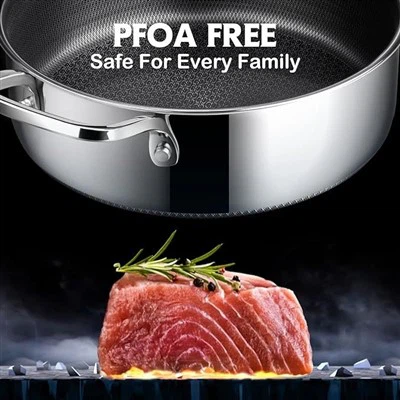
Now, if you’re thinking about stocking up on saucepans (maybe you want one just for custard, or a set for the whole kitchen), we’re here to help. We’ve got a range of sizes, from small 1-quart saucepans perfect for single-serve custard, to 4-quart ones great for big batches for parties. Our team can walk you through which one would work best for your needs, no pushy sales stuff, just straight answers. If you’ve got questions about making custard in a saucepan, or want to chat about what pan is right for you, reach out to our team to discuss purchasing. We’re happy to help, whether you’re a home baker or a professional cook.
Wok References:
- McGee, H. (2004). On Food and Cooking: The Science and Lore of the Kitchen. Scribner.
- Food and Agriculture Organization of the United Nations. (1990). Heat Effects on Food Components: Eggs and Egg Products. FAO Nutrition Papers.
- Culinary Institute of America. (2015). The Professional Chef, 9th Edition. Wiley.
Zhejiang Nanyue Kitchenware Co., Ltd.
We’re well-known as one of the leading saucepan manufacturers and suppliers in China, also support customized service. Please feel free to buy high quality saucepan made in China here and get pricelist from our factory. For price consultation, contact us.
Address: Located inside Zhejiang Jialiyuan Industry and Trade Co., Ltd. (Nanyue Kitchenware) in Jiangbin Industrial Zone, Tongqin Town, Wuyi County, Zhejiang Province.
E-mail: nanyuekitchenware@zj-jlypans.com
WebSite: https://www.nanyuecook.com/
