If you’ve ever watched an endoscopic procedure—say, a colonoscopy, a gastroscopy, or even a minimally invasive joint scope surgery—you might’ve glanced at the silver, coiled tools the doctor works with and thought, “Wait, how much do those even cost?” As someone who’s been in the endoscopic instruments supply game for over a decade, I get it. Most folks don’t stop to think about what goes into that price tag, and a lot of times, buyers (hospitals, clinics, surgery centers, even mobile surgical teams) reach out thinking these tools are just “another supply” that’s cheap to stock. Spoiler: they’re not. And the cost isn’t just for the metal and plastic you see on the surface. Let’s break this down straight, no corporate fluff, no jargon that makes your eyes glaze over. Endoscopic Instruments

First, let’s get one thing clear: endoscopic instruments aren’t like disposable syringes or band-aids you toss after one use. Even the “single-use” scopes and tools have hidden costs, and reusable ones? They’re way more complex than a wrench. Let’s start with the core of any endoscope—the main tube that snakes into your body. That’s not just a hollow tube. It has tiny fiber optics to light up the inside of your organs, a camera chip the size of a grain of rice to send images back to the monitor, and channels for tools to pass through. For a basic gastroscope (the one that goes down your throat), the manufacturing cost alone is around $1,500 to $2,500. Wait, that’s before we even add the tool kits that go with it. Why so much? Let’s talk materials. The scope’s shaft has to be super flexible to bend around the curves of your esophagus, stomach, or colon, but also durable enough to withstand repeated insertion and cleaning. We use medical-grade stainless steel for the outer braid, silicone for the inner lining, and those fiber optics? They’re made of glass that’s polished to a precision of a micron—way smaller than a strand of human hair. A single flaw in that fiber can blur the entire image, so manufacturers have to scrap 20-30% of the fiber they process to get usable ones. That’s not cheap.
Now, if we’re talking reusable instruments—like forceps, scissors, or biopsy tools—those run even more, depending on the type. A basic biopsy forceps (used to snip a tiny tissue sample) might cost $50 to $150 each, but a specialized one for laparoscopic (abdominal) surgery can hit $300 to $800. Why? The hinge on a biopsy forceps has to work perfectly every single time you close it to grab tissue, then open it again to release. If the hinge sticks even once during a procedure, that can mean redoing a part of the exam, or worse, a patient having to come back for another test. So we use titanium for those hinges—it’s strong, lightweight, and doesn’t rust, even after hundreds of autoclave cycles (the high-heat sterilization process that’s non-negotiable for medical tools). Also, those tiny cutting edges? They have to be sharp enough to snip a tissue sample no bigger than a pinhead, but not so sharp that they accidentally damage the patient’s organ wall. Grinding and polishing those edges takes specialized machinery that costs hundreds of thousands of dollars—costs that get passed down, not just for the tool itself, but for the warranty and after-sales support.
Wait, let’s not forget the other big cost: cleaning and maintenance. A lot of buyers forget that even if you buy a $2,000 scope, you can’t just wipe it down with alcohol like a countertop. Endoscopes are porous in the right places, so if you don’t clean them properly between uses, bacteria can grow in the tiny channels, leading to infections. That means automated endoscope reprocessors (AERs) that cost $10,000+ each, and single-use cleaning brushes, enzymatic cleaners, and leak testers that add up to $50-$100 per scope reprocessing. For a busy clinic that does 50 procedures a day, that’s $2,500-$5,000 a week just for cleaning. And if a scope breaks during a procedure or gets damaged from improper cleaning? Repair costs can be half the price of a new scope. I’ve seen a small tear in a scope’s outer layer lead to a $1,200 repair bill—more than most people’s monthly grocery budget. That’s a big reason why many clinics opt for quality tools upfront instead of cheap knockoffs that break easily.
Speaking of knockoffs—let’s address the elephant in the room. There are a lot of cheap endoscopic instruments out there, often imported without FDA or CE approval, that cost 30-50% less than our products. But here’s the thing: those tools often use lower-grade materials, no quality control, and no warranty. I once had a client come to me after a cheap biopsy forceps they bought from a no-name supplier broke during a colonoscopy, leading to a small tear in the patient’s colon. That cost them $15,000 in malpractice fees, plus a damaged reputation with their patients. Cheap might seem like a deal at first, but the hidden costs—malpractice, repairs, repeat procedures—end up being way higher. That’s why when we price our instruments, we’re not just charging for the metal and plastic. We’re charging for the years of R&D that goes into making tools safe, for the FDA approvals, for the after-sales support that can rush a replacement scope overnight if one breaks, and for the training we provide to clinics on how to clean and maintain their tools properly.
Let’s talk about single-use instruments too, because they’re a big part of the market right now. A lot of clinics switched to single-use tools during the pandemic to reduce infection risks, and now they’re sticking with them. A single-use biopsy kit can cost $20-$50, which seems high, but you don’t have to pay for sterilization, repair, or replacement tools when one gets damaged. For small clinics that do only a few procedures a week, single-use can actually be cheaper than buying reusable tools and maintaining them. The catch is, if you do 100 procedures a week, the single-use cost adds up fast—usually 2-3 times the cost of reusable tools over a year. So it’s a balance, and that’s where we come in: we work with clients to figure out which mix of reusable and single-use makes sense for their volume, budget, and patient needs.
Another often-overlooked cost: logistics. Endoscopic instruments are medical devices, so they have to be stored in specific temperature-controlled facilities, shipped with care to avoid damage, and tracked for recalls if there’s a safety issue. We don’t just drop a box of scopes off at a clinic’s loading dock. We work with specialized medical shipping companies that know how to handle delicate optical tools, and we keep track of every batch of products we send so we can pull them fast if there’s a problem. That logistics work costs money, and again, that’s baked into the price—unlike some suppliers who cut corners on shipping to lower their price, leading to scopes that arrive broken and can’t be used.
Now, let’s get real about what a “reasonable” budget looks like for a clinic. A small clinic that does 10-15 endoscopies a week should budget around $20,000-$30,000 a year for instruments, supplies, and maintenance. A busy surgery center that does 100+ procedures a week might spend $100,000-$200,000 a year. That sounds like a lot, but when you spread it out over 5-10 years (the lifespan of a good reusable scope), it works out to less than $10 a procedure—way cheaper than the cost of a single malpractice claim or a repeat procedure.
Wait, I know some of you are thinking, “I already have a supplier, why should I switch?” Let me be honest: a lot of suppliers only care about the initial sale, not the long-term needs. We’re different. We don’t just send you a box of tools and ghost you. We provide free training on cleaning and maintenance, we have a 24/7 support line if a scope breaks mid-procedure, and we can work with you on flexible pricing plans—bulk discounts, rental options for scopes you only use a few times a month, and even trade-in programs for old tools. For example, if a clinic has a scope they bought 5 years ago that’s still working, we’ll take it in and apply its value towards a new one when it’s time to upgrade.
At the end of the day, the cost of endoscopic instruments isn’t just a number on an invoice. It’s a reflection of safety, reliability, and the quality of care your patients get. A cheap tool might save you a few bucks now, but it could cost you patients, money, and peace of mind later. We’ve been in this game long enough to know that the best investment is in tools you can trust—tools that won’t fail when you’re in the middle of a procedure, tools that keep patients safe, and tools that work with your budget, not against it.
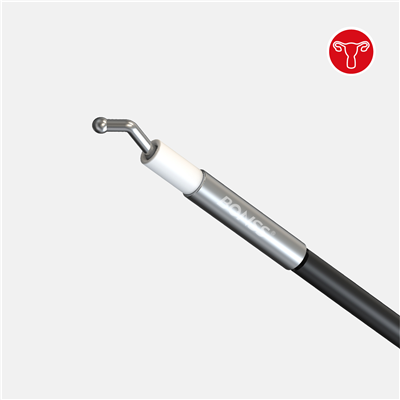
If you’re a clinic manager, surgery center director, or anyone in need of endoscopic instruments, we’d love to chat. We can walk you through our product lines, break down costs specific to your volume, and help you find the right mix of tools that fits your needs. No pressure, no sales pitch—just straight talk about what works for your practice. Contact us to start the conversation.
Endoscopy Related Equipments References
- U.S. Food and Drug Administration. (2022). Endoscope Safety and Infection Prevention.
- Association of periOperative Registered Nurses. (2021). Endoscopic Instrument Cleaning and Processing Guidelines.
- Medical Device and Diagnostic Industry. (2023). The True Cost of Reusable vs. Single-Use Medical Instruments.
- International Journal of Medical Devices. (2022). Precision Manufacturing of Endoscopic Tools: Material and Quality Considerations.
- Healthcare Financial Management Association. (2021). Budgeting for Medical Supply Maintenance and Replacement.
Jiangsu Bonss Medical Technology Co., Ltd.
As one of the most professional endoscopic instruments manufacturers and suppliers in China, we’re featured by quality products and good price. Please rest assured to buy bulk endoscopic instruments for sale here from our factory. Customized orders are welcome.
Address: Building #7,No.898,China Medical City Avenue, Haling District, Taizhou City.Jiangsu P.R. China
E-mail: inquiry@plasma-surgical.com
WebSite: https://www.bonssmedical.com/
