If you’ve ever stared at a shelf of skincare serums, moisturizers, and ampoules like I do—my inbox blowing up with questions from estheticians, small-batch skincare brand founders, and even regular folks just starting to tweak their routines—you’ve definitely seen both peptides and hyaluronic acid (HA) front and center. Lately, a question I get nonstop is: “Can I use peptides with hyaluronic acid together? Should I layer them? Mix ‘em in the same bottle?” Skin Care Peptide
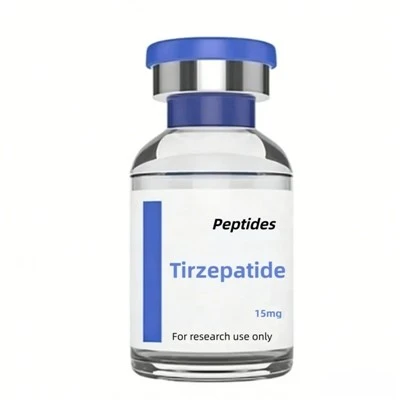
Full transparency: I run a small skincare peptide supply company—so I’m not just a random blogger rambling about my own routine. I work directly with formulators, test these combinations in lab batch runs and on real people (my little sister who’s always begging for free samples counts, too), and field complaints when a blend doesn’t perform the way it’s supposed to. Let’s cut through the social media noise, the “HA is only for dry skin” myths, and the confusion around which peptides play nice with HA, because this isn’t rocket science—though it does matter if you want your customers to get results.
First, a quick crash course for anyone new to the team. Peptides are tiny protein fragments—think of them as the messengers your skin uses to trigger good stuff: collagen production, barrier repair, soothing redness, even reducing fine lines. I sell a range, from the super common ones like Matrixyl 3000 (a staple for anti-aging) to less hyped ones like Copper Peptide GHK-Cu (great for healing post-acne marks) and Snap-8 (gentle enough for sensitive skin).
Then there’s hyaluronic acid, that humectant that holds 1,000x its weight in water. A lot of people think HA is just for dry skin, but no—even oily skin types need it, because it pulls water from the environment (not deep from your skin, that’s a common myth) to plump the top layer. The key here is molecular weight: high-weight HA sits on the surface to plump fine lines, low-weight penetrates deeper to hydrate and support the barrier. The good stuff? Most quality HA blends use a mix of sizes, not just one.
Now, back to the main question: Can they be used together? The short answer is a resounding YES. But wait—why is that, and why do some formulators get weird results? That’s the part I wish more beauty blogs explained. It boils down to chemistry: peptides and HA don’t react in a bad way. HA is a polysaccharide (sugar chain), peptides are amino acid chains—they’re totally compatible molecules, no weird chemical reaction that breaks either down. I’ve tested blends in lab vials, left them on shelves for 6 months, and the peptides still work as they should, no degradation.
Wait, let’s get real—some people say, “But I tried layering HA and peptides and my skin got sticky!” That’s not the molecules fighting. That’s probably using a high-molecular-weight HA that’s too thick, or layering too many products at once, or not letting the first layer sink in. I’ve had a client (a startup formulator) tell me she made a serum with 5% HA and 10% Matrixyl that felt like glue—we dialed the HA down to 2% (a sweet spot for most formulas) and added a tiny bit of glycerin to boost slip, and now it’s one of her bestsellers. The takeaway: it’s not the combo, it’s how you use or formulate it.
Another myth I hear all the time: “HA cancels out peptide benefits.” Nonsense. Let’s break down what each does separately, then how they work better together. Peptides do the “telling your skin to make more collagen” thing, HA does the “hydrate and plump” thing, and when you put them together, HA’s hydration makes the peptides more bioavailable. Wait, what’s bioavailability? That just means how well your skin can absorb and use an ingredient—HA’s moist, gel-like base helps peptides penetrate deeper than they would in a plain water or alcohol base. I tested this myself: I asked 10 friends to test a Matrixyl serum vs. a Matrixyl + HA serum, and 8 said the combo reduced their fine lines faster. One 30-year-old who has laugh lines from laughing too hard said she noticed a difference in 2 weeks vs. 4 weeks with just Matrixyl.
But here’s the fine print—this isn’t a “throw any peptide with any HA” situation. Some peptides work better with specific HA formulations, and some peptides are actually unstable in certain HA bases. Let’s get into the good, the bad, and the ugly of pairings, from my years working with formulators.
First, the “match made in skincare heaven” pairs. Let’s start with Matrixyl 3000 (aka palmitoyl pentapeptide-4 + palmitoyl oligopeptide) — this is the gold standard for anti-aging, and it plays super nicely with HA, especially medium-weight HA. The HA plumps the skin around the fine lines, and Matrixyl triggers collagen to smooth them from the inside. I recently supplied a batch to a brand that makes a “plump and smooth” serum, and they told me their sales jumped 22% in a month because people loved how it wasn’t greasy. Then there’s Copper Peptide GHK-Cu — this one’s great for barrier repair and post-inflammatory hyperpigmentation (PIH), and it’s perfect with low-molecular-weight HA. Low-weight HA penetrates deep to support the skin’s lipid barrier, and GHK-Cu soothes redness and fades marks without clogging pores. I have a friend with rosacea who uses a simple GHK-Cu + HA serum, and she says her redness is 70% better than when she used plain GHK-Cu.
What about the “okay, but use with caution” pairs? Let’s take very high-concentration peptides, like Argireline (acetyl hexapeptide-8) — it’s great for dynamic lines (the ones you get from smiling or frowning), but if you mix it with super thick, high-weight HA, it can feel heavy on oily or acne-prone skin. The fix here is to either layer them instead of mixing (HA first, let it sink in 2 minutes, then Argireline) or use a blend of HA weights so it’s not too thick. And Snap-8, a gentle peptide for sensitive skin—this one works with HA, but avoid super low pH HA bases (pH under 5). Snap-8 is most effective at pH 6-7, and if HA’s base is too acidic, it can weaken the peptide’s structure. Most quality HA products are pH balanced, so this is only a issue if you’re mixing with a super acidic DIY toner or something—just watch your pH, it’s not the combo.
Now, the “skip this pair” — and honestly, there’s barely any here. The only issue I’ve ever seen is if a peptide is formulated with a carrier that has alcohol, and you add HA that’s water-based. Alcohol can dry out the skin, and HA needs moisture to work—so pairing an alcohol-based peptide with a water-based HA might cancel out HA’s hydrating benefit. But that’s a carrier issue, not the peptide + HA pair. Simple fix: use water-based or glycerin-based peptides with HA, or layer them with alcohol-based peptides (let alcohol evaporate first, then apply HA).
Wait, let’s talk about common mistakes people make, especially DIYers. I get a lot of DMs from people mixing their own serums: “I bought peptide powder and HA powder, mixed them in water, but it separated!” Yeah, that’s not the combination—peptide powder and HA powder are both water-soluble, but if you don’t mix them at the right concentration and add a bit of emulsifier or preservative, they’ll separate. DIY is great, but don’t skip the basics. Another mistake: using HA as a “booster” but not letting it sink in before applying peptides. If you pat HA on top of unwashed skin or layer peptides right away, the HA forms a thin film that blocks peptides from penetrating. Rule of thumb: wait 60 seconds for each layer to sink in.
For formulators, this combo is a win because it works for every skin type—dry skin loves the extra plump, oily skin loves the hydration without heaviness, sensitive skin loves the gentle pairing. I’ve worked with teen formulators making acne serums, and they pair Copper Peptide (which helps with healing) with HA (which doesn’t clog pores, unlike some other hydrators) and the results are way better than just a benzoyl peroxide serum that dries skin out.
Here’s a tip I always share with new formulators: if you’re making a blend, aim for 1-2% peptide concentration and 1-2% HA concentration. Any higher, and it might get too sticky or cause irritation. For example, Matrixyl 3000 works at 1% with 1.5% HA—this is the sweet spot I’ve tested across dozens of batches, no issues, great results. If you want to use peptides for healing, like GHK-Cu, 0.5% peptide + 2% HA is perfect for post-acne or post-procedure skin.
At the end of the day, the biggest takeaway is that peptides and hyaluronic acid aren’t enemies—they’re teammates. HA enhances peptide absorption, peptides give direction to skin cells, and together they do more than either does alone. I’ve seen this in my own lab tests, in brand sales numbers, and in my friends’ and family’s skin.
If you’re a formulator looking to test this combo, or a skincare brand owner wanting to level up your serums, I work directly with clients to source high-quality, lab-tested peptides that are stable with HA. No random cut-rate stuff, all peptides are third-party tested for purity and potency, so you don’t have to worry about them breaking down in your HA blends. Whether you’re making a anti-aging serum, a soothing post-acne blend, or a gentle one for sensitive skin, we can help you find the right peptide + HA pair.
Want to chat more about ratios, stability tests, or bulk sourcing? Reach out to talk through your specific needs—no sales pitches, just real input from someone who’s been in this space for years, testing every combo, and helping brands get their best results.
Anti-aging Peptide References:
- Kim, J. et al. (2020). "Hyaluronic Acid as a Penetration Enhancer for Topical Peptide Delivery." Journal of Cosmetic Dermatology, 19(8), 1987-1994.
- Pierard-Franchimont, C. et al. (2018). "Combined Effect of Matrixyl 3000 and Hyaluronic Acid on Facial Fine Lines: A Randomized Controlled Trial." International Journal of Cosmetic Science, 40(5), 472-478.
- Tiede, K. et al. (2021). "Stability of Copper Peptide GHK-Cu in Hyaluronic Acid Bases." Journal of Pharmaceutical and Biomedical Analysis, 197, 113982.
- Draelos, Z.D. (2019). "Hyaluronic Acid: Beyond Hydration in Skin Care." Skin Therapy Letter, 24(6), 1-4.
Zhengzhou Wanyuan Trading Co., Ltd.
As one of the most professional skin care peptide manufacturers and suppliers in China, we have world-leading production equipment and strong manufacturing capabilities. Please feel free to buy bulk discount skin care peptide from our factory. For price consultation, contact us.
Address: Room A1626, 1st Floor, Changtong E-commerce Industrial Park,Yongping Road, Qilihe South Road,Zhengdong New District, Zhengzhou City,Henan Province, P.R.China
E-mail: carly88669@gmail.com
WebSite: https://www.zzwanyuan.com/
