Hey there, let’s cut to the chase—if you’re in the market for a dump semi-trailer, right off the shelf isn’t gonna cut it. Every job’s different, right? You might be hauling demolition debris in a dense city, massive gravel loads up a steep mountain grade, or even agricultural dirt on bumpy backroads. As someone who’s been building and customizing these things for way too many years, I’ve seen guys waste thousands on trailers that don’t fit their work, or regret skipping a small custom tweak that would’ve saved them hundreds of headaches. Today I’m breaking down exactly how to customize a dump semi-trailer like you actually need it, no fluff, no overengineering. Dump Semi-trailer
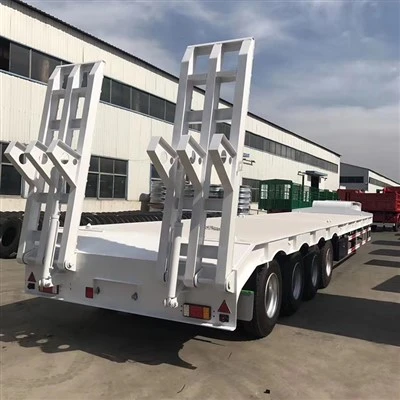
First off, let’s talk loads because that’s the entire point of the trailer—moving stuff. I can’t tell you how many times a guy comes in saying “I need a dump trailer” without naming what he’s hauling. Demolition concrete, for example? It’s sharp, heavy, and will slice through thin steel like butter. Gravel? It’s abrasive, dense, and you need enough volume but not so much it’s over the weight limit. Agricultural manure? It’s wet, stinky, and sticks to everything if you don’t design for that.
Let’s nail down the capacity and build for your load. If you’re doing hardcore construction, go with a steel tub, not aluminum. Aluminum is lighter, great for long hauls, but thin steel is non-negotiable for sharp, heavy debris. We bump the side walls on those steel tubs to 10-gauge minimum—anything thinner will warp in six months from dropping rebar or concrete chunks. If you’re hauling lighter stuff like wood chips or mulch, aluminum’s perfect. It cuts down on gross vehicle weight (GVW), so you can haul more volume without going over legal limits, and it resists rust a lot better than steel when you’re washing it out all the time. Pro tip: check your local weight laws first. A lot of states cap tri-axle trailers at 80,000 lbs total, so don’t build a tub that can hold 40 cubic yards if you’re only allowed 28—you’ll just get stuck overweight every time.
Next up, the type of trailer frame—this is non-negotiable. I see guys cheap out on frames and regret it within a year. If you’re doing on-and-off highway work, a standard flat frame is fine. But if you’re off-roading a lot—construction sites with mud ruts, farm fields, logging roads—get a drop frame or reinforced gooseneck. Drop frames sit lower to the ground, which makes loading heavy stuff like rocks easier, and they handle bumps way better because the gooseneck’s not a thin pipe that’ll crack when you hit a pothole. Also, if you’re hauling super heavy loads (think: 35k+ lbs per axle), spring for a reinforced frame with I-beam crossmembers, not channel. Channel is cheaper, but it twists under heavy weight, which makes dumping uneven and will eventually tear your tub loose.
Now let’s get to the dump mechanism—this is the heart of the trailer, and messing this up is a quick way to be stuck on the side of the road. There are two main types: piston hoists (the big ones under the tub) and scissor hoists. Piston hoists are standard for heavy loads—they lift the entire front of the tub straight up, way more lifting power. Great for concrete, rock, anything dense. Scissor hoists are lighter, cheaper, and good for lighter loads like mulch or yard waste, but they’re not built for 30k lbs of gravel—they’ll bend the arms if you push them too hard. Also, don’t sleep on the number of hoist stages. A single-stage hoist lifts the tub all the way up in one go, faster. Two-stage hoists lift the front first, then the back, which is way better for dumping sticky stuff like mud or manure—they let you rock the tub side to side a little as it lifts, so nothing gets stuck. We add two-stage hoists to every agricultural dump trailer we build, and guys say it cuts unloading time in half. Another thing: get a powder-coated or galvanized hoist cylinder. Regular steel cylinders rust out way faster, especially if you’re spraying salt in winter for snow and ice.
Side and tail gates—you’d think these are boring, but they make or break your workflow. Standard side gates are fine, but if you’re hauling bulky stuff like pipe or lumber, get extendable side gates that fold out 2 feet. Way easier than tying down extra lumber on top, and you won’t have to load smaller pieces separately. For tail gates: a swing gate is standard, but a barn door tail gate or a drop gate is way better for heavy loads. Swing gates work fine for light stuff, but if you’re dumping rock or concrete, a drop gate lets you lower the entire back of the tub, so you can spread gravel evenly or dump big chunks without them bouncing off the top of the gate. We also add a latch system that’s air-operated as an option—no more fumbling with rusted bolted latches in the rain or cold. That tiny upgrade alone saves guys 10 minutes per dump, which adds up to hours a week.
Now, small custom tweaks that no one talks about but change everything. Let’s start with the floor. A standard steel floor is okay, but if you’re hauling sticky or abrasive stuff, get a floor liner. UHMW (ultra-high molecular weight) liners are the best—they’re plastic, super slippery, so mud, manure, even wet concrete slides right out. They also resist scratches from sharp debris way better than steel, and they don’t rust. We line every dump trailer we sell with UHMW as a no-brainer now, and guys who skip it come back within a year asking to add it. Another tweak: mud flaps. Not the flimsy rubber ones that fall off, get heavy-duty steel or rubber mud flaps with extended fenders. If you’re hauling gravel, rocks fly off the trailer at 55 mph and chip the truck’s cab or other cars’ windshields—extended fenders and heavy flaps cut that by 90%.
What about lights and wiring? This is a dumb thing that causes so many tickets. Standard incandescent lights work fine, but LED lights are way brighter, use less power, and last 10x longer. Also, get waterproof wiring harnesses, not the ones that are just taped together. I’ve seen way too many guys stranded on a construction job at night because their lights shorted out in a rainstorm. And if you’re working in areas with a lot of dust or mud, get sealed light housings—no more cleaning gunk out of your lights every other day.
Oh, and one big one: tie-down points. Standard D-rings are spaced 10 feet apart, which is fine for most loads, but if you’re hauling something long or irregular like construction rebar or lumber, add extra D-rings every 5 feet along the sides. No more tying down a 20-foot piece of rebar with one D-ring and crossing your fingers it doesn’t bounce loose. We let guys specify tie-down spacing during customization, it takes 10 minutes to adjust and saves so much hassle.
Wait, let’s not forget about legal and safety stuff. You can customize a trailer all you want, but if you mess with GVW or axle spacing, you’ll get nailed with tickets. Make sure any customizations stay within your state’s length, width, and weight limits. For example, some states don’t allow dump trailers longer than 53 feet total on the highway—don’t add a 6-foot extra tub if that’ll push you over. Also, add reflectors and reflective tape around the edges, especially if you work at night or on backroads where visibility is low. It’s cheap, it’s easy, and it could save you from a collision.
Now, let’s walk through the actual process of customizing one, step by step, so you don’t make a mistake. First, figure out your core use case. Write down exactly what you haul most often, what’s the heaviest load you’ll move, where you’ll drive (highway, off-road, city). Bring that number to a reputable supplier—like us, obviously—don’t walk in just saying “get me a dump trailer.” We’ll ask all those questions, so come prepared with answers.
Second, prioritize. Don’t waste money on fancy add-ons you’ll never use. If you only haul mulch, you don’t need a 12-gauge steel tub for concrete. If you never off-road, you don’t need a reinforced drop frame. List your non-negotiables first: “must hold 30 cubic yards, no sticking loads” then nice-to-haves: “LED lights, extra D-rings.”
Third, test any custom parts before you commit. A good supplier will let you look at sample liners, see the difference between a single and two-stage hoist, even let you sit in the cab to test the hydraulic controls. We do that all the time—we don’t just sell you a trailer and ghost you until it’s built. If something feels cheap, say so. Don’t settle just because it’s a little cheaper.
Fourth, ask about warranty. Custom parts should have a warranty, same as the rest of the trailer. We warranty all our custom work for 2 years, and if a liner tears or a hoist cylinder leaks within that time, we fix it no questions asked. Avoid suppliers that offer no warranty for custom builds—they’re cutting corners somewhere.
I’ve been in this game for 15 years, and the best custom dump trailers aren’t the ones with the flashiest paint or the most add-ons. They’re the ones that fit exactly what the driver and the job need. Last year we built one for a small demolition company out of Chicago—they were tired of their standard trailers getting sliced open by concrete chunks, so we built a 10-gauge steel tub, two-stage piston hoist, UHMW liner, and extended side gates for bulky rebar. They texted me a month later saying they unloaded a full load of concrete in 15 minutes with no damage, no sticking, no tickets. That’s what customization is about.

If you’re ready to stop guessing and build a dump trailer that works for your schedule, your loads, and your wallet, reach out. We’ll walk through every step, answer all your dumb questions (believe me, I’ve heard them all), and make sure you don’t waste money on stuff you don’t need. No pushy sales guys, no hidden fees, just a trailer that gets the job done.
Fence Semi Trailer References:
- National Association of Trailer Manufacturers. (2022). Dump Semi-Trailer Customization Guidelines: Load Capacity, Safety, and Legal Compliance. NATM Technical Bulletin Series.
- American Trucking Associations. (2023). Over-the-Road and Off-Highway Dump Trailer Design Best Practices. ATA Maintenance & Operations Council.
- Steel Construction Institute. (2021). Structural Frame Design for Heavy-Duty Dump Trailers. SCI Engineering Report 127.
- UHMW Liners Industry Association. (2022). Performance Standards for Dump Trailer Bed Liners. ULIA Material Specification Series.
- U.S. Department of Transportation. (2023). Federal and State Weight and Dimension Regulations for Commercial Trailers. FHWA Commercial Vehicle Operations Guide.
Shandong Yuncheng Xinya Trailer Manufacturing Co., Ltd.
Shandong Yuncheng Xinya Trailer Manufacturing Co., Ltd. is one of the most experienced dump semi-trailer manufacturers and suppliers in China, featured by quality products and good service. Please rest assured to buy CE approved dump semi-trailer from our factory. Contact us for customized service and OEM service.
Address: No. 008, Hexie Road, Yangzhuangji Town, Yuncheng County, Heze City, Shandong Province
E-mail: fiona@xinyatrailer.com
WebSite: https://www.china-truckfactory.com/
