If you’ve ever stepped out into your garage on a frigid winter morning, ready to start your day, only to yank hard at your garage door’s slide lock and have it refuse to budge, you’re not alone. As a supplier that works directly with residential homeowners, handymen, and property managers on their garage door hardware needs, I’ve fielded this exact question dozens of times. It’s one of the most common, and most frustrating, cold-weather issues we get calls about—and it’s not just bad luck or a faulty lock. The sticking you’re noticing is rooted in simple, predictable physics, material science, and the everyday way garage door slide locks are designed, installed, and used. Let’s break it down, no overly technical jargon, just the straight facts from someone who sells and troubleshoots these locks for a living. Garage Door Slide Lock
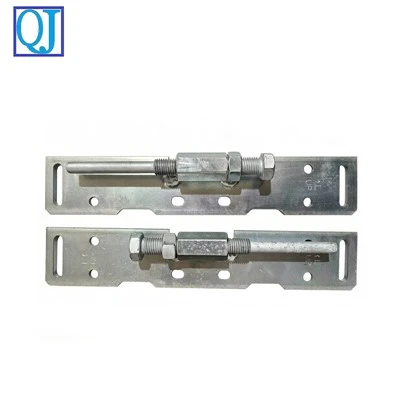
First, let’s get clear on what a garage door slide lock actually is, because not everyone who’s dealt with a sticking one knows the tiny parts at play. A standard side-mount slide lock (the most common type you’ll find on single or double car garage doors) is a small, L-shaped metal piece that slides along a vertical metal bar mounted to the door frame when the door is closed. When you push the lock down, its hooked end latches into a hole in the door track, securing the door from being opened from the outside. Simple, right? But those tiny, moving parts that make it work also make it susceptible to cold, which is where the problem starts.
The biggest culprit here is thermal expansion and contraction—this isn’t some myth about metal “freezing up,” it’s basic thermodynamics. Every material expands when it warms up and shrinks when it cools down, and different materials do this at different rates. Most slide locks are made of steel, right? Maybe a galvanized steel to prevent rust, or sometimes a cheaper steel alloy. The vertical bar the lock slides on is almost always steel too, because it needs to be strong enough to hold the door in place. Now, steel has a well-documented coefficient of thermal expansion: it shrinks about 0.000006 inches per inch of length for every degree Fahrenheit it cools. That doesn’t sound like much, but let’s put that in perspective. If your vertical bar is 36 inches long (a common length for single car garage door locks), a 20-degree temperature drop (like going from 40°F on a mild fall night to 20°F on a winter morning) would make that bar shrink by about 0.000216 inches. Wait, that’s less than a thousandth of an inch—how is that enough to make the lock stick?
Here’s the part most homeowners miss: it’s not just the bar or the lock itself. The door itself is metal too. Steel garage doors expand and contract at the same rate as the lock and the bar, but they’re bolted to the tracks and the frame, which are also metal. Those connections create tiny gaps and friction points that get tighter when things shrink. Let’s say your lock’s hook is designed to sit 0.001 inches away from the track hole when it’s 70°F. When temperatures drop, the entire assembly shrinks, but not perfectly evenly. The lock is a small, flat piece of steel, the bar is a long, straight piece, and the door frame is a larger, thicker piece. Each shrinks at almost the same rate, but minor variations in their thickness, how they were mounted, and even small amounts of rust or grime in the moving parts mean that the sliding gap that was perfect in warm weather suddenly becomes too tight. That tiny mismatch is enough to make the lock catch instead of slide.
Now, that’s the base issue, but there are a handful of secondary factors that make sticking way worse in cold weather, and they relate to how these locks fail over time, or how they’re made. The first is grime, dirt, and moisture. Garage door locks are installed outside (or at least right next to an opening that’s exposed to the elements), so over the year, they collect dust, road salt, spider webs, dead bugs, and rainwater. In warm weather, that gunk is soft, and the occasional rain or snow melts before it can stick. But in cold weather, that moisture freezes solid. Not just a tiny bit of ice—even a small accumulation of water in the gap between the lock and the bar will freeze into a thin, rigid layer of ice that acts like glue, bonding the two metal pieces together. I’ve seen this on jobs where a homeowner didn’t clean their lock all fall: a little water seeped into the slide channel, froze, and turned what was a smooth sliding lock into a solid piece of metal that you couldn’t move with a pry bar. Salt from roads is even worse—it mixes with water, seeps into tiny gaps, and when it freezes, it expands faster than pure water, creating even more friction and pressure between the lock and the bar.
Another big factor is cheap, low-quality hardware. As a supplier, I’ve seen my share of no-name slide locks that are made from thin, low-grade steel, not the commercial-grade steel we sell. Those cheap locks are produced with imprecise machining: the edges of the slot where the bar slides are slightly rough, or the lock’s hook isn’t perfectly aligned. In warm weather, those small defects don’t matter much, but when everything shrinks in the cold, those rough edges catch on the bar. Commercial-grade locks, by contrast, are precision-cut, have smooth, rounded edges, and are made from alloys that are less prone to warping or shrinking unevenly. I always tell customers that paying a couple extra dollars for a quality slide lock is worth it to avoid the headache of a stuck lock in winter, and from the number of repeat customers we have who switched from the cheap ones, that advice holds.
Wait, there’s also the issue of lubrication, or more specifically, bad lubrication. A lot of homeowners make the mistake of using any old lubricant on their garage door locks—WD-40, cooking oil, even Vaseline—thinking it’ll keep things sliding. But in cold weather, most of those lubricants either thin out too much, get sticky, or turn solid. WD-40, for example, is a solvent, not a lubricant, and it evaporates quickly in cold temperatures, leaving no protection between the moving parts. Cooking oil like vegetable oil will turn gummy and solid at 32°F or lower, turning your smooth slide lock into a sticky, hard-to-move piece. The right lubricant for garage door hardware is a dry, cold-temperature-specific lubricant, like silicone spray or Teflon-based lubricants designed for metal parts. Those stay slippery even in freezing temperatures, and they don’t attract dust or grime the way oil-based lubricants do. I see customers all the time who use the wrong lube, wonder why their lock is sticking, and switch to the right stuff, only to have it work perfectly all winter.
Another less obvious cause is misalignment from the door shifting as temperatures change. Garage doors are big, heavy pieces of metal, and they sit in an environment where the temperature can swing 20, 30, even 40 degrees between night and day. That constant expansion and contraction of the door, tracks, and frame can throw the whole assembly slightly out of alignment over time. In warm weather, when everything is at its widest, the lock is able to slide over the slightly misaligned bar easily. But when the temperature drops, the door shrinks just enough that the lock’s hook doesn’t line up perfectly with the track hole, or the bar is bent just a tiny bit that makes the lock catch as it slides. It’s not that the lock is faulty—it’s that the whole system is a little off, and cold weather amplifies that small misalignment.
So, what can you do if your slide lock is sticking in cold weather? Let’s get into practical fixes, since this is what most people reading this are looking for. First, skip the brute force. Yanking on a stuck lock can bend the lock, damage the bar, or even crack the garage door frame, which will make the problem way worse. If your lock is stuck from ice, the easiest fix is to warm it up gently. You can use a hair dryer on low heat (don’t use a torch or anything that will melt plastic or paint) to melt the ice, or a can of compressed air designed for electronics—wait, no, actually, a better trick is to use a small bag of warm water, or even a bottle of hot water, to pour over the lock and bar, just enough to melt the ice. Once the ice is gone, dry the area completely, then apply a cold-temperature lubricant.
Second, do regular maintenance on your lock throughout the year, not just when it’s cold. Every three months, wipe down the slide lock and the bar with a clean cloth to remove dirt, grime, and old lubricant. Once a year, take a minute to inspect the lock for rust—even a tiny spot of surface rust on the bar or the lock’s slot can create enough friction in the cold to make it stick. If you see light rust, sand it off with a fine-grit sandpaper, wipe it clean, and reapply lubricant. If you have a cheap, rust-prone lock, it might be time to replace it with a commercial-grade one. As a supplier, we get a lot of orders from homeowners who replaced their old locks after seeing how much better the quality ones perform in cold weather, and that’s a fix that pays off every winter.
Third, make sure you’re using the right lubricant. Again, avoid oil-based lubricants, WD-40, and cooking oil. Opt for a silicone-based or Teflon-based lubricant specifically designed for metal and cold temperatures. We recommend one that’s rated for use down to -20°F, which covers almost every winter temperature in the contiguous U.S. and most of Canada. Apply a thin, even coat to the bar and the inside of the lock’s slot, not so much that it attracts dust, but enough to keep the parts slipping smoothly.
If none of these fixes work, it might be a sign that your lock is worn out, or that your garage door assembly is too far out of alignment. For that, you might want to call a handyman to check the tracks, the frame, and the bar. But in most cases, a stuck slide lock in cold weather is a simple issue of temperature-related friction, moisture, or cheap parts, all of which are easy to fix with a little maintenance or a quality replacement lock.
If you’re tired of fighting a stuck garage door slide lock every winter, it’s worth investing in a durable, precision-made lock that’s designed to handle temperature swings and harsh conditions. We supply high-quality slide locks built from commercial-grade steel, with smooth machined slots and corrosion-resistant finishes, so they slide easily even in freezing temperatures. Whether you’re a homeowner looking to replace a faulty lock, a contractor outfitting multiple properties, or a property manager needing hardware for maintenance, we offer a range of options to fit every need and budget. To discuss your specific requirements, ask about bulk pricing, or get advice on which lock works best for your climate, feel free to reach out to our team for a consultation.
Garage Doors and Accessories References
- American Society of Civil Engineers. (2019). Thermal movement of structural metals for building components. ASCE Manuals and Reports on Engineering Practice No. 118.
- Garage Door Manufacturers Association. (2021). Residential garage door hardware performance standards, cold weather operation.
- International Association of Certified Home Inspectors. (2022). Common garage door hardware failures related to temperature and environmental factors.
- Society of Tribologists and Lubrication Engineers. (2020). Lubricant performance for metal-on-metal sliding in low-temperature environments.
Kunshan Qunju Metal Products Co., Ltd.
As one of the most professional garage door slide lock manufacturers and suppliers in China, we have world-leading production equipment and strong manufacturing capabilities. Please rest assured to wholesale premium garage door slide lock in stock here from our factory. We also accept customized orders.
Address: No.63, Jindong Road, Jinxi Town, Kunshan City
E-mail: Andycsyy@126.com
WebSite: https://www.topmhm.com/
