If you’re a homeowner trying to wrap your head around residential energy storage, or even just looking to take control of your electricity bills and power outages, you’ve probably asked this: what’s the actual maximum capacity I should be looking for? As a home energy storage system supplier who’s worked with thousands of customers over the last eight years, I can tell you it’s not a one-size-fits-all answer—and it’s tied to way more than just how much battery you can stuff in your garage. Home Energy Storage System
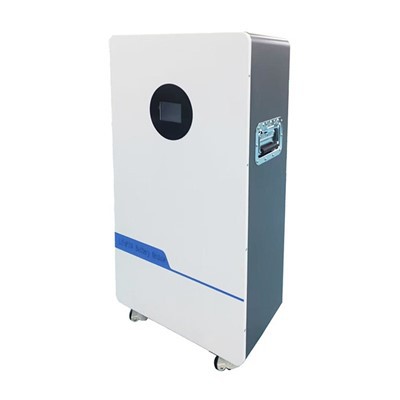
Let’s start with the basics. A residential home energy storage system is essentially a rechargeable lithium-ion (and more recently, iron-phosphate) battery bank that stores electricity generated by rooftop solar panels or pulled from the grid during off-peak, low-cost hours. Its maximum capacity, measured in kilowatt-hours (kWh), is the total amount of usable energy it can hold at full charge. But when I tell customers our largest unit clocks in at 20 kWh, that number doesn’t tell the whole story—we also have a 10 kWh model, and some of our partners offer modular systems that can scale up to 50 kWh or more by linking individual units. But why would someone need 50 kWh, and is there a point where bigger isn’t better?
To break that down, let’s ground it in real household use. The average U.S. home uses about 893 kWh of electricity per month, according to the Energy Information Administration (EIA)—that’s roughly 30 kWh per day. Wait, so does that mean a 30 kWh system would power a home for a full day without grid or solar? Not exactly. That’s total usage, but most households don’t spread their consumption evenly. You’ll run your AC or heater, your oven, and your washing machine between 6 p.m. and 10 p.m., for example, so that 30 kWh is all being drawn in a four-hour window, not 24. That’s where power rating, measured in kilowatts (kW), matters just as much as capacity. A 10 kWh system with a 5 kW inverter might only be able to power your fridge, lights, and a few small devices during an outage, while a 20 kWh system with a 10 kW inverter can run that plus your central AC, well pump, and electric dryer for several hours.
But here’s the thing: the “maximum capacity” isn’t a number you pull off a spec sheet. It’s a balance between your needs, your budget, and the limits of your home’s infrastructure. Let’s walk through the scenarios I see every day with customers:
First, off-grid homeowners. If you’re completely disconnected from the utility grid—say, a cabin in the mountains where line extensions would cost $50,000 or more—your maximum capacity is calculated to cover your full daily usage, plus a buffer for cloudy days or high-energy needs like an electric water heater. I recently worked with a customer in rural Colorado who needed enough power to run a small farm, so we put together a 45 kWh modular system paired with 12 kW of solar panels. On the longest, cloudiest days of winter, that system could last almost three full days without recharging, which is exactly what he needed to keep his livestock water heated and his home warm. For off-grid users, the maximum capacity is driven by energy independence, not cost savings from grid-tied systems.
Then there are grid-tied homeowners, which make up 90% of our customer base. For these folks, maximum capacity usually ties to two goals: reducing or eliminating their electricity bills, and avoiding outage costs. If you have rooftop solar, a larger system means you can store more of the excess solar your panels generate during the day, instead of sending it back to the grid for a credit (known as net metering). In states with low net metering rates, that’s a huge win—you’re buying cheap electricity at night instead of selling it back to the grid at a fraction of the cost. Our largest 20 kWh unit typically works well here, but some customers add a second unit to hit 40 kWh, which covers 100% of their nighttime usage and even feeds a small amount of power back during peak grid hours.
Outage preparedness is another big driver. For customers in areas with frequent severe weather—like Florida, Texas, or the Northeast—they size their system to cover critical loads: fridge, medical devices, lights, and outlets for charging phones and laptops. A 10 kWh system might cover those for 10 hours, while a 20 kWh system can cover them for 24, and a 30 kWh system can add a sump pump or small window AC. I had a customer in Louisiana last year whose area lost power for four days after Hurricane Ida; his 25 kWh system, paired with 8 kW of solar, kept his whole family’s critical needs running the entire time. He could have gone smaller, but the peace of mind was worth the extra cost.
Now, let’s talk about the limits. You can’t just cram a 50 kWh system into a 1,000-square-foot garage and call it a day. First, there’s your home’s electrical panel. Most residential panels can handle a maximum inverter output of 10 kW without upgrades, so even if you have a 30 kWh battery, your inverter might cap you at 10 kW, meaning you can’t draw more than 10 kW at any given time. That’s a key detail a lot of customers miss when they’re shopping: a big battery is useless if your electrical system can’t use its full power. Second, there’s space. Our largest modular units are about the size of a washing machine, so a 50 kWh system would take up about four of those—most homeowners have enough garage or outdoor space, but it’s not something to overlook. Third, there’s return on investment. A 50 kWh system can cost $15,000 to $20,000, not including installation, so if your average annual electricity bill is $1,200, it would take a decade or more to recoup that cost in savings. For many grid-tied customers, a 10 or 20 kWh system is the sweet spot—enough to cover 70-80% of their usage costs, without paying for capacity they’ll never use.
I also get asked all the time: can you have too much storage? The short answer is, yes, if you’re grid-tied. The extra capacity won’t save you much more money, and you’re paying for battery you’ll rarely use. For example, if you use 30 kWh a day, a 40 kWh system will only store 10 extra kWh per day—most of which you’ll send back to the grid during the day if you don’t use it, since net metering rates are usually lower than your retail rate. For off-grid, though, too little capacity is the problem: if you size too small, you’ll be stuck using the grid or a generator on cloudy days, defeating the purpose of going solar and storage.
Technology is also changing what we consider “maximum capacity.” Just five years ago, the largest residential battery on the market was 13.5 kWh. Today, we have 20 kWh units, and modular systems that can link up to six units for 120 kWh total. As battery costs drop—down 80% over the last decade, per BloombergNEF—we’re seeing more customers opt for larger systems, even if they don’t need all the capacity right away. Many of our customers choose a slightly larger system now, planning for future needs: adding an electric car, upgrading to an induction stove, or expanding their rooftop solar in a few years. Modular systems make that easy—you don’t have to replace the whole battery, just add another unit when you’re ready.
Let’s circle back to the original question: what is the maximum capacity of a residential home energy storage system? The scientific answer is that it can range from 5 kWh for small, apartment-sized setups, up to 120 kWh or more for custom off-grid or large-scale grid-tied systems. But the right maximum for you is the one that matches your specific usage, location, goals, and home’s infrastructure. There’s no universal number, and that’s why it’s important to work with a supplier who can audit your home, not just sell you a pre-sized unit.
At our company, we don’t push the biggest capacity just because it’s the “top of the line.” We start with a free assessment: we look at your monthly electricity bills, your solar production (if you have it), how often you experience outages, and what your goals are—lower bills, power independence, or both. For a family of four in a mild climate with no solar, a 10 kWh system is usually perfect to cover critical loads during outages and cut your bill by 30%. For a rural off-grid customer with a large home, we’ll recommend 50 kWh or more. For someone with a rooftop system in a state with high electricity rates, a 20 kWh or 30 kWh system is the sweet spot.

If you’re still unsure what makes sense for your home, don’t guess. Too many homeowners end up with a system that’s too small (wasting money on bills) or too large (wasting money on unused capacity). We’ve helped hundreds of customers find that balance, and we can help you too. To get started, reach out for a custom assessment—we’ll walk through your options, answer all your questions, and help you find the right maximum capacity for your needs.
Generator Set References
- U.S. Energy Information Administration. (2023). Residential Energy Consumption Survey.
- BloombergNEF. (2024). Battery Price Survey.
- International Energy Agency. (2023). Residential Energy Storage Market Report.
- National Renewable Energy Laboratory. (2022). Residential Energy Storage Techno-Economic Analysis.
Shandong Yaoqian Energy Storage International Trade Co., Ltd.
We’re well-known as one of the leading home energy storage system manufacturers and suppliers in China, featured by quality products and good price. Please rest assured to buy customized home energy storage system made in China here from our factory.
Address: Lithium Battery Industrial Park, Xingcheng Street, Zaozhuang High-tech Zone, Shandong Province, China
E-mail: business@yaoqiansmart.com
WebSite: https://www.yaoqiansmart.com/
