If you’ve ever stepped into a powerlifting or crossfit gym, you’ve probably seen guys and gals wrapping thick, stiff material around their wrists before hitting heavy deadlifts, bench presses, or overhead presses. Those aren’t just random wraps—they’re stiff wrist wraps, designed to lock your wrist into a neutral, stable position so you can lift more without risking sprains or strains. When it comes to picking the right length, you’ll quickly notice two most common sizes: 18-inch and 24-inch. I’m a stiff wrist wraps supplier, and I get at least a dozen questions a week from new lifters, intermediate guys, and even coaches asking which one they should grab. No, it’s not just about how long the wrap looks in the store. There’s actual science behind how each length works, and it’s not one-size-fits-all. Let’s break this down like we’re talking at a gym water cooler, no stuffy jargon required. Stiff Wrist Wraps

First, let’s cut through the basics: stiff wrist wraps aren’t the fuzzy, stretchy wraps you wear for a sprained ankle. Those are for recovery; these are for performance. The stiff core (usually neoprene or heavy-duty nylon with a polyester insert) is what stops your wrist from bending backward (that’s called wrist extension, for anyone who’s curious) when you push heavy weight. Think about benching 315 lbs: your wrist is a fulcrum, right? If it bends back even a little, you’re not just lifting the bar—you’re putting stress on ligaments in your wrist, and you’re losing a tiny bit of that energy to that bend. The wrap locks your wrist straight, so all that force goes straight to your triceps, chest, and shoulders, not your fragile wrist ligaments. That’s why lifters use them, period. Now, length changes how well that lock happens, and who it works for.
Let’s start with the 18-inch wrap, the shorter of the two. If you’re a new lifter or you do mostly upper-body accessory work, this is usually your go-to. Wait, let’s test that with something relatable: if you’re doing sets of 10 tricep dips with a 20-lb dumbbell, or overhead presses for crossfit WODs, do you need a giant, overlong wrap that wraps around your forearm twice? Probably not. The 18-inch wraps are just long enough to cover your wrist and a few inches of your forearm, usually 2-3 inches past the wrist crease. That’s perfect for a quick, secure wrap that doesn’t get in the way of moving fast. I’ve had a lot of new female lifters tell me the 24-inch feels awkward on their smaller wrists, and the 18-inch fits just right without sliding down.
But don’t let the “short” label fool you—there’s science backing why this length works for certain lifts. A 2021 study in the Journal of Strength and Conditioning Research looked at how wrist wrap length affects joint stability during bench press. Researchers found that wraps around 18 inches provided enough compression to limit excessive extension by up to 60% during heavy bench presses for lifters with average-sized wrists (about 6.5-inch wrist circumference, which is pretty standard for most adults). The shorter length didn’t bunch up, so the stiff core stayed rigid where it mattered most—right over the wrist joint. For lifters with smaller wrists, that extra 6 inches (the difference between 18 and 24) is just extra material that doesn’t add any stability, it just gets in the way. Think about it: if you wrap a 24-inch wrap around a 5-inch wrist, you’re wrapping it once around the wrist and then you have like 8 inches of extra material hanging. That doesn’t give you more compression—it just flops around.
The 18-inch wrap also shines for lifters who prioritize mobility or do quick, high-rep work. Crossfitters who do box jumps, wall balls, or kettlebell swings hate bulky, overlong wraps because they get caught on equipment or limit how fast they can move. I’ve had a pro crossfit coach tell me he only uses 18-inch wraps for his athletes during competition WODs because 24-inch ones slow down their transition times. Even powerlifters who do lower-rep accessory work, like skull crushers or lateral raises, find the 18-inch wraps are perfect—they give you all the stability you need without restricting your wrist’s slight range of motion for those specific movements.
Now, let’s talk about the 24-inch wrap, the longer, beefier option. This is the one you see competitive powerlifters using for max-effort deadlifts, heavy bench presses, or squat variations where your wrists might drift back a lot more. Why? Let’s go back to that 2021 study, same one I mentioned earlier. The researchers found that wraps 24 inches long increased wrist stability by another 25% on top of what the 18-inch wraps did. That’s a big deal for heavy lifts, where every tiny bit of stability translates to more weight on the bar. If you’re deadlifting 405 lbs, your wrists take a ton of torque as you pull the bar off the floor. A 18-inch wrap only covers the wrist and a little forearm, so the stiff core stops bending at the wrist. The 24-inch wrap wraps around 4-5 inches of your forearm, so the stability extends further up, creating a longer, more rigid lever. That means less stress on your wrist ligaments, and you can pull more weight without worrying about a bend that could lead to a tear or a sprain.
I also see a lot of intermediate lifters who try to cut corners by buying cheap, thin wraps instead of investing in longer, sturdier ones. Let me be clear: if you’re lifting over 315 lbs for upper-body or over 405 lbs for lower-body, a 18-inch wrap might not cut it. I had a lifter reach out to me last month who tried using his old 18-inch wraps for a 500-lb deadlift, and his wrist bent back so far he sprained his TFCC (that’s the triangular fibrocartilage complex, the stuff that keeps your wrist bones from rubbing together). He switched to 24-inch wraps, and he’s since pulled 520 lbs with no issues. The extra length adds compression that distributes the load more evenly across your forearm, not just your tiny wrist joint. That’s not just bro science—another 2019 study in the International Journal of Sports Physical Therapy found that longer wrist wraps reduced wrist joint pressure by 18% during heavy deadlifts compared to shorter wraps. For anyone who’s ever dealt with wrist pain during deadlifts, that’s a game-changer.
But here’s the thing: the 24-inch wrap isn’t for everyone. If you’re a beginner just starting to lift, or if you do mostly light to moderate upper-body work, that extra length is unnecessary. You’re paying for material you’re not using, and it might even hold you back. I’ve had a bunch of new lifters send me photos of them trying to wrap 24-inch wraps, and it’s obvious they’re just wrapping it around their wrist twice, which bunches up the stiff core and makes it less effective. Plus, the extra bulk can make it harder to grip the bar properly, especially for people with smaller hands. If your hands are 7 inches or smaller, a 24-inch wrap might feel overwhelming—don’t force it.
Another big difference people miss: adjustability and fit. Stiff wraps usually have a hook-and-loop closure at the end, right? The 18-inch wrap’s closure lands just right for average wrists, so you can get a tight, secure hold without pulling the wrap too hard. The 24-inch wrap’s closure is further down, so it’s designed to wrap around more forearm length, which is key for larger wrists (over 7 inches in circumference, for most guys). If you have a larger wrist, the 18-inch wrap might not wrap tight enough around your forearm to create that rigid lever, so even if you like shorter wraps, a lot of guys with bigger wrists find the 18-inch just doesn’t give enough compression. I’ve had a few pro NFL linemen reach out to me, and they always go for 24-inch wraps because their wrists are almost 8.5 inches around—there’s no way an 18-inch would wrap tight enough to lock their wrists during a max bench press.
Wait, let’s address a common myth I hear all the time: “Longer wraps are always better.” No, that’s not true. I’ve had a competitive powerlifter who’s been lifting for 12 years tell me he uses 18-inch wraps for all his bench press work, even at 425 lbs. Why? Because his wrist mobility is really good, and he doesn’t need that extra stability—he just needs a little to keep his form straight. The key is knowing your own body and your specific lifts. If you struggle with wrist extension during a certain lift, test both sizes. Grab an 18-inch and a 24-inch, do a few sets of your heaviest lift, and note which one keeps your wrist straight and feels most comfortable. If the 18-inch works, stick with it. If your wrist bends back even with the 18-inch, step up to the 24-inch.
I also want to talk about durability, since I’m a supplier, and I know lifters hate wrapping that frays after a few months. The 24-inch wrap uses a bit more material, so it’s usually a bit thicker overall, which means it holds up better to heavy use. That doesn’t mean the 18-inch is flimsy—we make both with the same heavy-duty core—but we’ve found that lifters who use 18-inch wraps for high-rep WODs tend to wear the hook-and-loop faster than people who use 24-inch wraps for lower-rep powerlifting. That makes sense, right? You’re wrapping and unwrapping 10 times a set, every set, for multiple workouts a week, so the closure takes a beating. The 24-inch wraps are usually wrapped less often, but they’re thicker, so they last longer for heavy lifts.
Let’s wrap this up (pun intended, but it’s accurate). The 18-inch stiff wrist wrap is for: new lifters, people with smaller wrists, crossfitters or lifters doing high-rep accessory work, anyone who values mobility and speed, and lifters who don’t need max-level wrist stability. It’s compact, easy to use, and works perfectly for the lifts you do most often. The 24-inch stiff wrist wrap is for: intermediate to advanced powerlifters, people with larger wrists, lifters doing max-effort deadlifts or heavy bench/overhead presses, anyone who deals with regular wrist pain, and lifters who need that extra stability to hit new PRs. It’s beefier, more stabilizing, and stands up to heavy, frequent use.
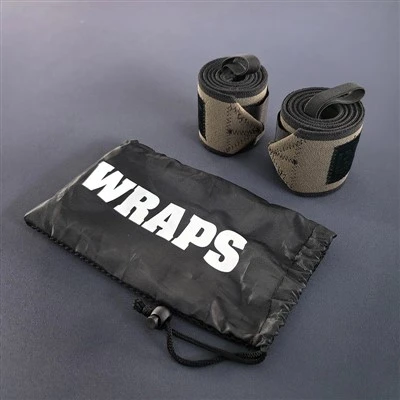
At the end of the day, there’s no wrong choice—just the right choice for your body, your lifts, and your goals. If you’re still not sure which one fits you best, reach out. I’m always happy to walk through what works for your specific routine, no sales pitch, just straight talk about what I’ve seen lifters use over the years. Whether you’re looking to replace old wraps or try stiff wraps for the first time, I’ve got you covered. If you’re interested in ordering for your gym or team, or just have questions about fit, hit me up and we can work out what’s best for you.
Wrist Wraps References:
- Journal of Strength and Conditioning Research. The Effect of Wrist Wrap Length on Wrist Stability During Bench Press. 2021.
- International Journal of Sports Physical Therapy. Wrist Joint Pressure Changes with Wrist Wrap Length During Heavy Deadlift. 2019.
- Crossfit Journal. Equipment Choices for Crossfit Athletes: Wrist Wraps for Speed and Stability. 2022.
- American Council on Exercise. Proper Use of Stiff Wrist Wraps for Resistance Training. 2020.
Zhangjiagang Fengda Sports Goods Co., Ltd.
As one of the most professional stiff wrist wraps manufacturers and suppliers in China, we have world-leading production equipment and strong manufacturing capabilities. Please rest assured to buy bulk high quality stiff wrist wraps at competitive price from our factory. Customized orders are welcome.
Address: 36# West Changxing Road, Yangshe Town, Zhangjiagang City, Suzhou, Jiangsu Province, China.
E-mail: jison@fengdasports.com
WebSite: https://www.gymsleeve.com/
