As a NBR O-ring supplier, I’ve spent years walking engineers, maintenance teams, and design specialists through the common mistake of reaching for “the standard O-ring” for every application. Too often, a mischosen seal turns a $0.15 part into a $1,000 machine shutdown, and I’ve seen that happen more times than I can count. This post breaks down the practical, science-backed steps to pick the right NBR O-ring, straight from the perspective of someone who ships these parts every week. NBR O Ring
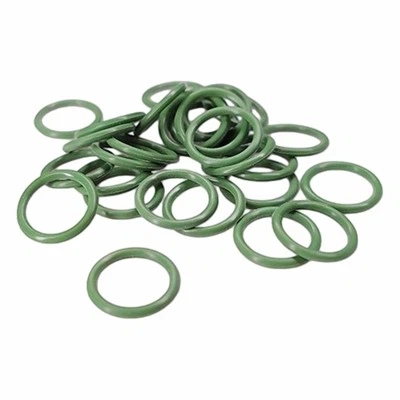
First, let’s get clear on what NBR is—and why it’s not a one-size-fits-all material. Nitrile Butadiene Rubber, or NBR, is the workhorse elastomer for sealing in industrial, automotive, and hydraulic applications, thanks to its balance of oil resistance, tensile strength, and affordability. But not all NBR is the same. Shore hardness, acrylonitrile content (ACN), and compound additives vary wildly between batches, and mismatching those to your use case is the #1 error I see customers make. Let’s start with hardness, because it’s the first decision you need to make. Hardness, measured in Shore A units, determines how the O-ring deforms under pressure—too soft, and it extrudes into gaps between mating parts; too hard, and it won’t seat properly, leading to leaks. For low-pressure static seals (like a tank lid or a sensor housing), 70 Shore A is almost always the sweet spot. It deforms enough to fill minor surface imperfections and resist small leaks, but stays flexible enough to install without tearing. For hydraulic cylinders or high-pressure static seals (1,000 PSI and above), 90 Shore A is non-negotiable. The firmer material won’t deform under extreme pressure, preventing the catastrophic extrusion that causes fluid leaks. And if you’re working with dynamic seals—parts that move, like a hydraulic cylinder rod that slides back and forth—80 Shore A is the middle ground. It has just enough give to move with the part without wearing out prematurely, which is a common pain point for my clients in construction equipment and manufacturing. I always tell customers to test hardness against their operating pressure first, because even a small 5-point difference can make or break a seal’s lifespan.
Next, ACN content, which is the percentage of acrylonitrile in the NBR compound, directly ties to oil and fuel resistance. ACN levels range from 18% (low) to 50% (high), and the rule is simple: the higher the ACN, the better the oil resistance. But that comes with a tradeoff: higher ACN NBR is less flexible and more prone to cracking at low temperatures. If you’re sealing in a hydraulic system that runs on mineral oil at 80–120°F (27–49°C), a 30% ACN NBR is ideal. It balances oil resistance with flexibility, works well in most standard industrial applications, and is the most widely stocked compound I keep in inventory. For applications with harsh oil or fuel exposure—like agricultural equipment, fuel pumps, or industrial gearboxes running synthetic oils—40–45% ACN is the way to go. This high-ACN NBR resists swelling and degradation even when exposed to aggressive petrochemicals, which is critical to preventing leaks that can shut down a harvest line or a manufacturing shift. The caveat? If your operating temperature drops below 0°F (-18°C), high-ACN NBR will harden and fail. For cold environments, you need a lower ACN (18–25%) NBR, which stays flexible in freezing conditions but can’t handle heavy oil exposure. I’ve had customers come back to me with failed seals in winter mining operations because they picked a high-ACN NBR, not realizing the low temperatures would make it brittle enough to crack. That’s why testing your application’s chemical and temperature exposure before choosing ACN is non-negotiable.
Now, the physical dimensions of the O-ring—this is where precision matters most, and why I always emphasize not guessing. O-rings are specified by three dimensions: inner diameter (ID), cross-sectional diameter (CS or thickness), and tolerance. A 1mm error in ID or CS can lead to a seal that’s too loose (leaks) or too tight (damages during installation). First, cross-sectional diameter: this is the thickness of the ring itself. For most standard groove designs, CS is 1/8 inch (3.53mm) for general-purpose applications, 3/32 inch (2.62mm) for smaller, tight-fitting parts, and 3/16 inch (4.87mm) for high-pressure seals. The rule of thumb here is to match the CS to your groove width: the O-ring should be 10–15% compressed when installed, which ensures a tight seal without overstretching. If your groove is too wide, a thinner CS O-ring won’t compress enough; if it’s too narrow, a thicker CS will stretch and crack. Then, inner diameter: the O-ring must fit snugly around the part it’s sealing, but not so tight that it’s distorted. For example, if you’re sealing a 2-inch cylinder rod, your O-ring’s ID should be 1.98–1.99 inches, leaving enough stretch to seat in the groove. I always tell customers to measure their existing O-ring (if replacing) rather than relying on old part numbers that might have been misordered. Many engineers will look at a part number and assume a 2-inch ID, but if that part was incorrectly cataloged, the seal will fail immediately. Tolerance is another detail that’s easy to overlook, but critical. Precision-machined parts (like in aerospace or medical equipment) require O-rings with ±0.001 inch tolerance, while general industrial applications can handle ±0.003 inch. I stock both precision and standard tolerance NBR O-rings, and I always ask customers to confirm their mating part’s machining accuracy before ordering.
Once you’ve nailed hardness, ACN, and dimensions, there are additives and surface finishes to consider for extra performance. NBR O-rings can be compounded with additives to address specific needs: for example, anti-aging additives for applications exposed to UV light or harsh weather (like outdoor equipment), anti-extrusion agents for high-pressure seals that prevent the O-ring from being squeezed into gaps, and low-friction coatings for dynamic seals to reduce wear and tear. I also offer a blend of NBR with a small amount of silicone additive, which extends the O-ring’s lifespan in dynamic applications by reducing friction between the seal and the moving part. Surface finish matters too: a smooth, polished O-ring surface is less likely to tear during installation, while a matte finish is better for high-pressure seals that need extra grip to stay in the groove. I advise customers to prioritize additives and finishes based on their specific application’s harshest conditions—there’s no need to pay for anti-aging additives if your seal is going to be installed indoors, but it’s essential for farm equipment that sits outside year-round.
Let’s walk through a couple of real-world examples to tie this all together, because theory only works when it applies to actual work. First case: a customer who builds hydraulic lift systems for construction trucks. Their O-ring is used in a cylinder that runs at 2,000 PSI, with ambient temperatures between 20°F and 100°F, and exposed to diesel fuel and hydraulic oil. What do they need? A 90 Shore A hardness to withstand high pressure, 40% ACN for oil and fuel resistance, 3/16 inch cross-sectional diameter to fit the cylinder’s deep groove, and anti-extrusion additives to prevent gaps from forming. That’s the exact NBR O-ring I supply for that application, and they tell me it cuts their seal failure rate by 70% compared to the cheaper, generic O-rings they used before. Second case: a small manufacturer that makes food processing equipment, using static seals to cover product tanks. Their application requires no off-gassing (to avoid contaminating food), operates at room temperature, and is exposed to food-safe oils. Here, 70 Shore A hardness is perfect, 30% ACN provides enough oil resistance, and we use a food-grade NBR compound that meets FDA standards. I supply these in bulk, and they love that the seals are affordable but don’t pose any contamination risk.
I know a lot of suppliers will push the cheapest O-ring they have, but as someone who’s been in this business for over a decade, I’ve learned that the right seal saves customers time, money, and headaches. That’s why I prioritize walking through each application with customers, not just taking an order. If you’re an engineer who’s stuck on a part number, a maintenance team dealing with repeated seal failures, or a designer putting together a new product, don’t guess at your O-ring choice. Reach out to discuss your specific conditions—pressure, temperature, chemical exposure, and application type—and I’ll help you select the exact NBR O-ring that fits your needs, no generic one-size-fits-all solutions.

When it comes to sourcing NBR O-rings, making an informed choice isn’t just about avoiding leaks—it’s about minimizing downtime, reducing replacement costs, and ensuring your equipment runs reliably. By focusing on Shore hardness, ACN content, precise dimensions, and targeted additives, you’ll avoid the most common pitfalls and find a seal that lasts. For more tailored advice or to place an order, don’t hesitate to connect.
Silicone Caps References
- The Rubber Manufacturers Association. Elastomer Selection Guide for Industrial Seals. 2022.
- Society of Automotive Engineers (SAE). Standard Practice for Elastomeric Seals, Aerospace Hydraulic Systems. SAE AS568, 2021.
- Hydraulic seals handbook. National Fluid Power Association (NFPA), 2020.
- ASTM International. Standard Specification for Nitrile Rubber (NBR) Elastomers for Sealing Applications. ASTM D2000-18, 2018.
- Parker Hannifin. O-Ring Selection and Application Manual. 2023.
Haining Chaoyue Seals Co., Ltd.
As one of the most professional nbr o ring manufacturers and suppliers in China, we offer a wide range of products with superior quality. Please feel free to wholesale high quality nbr o ring made in China here from our factory. Also, custom service is available.
Address: Building 9, 158 Lianhong Road, Yuanhua Town, Jiaxing, Zhejiang, China.
E-mail: chaoyue@cyseals.com
WebSite: https://www.hncyseal.com/
