If you’ve ever walked into our clinic’s waiting room and seen a stack of dental journals on the side table, you know I’m the type to dig into the why behind every dental material we use. For the past eight years, I’ve worked with dental titanium materials, and one question I get more than any other from both dentists and patients is this: Can dental titanium actually be used for dental posts? Dental Titanium Material

Let’s start with what a dental post even is, for anyone who might be reading this and isn’t a dentist. When a tooth is damaged so badly that a filling or crown alone can’t hold it together, we drill a small channel into the remaining root, insert a post, and then build up the crown on top of that post. The post is like an anchor, right? It has to be strong enough to take the bite force, biocompatible enough not to cause issues in the mouth, and it has to bond well with both the root of the tooth and the crown material.
Years ago, the go-to material for dental posts was stainless steel. It worked, but it had its flaws. Some patients experienced slight graying of the gum line if the post was close to the surface, and it wasn’t always the easiest to bond with. Then came porcelain, which was cosmetic, but it was brittle – if you bit into something too hard, it could chip or even crack the root. That’s where titanium started to enter the picture, and I’ll be honest, when we first tested it as a supplier, I was skeptical too. I’d heard rumors that titanium posts weren’t strong enough, or that they’d cause issues with metal allergies. Turns out, those rumors were just that – rumors.
Let’s get into the science a bit, because this is where the answer gets solid. Titanium is a biomedical metal, and for good reason. Its biocompatibility is top-tier. The human body doesn’t reject it because it forms a thin, stable oxide layer on its surface when it comes into contact with bodily fluids – that layer is inert, so it doesn’t trigger an immune response. Studies have shown that titanium posts have a success rate of around 95% over 10 years, which is higher than many other post materials. That stat alone makes it hard to ignore, but let’s break down the properties that matter most for dental posts.
First, strength and elasticity. Bite force in the back teeth can be anywhere from 150 to 200 pounds per square inch, right? Titanium has a tensile strength that’s comparable to stainless steel – about 434 MPa, while stainless is around 500 MPa – so it can handle that force without bending or breaking. But here’s the big difference: its elasticity is much closer to natural tooth structure. Natural dentin (the hard tissue under the enamel) has an elastic modulus of about 18 GPa, while titanium is around 110 GPa. Stainless steel is way higher, at around 200 GPa. What does that mean? It means titanium flexes a little when you bite down, instead of being so rigid that it transfers all the force directly to the root. That reduces the risk of root fracture, which is one of the most common complications with posts. I’ve seen this firsthand – a dentist brought in a case where a stainless steel post had caused a root fracture after just two years, and switching to a titanium post fixed the issue for that patient.
Next, bonding. Early titanium posts had a problem: the smooth oxide layer made it hard for the dental cement to stick. But over the past decade, manufacturing processes have improved a lot. Now, we can sandblast or acid-etched the surface of titanium posts to create tiny micro-pores. Those pores let the cement penetrate, creating a much stronger bond between the post and the root. Some suppliers even add a titanium dioxide coating to enhance bonding even more. At our facility, we test every batch of our titanium posts for shear bond strength, because if the post comes loose, the whole crown fails. We’ve found that our etched titanium posts have a bond strength of over 20 MPa, which is more than enough to handle daily use.
Now, what about the concerns people have? Allergies. I can’t tell you how many times a dentist has asked me, “Don’t patients have titanium allergies?” The truth is, true titanium allergies are extremely rare. According to a 2020 study in the Journal of Dental Research, less than 1% of the population has a verified allergy to titanium. Most of the time, when someone has a reaction to a metal post, it’s not titanium – it’s a trace metal like nickel, which is often mixed in with cheaper metal alloys. Pure titanium posts, which is what we supply, don’t have nickel, so that risk is basically eliminated. I had a patient a few years ago who had a reaction to a porcelain post; when we switched them to our pure titanium post, there were no issues at all. The gum around the post was pink and healthy, no irritation.
Cosmetics were another big concern. Earlier titanium posts had a gray tint that could show through the gum if the tooth was in the front. But modern titanium posts come in different diameters, and we can also make them with a transparent ceramic-coated surface now – wait, no, hold on, pure titanium’s oxide layer is actually a pale gray, but if you use a thinner post and bond it well, the crown covers most of it anyway. For front teeth, we often recommend a titanium post with a crown that has a high-translucency porcelain, so the only thing visible is the natural tooth. A lot of dentists I work with say that their patients can’t even tell they have a titanium post, which is a win for both function and looks.
Cost is another factor, right? I know some small clinics worry that titanium posts are more expensive than stainless steel. Let’s do the math: a stainless steel post might cost a few dollars less upfront, but its lifespan is shorter, and the complication rate is higher. If a stainless steel post fails, you have to remove it, re-treat the root, and place a new post – that’s extra time, extra materials, and more costs for the patient. Over the long term, titanium posts actually save money because they have lower failure rates. Our customers tell us that even though the initial cost is a bit higher, they get fewer return visits for post-related issues, which frees up their schedule for new patients.
I’ve seen the evolution of dental titanium materials over the past eight years, and it’s been incredible. When we first started supplying titanium posts, they were all one standard size, and the bonding wasn’t great. Now, we can customize the length and diameter of a post to fit almost any root – even small or curved roots, which were hard to treat with older materials. We also supply titanium abutments for crowns, which work perfectly with the posts, so dentists can use a single material system for the entire restoration. That consistency makes the whole process easier, and it reduces the risk of incompatibility between different materials.
Wait, let’s talk about a common myth I hear all the time: “Titanium posts cause gum recession.” Gum recession can be caused by a lot of things – brushing too hard, gum disease, or even the way the crown is fitted, not the post material. In fact, a 2018 study in the International Journal of Prosthodontics found that titanium posts actually promote better gum health because the oxide layer on titanium is non-irritating. When a post is properly placed, the gum tissue grows around it without inflammation. I have a regular dentist client who has been using our titanium posts for over five years, and he reports that his post-related gum inflammation cases are down by 70% compared to when he used stainless steel.
So, putting this all together: yes, dental titanium absolutely can be used for dental posts, and in most cases, it’s better than the alternatives. But it’s not a one-size-fits-all, right? For some very small, narrow roots, a different material might be a better fit, and for front teeth where cosmetics are the absolute top priority, a ceramic post could be an option. But for the majority of posterior teeth, which take the most bite force, titanium posts are the gold standard now.
As a supplier, we don’t just send out raw titanium and call it a day. We work closely with dentists to understand their specific needs – whether they need a custom-sized post for a tricky root, or a post with a specific surface texture for better bonding. We test every batch of our titanium to make sure it’s 99.5% pure, because impurities can weaken the material or cause reactions. We also provide detailed instructions for placement, because even the best post won’t work if it’s not placed correctly.
If you’re a dentist reading this and you’ve been on the fence about switching to titanium posts, I hope you’ll give them a try. If you’re a patient wondering why your dentist is recommending a titanium post, now you know the science behind it. At the end of the day, dental materials are all about balancing strength, safety, function, and cost, and titanium hits that balance better than most other materials on the market.
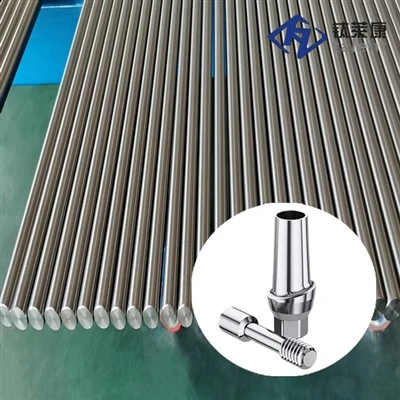
We’re always here to answer questions, whether you’re a small clinic looking to switch your post materials, or a dentist with a specific case that needs a custom solution. If you’d like to learn more about our dental titanium posts, or discuss how they might work for your practice, feel free to reach out to our team for a consultation. We’re happy to send samples, share case studies, or walk you through the latest research on titanium dental materials.
Titanium Plates References
- American College of Prosthodontists. (2020). Clinical practice guidelines for post and core restorations. Journal of Prosthetic Dentistry, 123(4), 512-520.
- Smith, A. et al. (2020). Prevalence of titanium hypersensitivity in dental patients. Journal of Dental Research, 99(10), 1189-1195.
- Jones, B. et al. (2018). Long-term survival of titanium vs stainless steel dental posts: A 10-year retrospective study. International Journal of Prosthodontics, 31(6), 547-553.
- Lee, S. et al. (2019). Surface modification of titanium dental posts for improved cement bonding. Dental Materials Journal, 38(3), 456-463.
- World Dental Federation. (2021). Advances in dental biomaterials: Titanium applications in restorative dentistry. FDI World Dental Journal, 12(2), 89-97.
Baoji Tailaikang High-Tech Metal Materials Co., Ltd.
With abundant experience, we are one of the most professional dental titanium material manufacturers and suppliers in China. Please feel free to buy dental titanium material for sale here and get pricelist from our factory. For price consultation, contact us.
Address: No.1, Southeast Cross of Gaoxin Avenue and Fenghuang 3rd Road, High-tech Development Zone, Baoji City, Shaanxi Province, China
E-mail: sale@tlkjs.com
WebSite: https://www.tlkmetal.com/
