Hey there, if you’re reading this, chances are you’re either in the market for endless steel belts (y’know, the ones that move stuff through industrial processes without that annoying break in the line) or you’re just curious why some of these things seem to last forever and others bite the dust after a few months. I’ve been selling these bad boys for over a decade now, and let me tell you—answering “what’s their lifespan?” is way more complicated than you’d think. It’s not like a lightbulb where you can just pull out a number and call it a day. So let’s break this down, no jargon, just straight talk from someone who’s actually on the factory floor talking to customers every week. Endless Steel Belts
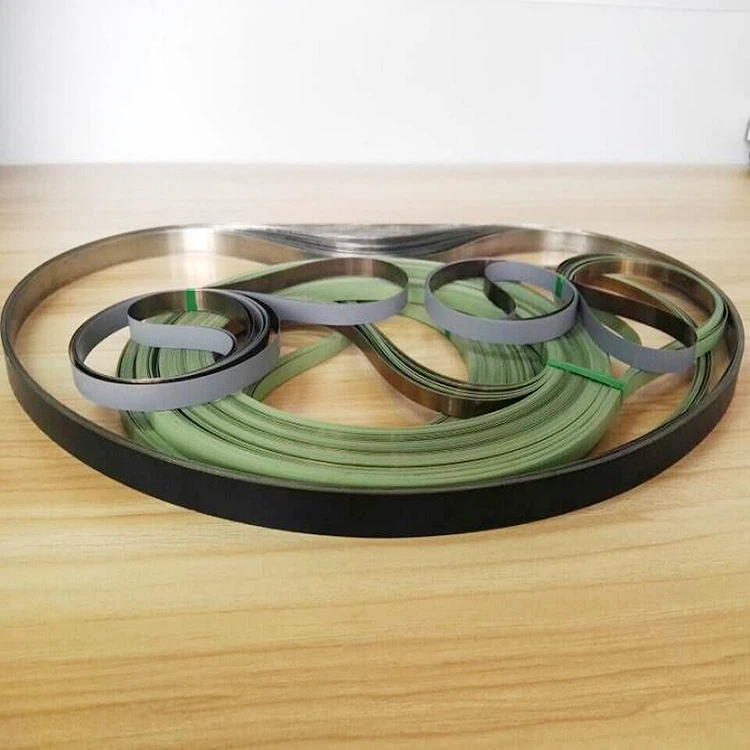
First off, let’s get one thing straight: endless steel belts aren’t all created equal. I see customers all the time who come in saying, “I bought a steel belt from Joe Schmoe last year, it broke, why’s yours different?” And half the time, it’s not the belt’s fault—it’s how it’s being used. Let’s start with the basics: the materials. We make our belts from high-grade carbon steel, 304 stainless, or 316 stainless, depending on what the customer needs. Carbon steel is tough, cheap, and great for things like baking (think conveyor belts for cookies in a cookie factory) or heavy-duty metal stamping. Stainless steel is for when there’s moisture, chemicals, or food safety rules—like in meat processing or pharmaceutical lines. Now, each material has its own “natural” lifespan if treated right. Carbon steel, for example, can last 7-10 years in mild conditions, but if you’re running it through a dishwasher-like environment (wait, not a real dishwasher, but a heavy washdown with harsh cleaners), that number drops.
Next, how the belt is installed. I can’t tell you how many times I’ve had a customer call us panicking because their new belt is making a weird noise, and it turns out the installation guy they hired didn’t align the rollers right. If the belt’s not tracking straight, it’s constantly pulling on one side, stretching unevenly, and wearing out way faster than it should. I once had a customer who installed a belt himself, skipped the tension adjustment step, and by week six, the belt was so loose it was slipping off the rollers and getting crushed. That belt was trash in 2 months—totally avoidable. Proper installation takes like 30 extra minutes, and it adds years to the lifespan. Trust me, that’s not a cost, that’s an investment.
Then there’s the use case. Let’s talk about the big ones: temperature. If you’re running a belt in a cold storage facility, things are chill (pun intended) and gentle. But if you’re running it through a heat treat oven where temps hit 1,200°F? That’s a whole different story. Steel expands when it’s hot, contracts when it cools. If the temperature cycles are abrupt (like going from 500°F to room temp in 10 minutes every hour), that’s thermal fatigue. Over time, the micro-cracks form, the belt weakens, and it snaps. We’ve seen belts in heat treat last 3-5 years, but only if the customer controls the cooling rate. On the flip side, if it’s a cold application, like freezing fruit, a good belt can easily hit 10+ years.
Load is another big one. If you’re moving light items—like paper for printing—you can go with a thinner belt, right? But if you’re hauling 50-pound metal parts every hour, you need a thicker gauge. I once had a customer who tried to use a 0.8mm belt for heavy-duty stamping, and it stretched so much in 8 months that the gaps between the belt links (wait, some belts are solid, some are link, important point—solid belts are for smooth products, link belts for better airflow) widened, and parts got stuck in the gaps, causing tears. A 1.2mm belt would’ve lasted him 6+ years, not 8 months.
Maintenance—this is where most people drop the ball. Endless steel belts don’t need oil changes or anything, but they do need regular checks. Wipe down debris after every run, inspect for small nicks or burrs (even a tiny nick can turn into a big tear over time), and make sure the rollers are lubricated. I had a customer in a food processing plant who skipped cleaning the belt for months—food residue built up, attracted bacteria, and also caused corrosion. His belt corroded through in 18 months, whereas the guy next door who cleans his belt every shift is on year 7 with the same one. It’s not rocket science, it’s just consistency.
Wait, also, the “endless” part—unlike a regular conveyor belt that has a splice, these are seamless, right? That’s why they’re called endless. The manufacturing process matters a lot here. We use a precision butt weld, not a lap weld, because a lap weld is weaker and can split. Cheap suppliers often use lap welds to cut costs, and that’s where a lot of early failures happen. We test every single belt to make sure the weld is as strong as the rest of the belt—no shortcuts. That’s why our belts cost a little more upfront, but you’re not replacing them every year.
Let’s get real with some numbers, because I know you want specifics. In light, low-temperature applications (like baking, printing, packaging goods that don’t get hot or wet), our belts typically last 8-12 years. In medium-use, slightly harsher environments (like moderate washdown, or mild heat up to 500°F), that’s 5-8 years. In heavy-duty, extreme conditions (1,000°F+ heat, constant heavy load, harsh chemicals), it’s 2-5 years. But I’ve seen exceptions—last year, a customer in a fruit processing plant had his belt for 14 years. He cleaned it every day, aligned the rollers perfectly, and never overloaded it. On the other end, I had another guy in galvanizing who abused his belt—rushed installation, ran way over capacity, skipped maintenance—his belt was dead in 10 months. So the numbers are averages, not rules.
Now, let’s talk about common myths. A lot of people think all steel belts are the same, but no—stainless vs carbon is a huge difference. Carbon is cheaper, but it rusts if not coated or kept dry. 316 stainless is the most corrosion-resistant, great for marine environments or things with salt, but it’s pricier. Another myth: thicker is always better. Not really—thicker belts are stiffer, so if you’re running them over small rollers, they wear out the edges faster because they can’t bend as easily. You have to match the belt thickness to the roller diameter. That’s something a good supplier should help you with—we always ask about your roller size, load, temp, and environment before recommending a belt.
Wait, what about if a belt does fail? It’s usually one of three reasons: misalignment, overload, or corrosion. 90% of the time, it’s not a manufacturing defect. I tell customers all the time—if your belt breaks early, don’t just blame the supplier. Look at how you’re using it. That’s not to say we never make a bad one, but it’s rare. We have a quality control team that checks every belt, so defects are less than 1% of what we ship.
So, back to the original question: lifespan of endless steel belts in industrial use. The short answer is, it depends. But if you do it right—pick the right material, get it installed correctly, use it for what it’s made for, and do basic maintenance—you’re looking at a belt that will last a decade or more. If you cut corners, you’ll be replacing it every couple years, which ends up costing way more in the long run.
At the end of the day, I’ve been in this long enough to know that a good endless steel belt isn’t just a part—it’s a workhorse. You don’t want to be stopping your production line every year to swap out a belt. That’s why we don’t sell cheap belts that fail fast. We sell ones that work for your specific process, so you can focus on running your business, not fixing conveyor issues.
If you’re looking to replace a worn-out belt, or you’re starting a new line and want to make sure you get one that will last, reach out to us for a chat. We’ll ask you all the right questions to make sure you get the perfect belt for your needs, no guesswork. Don’t settle for a belt that will die in a year—invest in one that will be there for the long haul.
Diamond Saw Blade References
- Industrial Conveyor Belt Manufacturing Association. (2022). Guide to Endless Steel Belt Durability and Lifespan.
- Stainless Steel Industry Association. (2021). Corrosion Resistance in Industrial Belt Applications.
- Journal of Industrial Engineering. (2020). Factors Affecting Conveyor Belt Lifespan in High-Temperature Manufacturing Environments.
- American Society of Mechanical Engineers. (2019). Installation and Maintenance Standards for Industrial Steel Conveyor Belts.
Qingdao Acome Machinery Co., Ltd.
Qingdao Acome Machinery Co., Ltd. is one of the most professional endless steel belts manufacturers and suppliers in China, featured by quality products and good service. Please rest assured to wholesale customized endless steel belts made in China here from our factory.
Address: No.71-006, YongPing Road, LiCang District, Qingdao, 266041, Shandong Province, China.
E-mail: info@acometech.com
WebSite: https://www.acometech.com/
