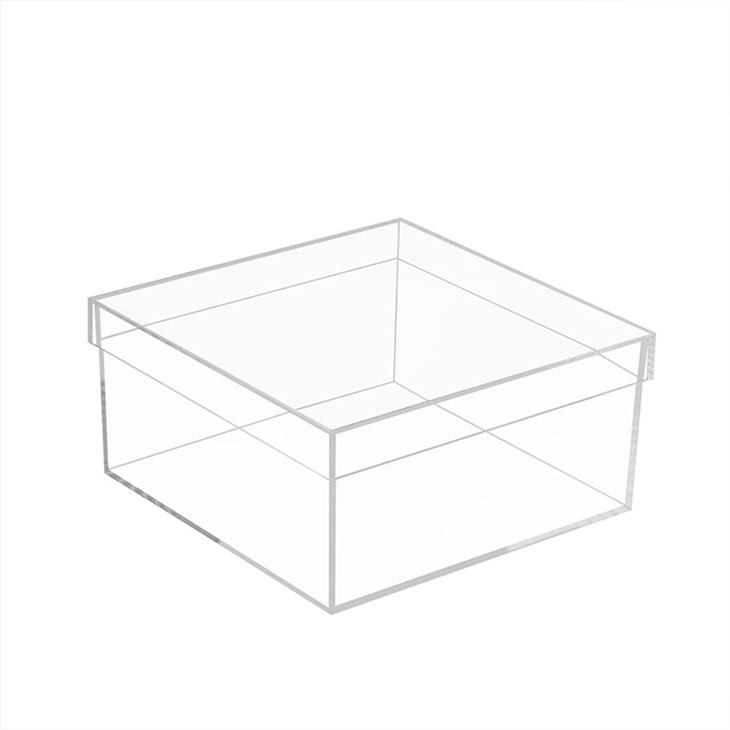
If you’ve ever ordered an acrylic box for your business, a retail display, or even a personal storage project, you’ve probably found yourself pausing mid-checkout and wondering: Are acrylic boxes heavy? I’ve heard this question from dozens of clients over the years, from small boutique owners looking to stack product displays in tight storerooms to event planners who need to move dozens of display units between venues. As an acrylic box supplier who’s worked with raw materials for nearly a decade, I don’t just give a one-word answer— I break this down by science, material specs, and real-world use cases that matter for anyone looking to buy. Acrylic Box

First, let’s start with the basics: Acrylic is a thermoplastic polymer, technically known as polymethyl methacrylate (PMMA). It’s often marketed as a lightweight alternative to glass, which is true in most scenarios, but that doesn’t mean acrylic boxes are uniformly light. The weight of an acrylic box depends entirely on three key factors: the thickness of the acrylic sheet used, the size of the box, and whether it has additional features like reinforced edges, locks, or dividers.
Let’s run through the numbers, because that’s what clients always ask for. Standard acrylic sheets used for boxes come in thicknesses ranging from 1/8 inch (3mm) to 1/2 inch (12mm) for most commercial applications. The density of pure acrylic is approximately 1.19 grams per cubic centimeter, which is roughly 1.2 times heavier than water, but about half the density of glass (which is around 2.5 grams per cubic centimeter). To put that in pounds for anyone who works with imperial measurements, a 12x12x12 inch (30x30x30 cm) box made from 1/8 inch acrylic will weigh roughly 2.2 pounds (1 kg) when empty. That’s light enough to carry one-handed, even with a few small items inside, and far lighter than a glass box of the same size, which would tip the scale at around 10 pounds (4.5 kg).
But here’s where the myth that all acrylic boxes are “super light” falls apart: if you need a sturdier box for heavy-duty use, the weight goes up quickly. For example, a 12x12x12 inch box made from 1/2 inch acrylic—used for storing heavy tools, high-value retail inventory, or outdoor display items that need to resist impact—will weigh around 8.8 pounds (4 kg) empty. Add a set of heavy-duty brass latches, a reinforced base, and a divider, and that number climbs to roughly 10.5 pounds (4.75 kg). For context, that’s about the weight of a small laptop, or a standard hardcover novel. It’s still lighter than a comparable glass box, but it’s not something you’d want to carry up a flight of stairs multiple times a day without help.
I test every batch of acrylic sheets we source, because thickness is non-negotiable for the boxes we sell. A common mistake first-time clients make is ordering a 1/8 inch acrylic box for a project that requires it to hold more than 5 pounds of product inside. The thin sheet will flex under the weight, and if it’s used for long-term storage, it can warp over time—another reason why weight matters beyond just portability. For example, a client last year ran a specialty candle brand, and originally ordered 1/8 inch boxes to display their candles at a local farmers’ market. When they stacked 8 of the boxes on a market table, the bottom box cracked under the combined weight of the candles and the thin acrylic. We worked with them to adjust to 3/16 inch (5mm) acrylic boxes, which added about a pound per box, and they’ve had zero issues since. That’s a real example of how understanding acrylic box weight prevents costly mistakes.
Another factor people don’t always consider is the manufacturing process of the box itself. Some acrylic boxes are cut from a single sheet and glued together, while others are assembled from multiple pieces with reinforced corners or metal frames. Framed acrylic boxes, which are often used for museum displays or high-end jewelry cases, will be heavier because of the aluminum or stainless steel frames that add structural support. A 24x18x12 inch framed acrylic display case for a retail store, for example, will weigh around 25 pounds (11.3 kg) empty—heavy enough that you’ll want to mount it to a wall instead of placing it on a counter, or use a rolling cart to move it around. Contrast that with a 24x18x12 inch non-framed acrylic box, which weighs around 16 pounds (7.25 kg) empty, and you can see how much the manufacturing style impacts weight.
I also get asked how acrylic box weight compares to other common materials, because that’s often a deciding factor for clients. Plastic storage bins made from polyethylene (PE), for example, are generally lighter than acrylic boxes of the same size. A 12x12x12 inch PE bin weighs about 1.8 pounds (0.8 kg) empty, so it’s lighter, but it’s not as durable for long-term use, doesn’t have the same clear, scratch-resistant finish acrylic offers, and can yellow over time with UV exposure. Wood boxes, on the other hand, are usually heavier: a 12x12x12 inch pine box weighs around 3 pounds (1.35 kg) empty, and solid wood options can be much heavier for the same size. So acrylic lands right in a sweet spot: lighter than glass and wood, but sturdier and more versatile than most common lightweight plastics for commercial use.
For people who need to transport acrylic boxes, weight is even more critical. Event planners who ship display cases to trade shows often have weight limits for shipping, so a box that’s too heavy will add extra freight costs. A standard 36x24x12 inch acrylic display case for a trade show, for example, will weigh around 18 pounds (8.15 kg) empty, which fits within standard ground shipping limits for individual boxes. If that same case was made from 1/2 inch acrylic, it would weigh closer to 30 pounds (13.6 kg), which might require an oversized shipping label or extra fees. That’s why we always work with event clients to balance the acrylic thickness with their portability needs—we don’t just sell a box, we help them figure out what weight works for their specific use.
I should also mention that when people say “acrylic boxes are heavy,” they’re often comparing them incorrectly. If you’ve only ever used thin, disposable acrylic boxes for things like takeout containers, you’re right—those are extremely light, often less than a pound for a small container. But those are not the same as the solid, commercial-grade acrylic boxes we supply. The acrylic we use is cast acrylic, not extruded acrylic, which makes it 10% denser and more durable. That extra density is part of why cast acrylic boxes are slightly heavier than disposable ones, but also why they last for years instead of breaking after a few uses.
Over the years, I’ve also found that many clients don’t realize they can request custom thicknesses for their acrylic boxes. If you need a ultra-light box for moving, say, retail inventory across a store floor, we can make a box with 1/16 inch (1.5mm) acrylic, which weighs less than a pound for a 12x12x12 inch box. It’s not suitable for heavy products, but it’s perfect for lightweight items like apparel or small accessories. On the other end, if you need a heavy-duty box for outdoor use, we can go up to 3/4 inch (19mm) acrylic, which weighs around 13 pounds (5.9 kg) for a 12x12x12 inch box, and can hold up to 50 pounds of product without flexing.
What matters most when it comes to acrylic box weight is matching the weight to your intended use. There’s no universal answer of “yes, acrylic boxes are heavy” or “no, they’re light”—it all depends on what you’re using the box for. A jewelry display case that sits on a counter will be a bit heavier to keep it stable, while a box for storing photo albums in a closet can be thinner and lighter.
If you’re in the market for an acrylic box and still unsure about weight, my advice is to reach out directly with your specific needs. I’ve helped hundreds of clients adjust their box design, thickness, and features to get exactly the weight they need, whether that’s for a pop-up shop display, a retail storage solution, or a custom project for an event. Don’t guess about the right weight—talk through your needs with someone who works with acrylic boxes day in and day out, because a box that’s too heavy will add unnecessary costs and portability issues, and a box that’s too light won’t be durable enough for what you need to store.
If you’re ready to discuss your acrylic box project, including weight requirements, size, and custom features, please don’t hesitate to get in touch. Our team is here to walk you through every step, from selecting the right acrylic thickness to finalizing the design, so you get a box that fits your needs perfectly.
Acrylic Table Tent References
- Marks, G. (2009). Plastics Materials and Processes. Prentice Hall.
- Smith, A. (2018). Acrylic Applications in Commercial Displays. Journal of Retail Fixtures and Design.
- National Plastic Manufacturers Association. (2021). Density and Weight Specifications for Common Thermoplastics.
Wenzhou Daoqin Crafts Co., Ltd.
With abundant experience, we are one of the most professional acrylic box manufacturers and suppliers in China. Please rest assured to wholesale bulk customized acrylic box from our factory. If you have any enquiry about quotation and free sample, please feel free to email us.
Address: Room 401, Building 5, Wanyang Innovation City, No.9 Yangyu Road, Binhai New Area, Pingyang County, Wenzhou City, Zhejiang Province, China
E-mail: wzdaoqin@163.com
WebSite: https://www.wzacrylic.com/
