When I first started my career as a precision machined parts supplier 12 years ago, I’d sit across from engineering teams at aerospace, medical device, and automotive manufacturing facilities, watching them debate two terms they’d throw around like they were interchangeable: precision forging and precision machining. Back then, I’d nod along and answer their questions, but I’ll admit I didn’t fully grasp the level of confusion these two manufacturing processes caused—especially for teams that are new to sourcing tight-tolerance parts, or for small-batch prototypers who just need a solid part to test a new design. Now, after supplying parts to over 200 clients across North America, I make it a point to break down these differences clearly, because choosing the wrong process doesn’t just add cost—it can delay a product launch that took years to develop. Precision Machined Parts

Let’s start with the basics, because both precision forging and precision machining live in the same world of tight tolerance work, but they start from completely different places. Precision forging is a metal shaping process where a solid metal—usually aluminum, steel, titanium, or brass—is heated to a specific (often critical) temperature, then hammered or pressed into a pre-designed die. That die is made to the exact shape you want, so the metal takes on that form as it cools. Precision machining, on the other hand, starts with a solid block of metal (called a billet or bar stock) and uses cutting tools to remove excess material, layer by layer, until only the desired part remains. If that sounds like the difference between molding a sculpture out of wet clay versus carving one out of a block of granite… well, that’s not a bad analogy. But to get to the real, actionable differences, we need to dive into the details that matter to anyone sourcing parts: material properties, tolerance capabilities, part complexity, production volume, cost, lead time, and post-processing needs.
First, material properties. This is where precision forging consistently has an edge over machining, and it’s why I can’t count how many aerospace clients have walked in asking for machined titanium parts, only to switch to forging after testing proves the strength difference. When metal is forged, the heat and pressure reshape its internal grain structure. The grain flows along the contours of the part, rather than being cut straight through like it is in machining. Think of a piece of wood: if you cut a plank crosswise, it splits easily along the grain, but if you cut it lengthwise along the grain, it’s strong. That’s exactly what happens in metal. Forged parts have higher tensile strength, better fatigue resistance (meaning they last longer under repeated stress), and improved impact toughness. For applications like a jet engine turbine blade, a medical orthopedic implant, or a heavy-duty automotive transmission gear, that strength isn’t just a nice-to-have—it’s a safety requirement.
Machined parts, by contrast, have a disrupted grain structure because we’re cutting away material from a solid block. That grain cut can create weak points, especially at sharp edges or internal holes. That’s not to say machined parts are weak—far from it, especially when we work with high-strength alloys—but they can’t match the structural integrity of forged parts for high-load applications. For example, I recently supplied a set of hydraulic valve bodies to a construction equipment manufacturer. They initially wanted forged bodies, but when we tested the same design machined from 6061-T6 aluminum, it withstood 10,000 psi of pressure without cracking—more than enough for their needs. That’s the kind of tradeoff I walk clients through every day: when strength is non-negotiable, forging is better; when strength requirements are moderate, machining can save costs.
Next, tolerance capabilities. This is where the lines get blurrier, but there’s still a clear pattern. Precision forging can hold tight tolerances, but they’re not as tight as what we can achieve with machining. What does that mean in real numbers? A good precision forging operation can hold tolerances of ±0.005 inches (0.127 mm) on most dimensions, and sometimes as tight as ±0.003 inches (0.076 mm) for simpler shapes. But precision machining? We regularly hold tolerances of ±0.0005 inches (0.0127 mm)—that’s 10 times tighter than many forgings. For reference, a human hair is about 0.003 inches thick, so we’re cutting to a tolerance thinner than half the width of a hair. That’s why machining is the go-to for parts that need to fit perfectly with other components. If you’re making a custom medical implant that has to align with a patient’s bone, or a small electronic connector that has to slot into a circuit board without gaps, machining is the only way to get that level of accuracy.
Wait, I should note that modern precision forging processes, like cold forging or isothermal forging, have improved a lot in the last 10 years. Cold forging doesn’t heat the metal at all, so it can hold tighter tolerances than hot forging, sometimes up to ±0.002 inches. But even then, it’s still not matching the accuracy of 5-axis CNC machining, which is the workhorse of my shop. 5-axis machines can rotate and tilt the part while cutting, so we can machine complex internal features, curved surfaces, and multiple sides in one setup, holding that ultra-tight tolerance every time. For parts with very intricate details—like aerospace fuel line fittings or micro gears for medical pumps—machining is non-negotiable for that precision.
Then there’s part complexity. This is the biggest deciding factor for most clients, in my experience. Let’s be honest: parts these days are getting more complex. Ten years ago, a part might have had 2 or 3 holes and a simple curve. Now, clients are asking for parts with internal channels, undercuts, thin walls, and multiple mating surfaces. Which process is better for that? Precision machining, hands down. Forging requires a die, and designing a die for a complex part can be extremely expensive and time-consuming. If you have a part with an internal channel, making a die that can produce that shape without having to split the die (which adds cost and can leave a seam line) is almost impossible. Machining, on the other hand, can cut those internal channels, undercuts, and thin walls directly from the block of metal, no die required. That’s why so many tech companies that make small, complex electronic parts—like smartphone components or sensor housings—rely on precision machining.
That said, forging has a big advantage for parts that are solid, bulky, or have a consistent shape. For example, a automotive crankshaft, a truck axle, or a wrench—those are parts where forging works perfectly, because the die is simple and the shape is consistent. The downside is that if you need even a small change to the part design, you have to re-make the entire die, which can cost tens of thousands of dollars. I once had a client who wanted to test a new design for a custom bike crank arm. The initial forging die cost $15,000. When they decided to change the shape of the arm to save 10 grams of weight, we had to scrap the old die and make a new one—another $15,000. For machining, we would have just reprogrammed the CNC machine, no tooling cost, so that’s a huge difference for prototyping or design iterations.
Volume is another huge factor that most people don’t think about. Let’s break it down: if you need one or two parts, or 100 parts, which is cheaper? Precision machining, every single time. Because machining doesn’t require any custom tooling, just a program for the CNC machine. You can set up a machine and run parts that same day, for a small setup fee. For forging, you have to make a die first, which takes 4 to 8 weeks and costs thousands of dollars. That means if you need a prototype or a small batch of parts, forging is way too expensive and slow. But if you need 10,000 or 100,000 identical parts, forging becomes much cheaper per part. Because once the die is made, each part is just pressed out, with very little labor, so the per-unit cost drops drastically.
I’ve had clients come to me asking to do a 50-part prototype for a new medical device, and they initially wanted forging because they thought it was stronger. I’d tell them that for a 50-part run, the forging die would add $18,000 to the cost, and it would take 6 weeks to get the first sample. Machining would cost $2,500 total, with a sample ready in 5 days, and the parts would be strong enough for testing. Once they get past the prototype stage and need 5,000 parts, then we can switch to forging, and they save 30% per part. That’s the kind of cost-benefit analysis I walk clients through all the time—volume is king here.
Lead time goes hand-in-hand with volume, and it’s a big deal for anyone with a tight product launch. Precision machining has lead times that are measured in days or weeks, depending on the complexity of the part. We’ve had emergency orders for custom hydraulic valve bodies that needed to ship in 3 days, and we got it done on our 5-axis machines. Precision forging? Lead times are usually 6 to 12 weeks, because of the die design and manufacturing process. Even with fast, modern forging operations, you’re not going to get a part in 3 days. That’s a critical point for startups or companies with urgent deadlines.
Post-processing is another detail that adds up. Most machined parts need some post-processing: deburring (trimming the sharp edges left by the cutting tools), sanding, anodizing, or coating. Forged parts also need post-processing, but usually less—they’re smoother from the die, and only need light deburring, maybe a bit of machining to get tight tolerance on critical surfaces. But here’s the thing: the sharp edges from machining are usually smaller and easier to remove than the grainy, sharp edges that can come from forging, especially hot forging. I’ve also noticed that machined parts are easier to inspect for defects. We use coordinate measuring machines (CMMs) to scan every dimension, and since we cut the part from a solid block, we can see exactly where every feature is. Forged parts have a little more variability because of the metal flow, so inspection takes a bit longer, though modern CMMs have closed that gap a lot.
Wait, let’s clear up a common misconception I hear all the time: “Precision machining is only for small parts.” No, that’s not true. We machine parts that are 1 inch long all the way up to 10 feet long, for industrial machinery and construction equipment. And precision forging isn’t only for big parts—we get clients asking for tiny, intricate forged parts for watches and medical implants all the time, though those cold-forged parts are usually simpler shapes. The size of the part matters, but not as much as the complexity and volume.
Another thing: material waste. That’s a big one for clients focused on sustainability (which more and more are these days). Precision machining is a subtractive process—we start with a solid block, and about 30% to 50% of the metal gets cut away as scrap. That scrap is recyclable, of course, but it’s still waste. Precision forging is an additive process in terms of material shaping, though you do have to start with a metal billet that’s slightly larger than the final part. The material waste for forging is usually only 5% to 15%, because the metal flows exactly into the die shape. So if you’re working with expensive materials like titanium or Inconel, that material waste adds up fast. A 50% scrap rate for a titanium part that costs $50 per pound is $25 per part in scrap, which is a big difference. That’s another reason why forging is better for high-volume parts made with expensive materials.
But let’s get back to why I, as a precision machined parts supplier, care about making this distinction clear. I’m not here to push machining over forging, or vice versa. I’m here to help clients make the best choice for their specific part, their project, and their budget. I’ve seen too many clients choose forging when machining would have saved them time and money, or choose machining when a forged part would have been stronger and more reliable for their application. For example, a few years ago, a startup that made small electric motors came to me wanting forged motor shafts for a 1,000-part run. The forging die would have cost $12,000, and each part would have been $18. I suggested machining from 316 stainless steel, which would have cost $3,000 total, with each part at $3. They took my advice, launched their motor 8 weeks earlier than planned, and saved over $15,000. That’s the kind of win I pride myself on delivering, not just selling a service.
On the flip side, last year a medical device manufacturer came to me with a design for a custom hip implant. They initially wanted a machined implant, but after testing a prototype machined from titanium, it failed a fatigue test because the grain structure was too weak. We worked with a local forging partner to create a cold-forged prototype, which passed the test easily, and we supplied the machined mating surfaces to hold the ultra-tight tolerances they needed. That’s a perfect example of how the two processes can even work together, depending on the application.
So, to wrap this up: when should you choose precision forging, and when should you choose precision machining? Choose precision forging if: you need high strength and fatigue resistance, you’re making high volumes of simple-to-moderate complex parts, you’re working with expensive materials and want to reduce waste, and you have a lead time of at least 6 weeks. Choose precision machining if: you need ultra-tight tolerances for mating parts, you have low volumes or prototypes, your part is complex with internal features or undercuts, you need a part fast (less than 2 weeks), or you’re working with materials that are hard to forge without cracking.
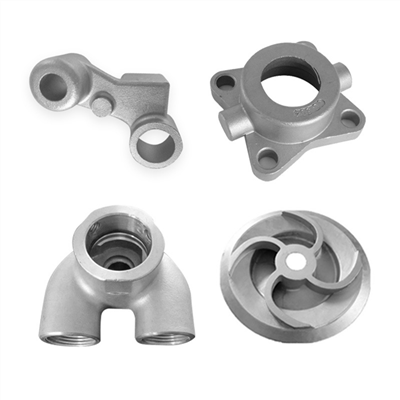
At the end of the day, there’s no one-size-fits-all answer. The best choice depends on your part’s design, required performance, volume, budget, and timeline. If you’re still not sure which process is right for your project, or you need a quote for either precision forging or precision machined parts, don’t hesitate to reach out to our team to discuss your needs. We can help you evaluate both options, test prototypes, and find the solution that balances quality, cost, and delivery for your project.
Transmission Parts References
- Degarmo, E. P., Black, J. T., & Kohser, R. A. (2011). Materials and Processes in Manufacturing (11th ed.). Wiley.
- Groover, M. P. (2020). Fundamentals of Modern Manufacturing: Materials, Processes, and Systems (7th ed.). Wiley.
- ASTM International. (2018). Standard Guide for Forging Process Selection and Capability. ASTM E2268-18.
- American Machinist. (2022). “Precision Machining vs. Forging: Key Differences for Part Design.” Accessible industry manufacturing reports.
Taizhou Liuhuan Machinery Co., Ltd.
As one of the most professional precision machined parts manufacturers and suppliers in China, we’re featured by quality products and good service. Please rest assured to buy customized precision machined parts made in China here from our factory. For quotation, contact us now.
Address: Xinyuan Industrial Zone, Damaiyu Street, Yuhuan City, Zhejiang Province,China
E-mail: tzlhmachining@gmail.com
WebSite: https://www.tzlhmachining.com/
