Hey there, if you’ve ever dug into building or renovating a plumbing project, you’ve probably stumbled on all those weirdly named pipe fittings that make the whole system work. Today, let’s talk about one we see all the time in our PP-R pipes and fittings line—this thing called a PP-R male adapter. I get it, pipe terms can sound like a secret code sometimes, so I’m gonna break this down like I’m chatting with a buddy who’s new to the whole plumbing game, no fancy jargon overload. PP-R Pipes and Fittings
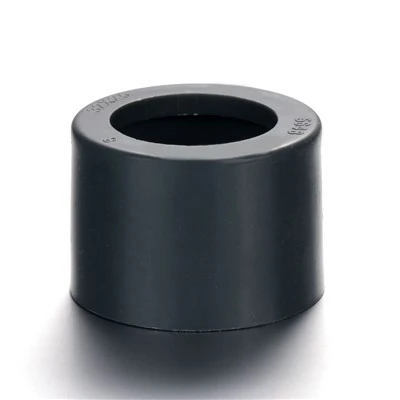
First off, let’s start with the basics: PP-R stands for Polypropylene Random Copolymer. It’s this super popular plastic material used for plumbing because it’s cheap, durable, doesn’t rust, and works great with hot and cold water (perfect for everything from shower lines to kitchen sinks). Now, an adapter, in general, is just a fitting that connects two different parts of a pipe system, right? But a male adapter? That’s where the “male” part comes in—because unlike female parts which have a hollow opening (like a nut with a hole in the middle), male adapters have threads sticking out, kinda like the screw end on a lightbulb. Makes sense, yeah?
So what does a PP-R male adapter actually do, specifically? Let’s set a scene. Suppose you’re installing a new water heater. Most water heaters, or old metal pipes you’re replacing, have male threads made of metal. But your new PP-R pipes are plain, no threads—they’re just smooth cut ends that you weld together with heat. A PP-R male adapter bridges that gap. One end of the adapter is a smooth PP-R end, which you heat up and push onto your PP-R pipe (that’s the fusion method, the standard way to join PP-R parts, super reliable). The other end has those external male threads, so you can screw it right onto that metal water heater or old pipe fitting without needing any extra connectors. No more weird, leak-prone joints, no more mixing different materials in a bad way (which can cause corrosion over time, by the way).
Wait, let’s make sure I’m not mixing it up with other adapters. There’s also female PP-R adapters, obviously, which have internal threads. But male adapters are for when you need to connect a PP-R pipe to something that has male threads—like a hose bib, a shower head arm, a valve with male ends, even a washing machine inlet. I see so many people grab the wrong one and end up having to run to the hardware store last minute, so this quick tip: always check what kind of threads your other connection has. If it’s sticking out, you need a male adapter. If it’s a hole, go female. Simple as that.
Now, why PP-R specifically for these adapters, not just any plastic? Because PP-R is compatible with the rest of your PP-R system. When you fuse the smooth end of the male adapter to your PP-R pipe, they become one solid piece—no glue, no tape, just molecular bonding. That means way less chance of leaks down the line. Other plastics might not fuse as well, or could react with the water or the heat, leading to breakdowns. PP-R can handle temperatures up to around 140°F (for hot water lines) and pressures that are standard for residential plumbing, so these adapters hold up as long as the rest of your PP-R pipes do—like decades, basically. I’ve been in this PP-R pipes and fittings game for 8 years now, and we haven’t had a single complaint about PP-R male adapters failing due to material quality.
Let’s talk about how they’re made, quick, because it matters. Most good PP-R male adapters are injection-molded, right? So the molten PP-R is poured into a mold that has the exact shape: smooth end on one side, precise external threads on the other. The threads have to be super uniform, because if they’re mis-cut, screwing them onto a metal fitting will cross-thread, stripping the threads and causing leaks. That’s why at our company, we use high-grade raw PP-R resin, not recycled stuff (recycled plastic can have impurities that make the threads weak or the material brittle). We test every batch of adapters for thread integrity and pressure resistance, so our customers don’t have to worry about that.
Common uses, just to give you a sense of how versatile these things are. Let’s say you’re doing a bathroom renovation: you’ve got PP-R lines running to the wall where your shower valve goes. The shower valve has male inlet threads, so you attach a PP-R male adapter to the end of your wall pipe, then screw the valve right onto that. Done, no extra parts. Or outdoor: if you’re adding a new hose bib to your backyard, the bib has male threads, so you connect a male adapter to your underground PP-R line coming up out of the ground, then screw the hose bib on. That’s way easier than trying to connect a female adapter and a separate threaded piece—fewer joints = less potential for leaks.
Wait, a lot of new plumbers or DIYers ask me: can I use a male adapter somewhere else? Like, connecting two PP-R pipes? No, not usually. Because PP-R pipes are connected via fusion, so you just use a plain PP-R coupling for that. Male adapters are only for connecting PP-R to something with external threads—metal pipes, valves, fixtures. If you try to use a male adapter to connect two PP-R pipes, you’re wasting money and adding an extra joint that doesn’t need to be there. That’s another quick tip: only use a male adapter when you’re linking two different types of pipe ends (PP-R smooth end to male threaded end).
What about maintenance? PP-R male adapters are basically maintenance-free. They don’t rust, they don’t corrode like metal adapters do (which is a big one—metal adapters can start rusting inside, which gets into your water, or outside, making them hard to unscrew later). Since they’re plastic, they’re also lighter than metal, so they’re easier to handle when you’re up on a ladder or working in a tight space. You don’t have to worry about them being too heavy and pulling on the pipe joints.
Now, let’s clear up a common myth. Some people think “male adapter” means it’s only for male plumbing parts, but that’s not the case at all. It’s just a naming convention based on the threads. The male part has the threads sticking out, the female has them inside—it’s not a reflection of anything else. I’ve seen so many people get tripped up on that terminology, so I always make sure to explain it like that to customers, even the ones who’ve been plumbing for 20 years.
If you’re working on a project right now—whether it’s a small kitchen remodel or a whole house plumbing install, or even a commercial building—getting the right fittings is half the battle. PP-R male adapters might seem like a tiny, unimportant part, but pick the wrong one, and you could end up with a leak that ruins your new floor, or a pipe that bursts in the middle of winter. That’s why we focus on making these adapters with the same quality as all our PP-R pipes and fittings—no cutting corners, no cheap materials.
Speaking of which, if you’re a contractor, a plumber, or even a DIYer with a big project coming up, we’ve got a full line of PP-R male adapters in all standard sizes—1/2 inch, 3/4 inch, 1 inch, whatever you need. We also carry different thread types to fit standard US plumbing fixtures, so you don’t have to worry about them not matching up. We can give you bulk pricing for large projects, and our team is always here to answer questions—like “do I need a male or female adapter for this water heater?” or “what size adapter do I need for my hose bib?”
You don’t have to guess when it comes to your plumbing fittings. A PP-R male adapter is a simple, reliable piece that makes your entire system work smoothly, connecting your modern PP-R pipes to all those existing fixtures and valves you already have. It’s the unsung hero of plumbing, honestly—most people don’t even notice them until there’s a problem, but when you use the right one from a trusted supplier, you won’t have to worry about problems at all.
If you’re ready to stock up on PP-R pipes, fittings, including our high-quality PP-R male adapters, or if you just have questions about what you need for your project, hit us up to connect and chat through your requirements. No pressure, just honest advice and quality products for all your plumbing needs.
PVC Pipe & Fittings REFERENCES
- Plastics Pipe Institute. (2021). PP-R (Polypropylene Random Copolymer) Piping Systems: Design and Installation Guide.
- International Plumbing Code. (2022). Chapter 6: piping and plumbing systems, section 604.2: plastic pipe and fittings compatibility.
- Schuchardt, U., & Berghaus, W. (2019). Polymer Piping Systems for Domestic Water Supply: Material Properties and Application Standards. Journal of Applied Polymer Science, 136(15), 47218.
Shanxi Kaisheng Plastic Co., Ltd.
As one of the most professional pp-r pipes and fittings manufacturers and suppliers in China, we’re featured by quality products and good price. Please rest assured to buy customized pp-r pipes and fittings made in China here from our factory. Welcome to contact us for quotation.
Address: No.72, Area S, Gate 1, Haohai Wumart, Fendong Street, Xiaodian District, Taiyuan City, Shanxi Province
E-mail: sxkssj8@163.com
WebSite: https://www.sx-kssj.com/
