If you’ve ever worked in industries like oil and gas, petrochemicals, power generation, or even large-scale water treatment, chances are you’ve heard someone throw around the term “trunnion ball valve.” But if you’re new to the game, or just trying to figure out exactly what makes a top entry trunnion ball valve different from every other valve out there, you’re in the right place. As a forged steel trunnion ball valve supplier, I get questions about this specific type of valve all the time, and it’s way more than just a fancy name for a standard ball valve. Let me break this down in plain speak—no overly technical jargon, I promise. Forged Steel Trunnion Ball Valve
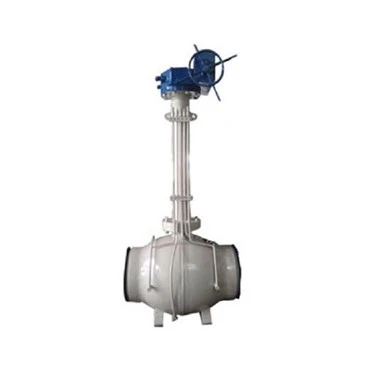
First, let’s start with the basics: what’s a trunnion ball valve, period? If you know what a basic ball valve looks like, imagine a hollow, perforated ball inside a pipe that you turn 90 degrees to open or close flow. That’s the core. But a standard floating ball valve (the kind you might find under your sink) has a ball that’s held in place just by the pressure of the fluid flowing through it. Push comes to shove, that ball can shift a little, right? Not ideal for high-pressure, high-temperature, or really demanding applications. That’s where trunnion comes in. Trunnion refers to two small support pins at the top and bottom of the ball that hold it firmly in position, like a pivot. These pins (the trunnions) take the brunt of the pressure from the fluid, not the valve’s seat seals, which means trunnion valves can handle way harsher conditions than floating ball valves. Makes sense so far, yeah?
Now, the key part here is “top entry.” That’s where this valve really stands out for industrial users. Let’s think about how most valves are assembled: side entry valves, for example, come in pieces that you bolt together along the sides of the valve body, so to get to the internal parts (like the ball or seats), you have to cut the pipe or pull the whole valve out of the line first. That’s a huge hassle, especially if you’re working on a pipeline that’s already installed. If you have to shut down an entire section of a refinery or a power plant just to fix a valve, that’s lost time, lost money, and total chaos for the maintenance team.
Top entry trunnion ball valves? Their whole design lets you pull the entire internal working parts (the ball, trunnions, seats, stem) out through the top of the valve body—without removing the valve from the pipe, and without cutting any pipes. That’s a game-changer. I’ve had clients tell me that switching to top entry trunnion valves cut their maintenance time on valve-related repairs by 70% or more. Instead of a 12-hour shutdown to replace worn seats, it’s a 2-hour job from the top. No need for heavy equipment to lift the whole valve out, no need to re-weld or re-pressure test the line afterward. It’s just smart design for anyone who values uptime.
Wait, let’s make sure we’re not mixing up “top entry” with other types. There’s also top side entry, but no—this is full top entry, meaning the entire internal cartridge is accessed through a single opening at the top of the valve. And since we’re forged steel trunnion ball valve specialists, let’s talk about the material here too. Forged steel isn’t the same as cast steel. Forged parts are made by heating a solid steel billet and hammering or pressing it into shape, which makes the molecular structure way denser and more uniform than cast steel, which is poured into a mold and can have tiny gaps or weak spots. That’s critical for valves that work at 10,000 psi or more, or temperatures that can go from -40°F to 1,000°F. Forged steel trunnion valves just can’t be beat for strength and durability in extreme environments.
Let’s get into what makes a top entry trunnion ball valve work the way it does, because there’s more to it than just the top access. The trunnion pins (again, the ones holding the ball) are connected to the valve body, so when fluid pushes against the ball (like when you’re dealing with upstream pressure), that force is transferred down through the trunnions to the body, not pushing the ball against the seat seals. That means the seat seals don’t get crushed or worn out from constant pressure, which extends their life and makes the valve way more leak-tight. Speaking of leaks—industrial standards like API 6D or ASME B16.34 require trunnion valves to have zero external leaks, and top entry designs actually make it easier to maintain that leak-tightness because you can easily inspect and adjust the seat torque from the top, without pulling the whole valve out.
Another big plus for top entry trunnion ball valves: they’re versatile. You can get them in sizes from 2 inches up to like 50 inches, right? And they work with pretty much any fluid—crude oil, natural gas, corrosive chemicals, steam, even abrasive slurries. I’ve supplied valves for everything from offshore drilling rigs to municipal power plants to chemical processing facilities. The key is matching the valve’s pressure rating, material, and trim (the internal parts that touch the fluid) to the specific application, which is why a good supplier will ask you questions about your operating conditions before pushing a product.
Wait, let’s address a common misconception: some people think top entry valves are more expensive than side entry, or that they’re harder to manufacture. And yeah, the machining is more precise, and the access mechanism adds a little to the upfront cost. But when you factor in the maintenance savings, the longer lifespan, and the lack of downtime from removing and reinstalling the valve, it’s actually more cost-effective in the long run. I always tell new clients: buy once, cry once. A cheap side entry valve that needs full replacement every 5 years is way more expensive than a top entry trunnion valve that only needs seat replacements every 15 years, and you can do those seat swaps in an hour.
Let’s talk about real-world use cases to make this concrete. Take an oil refinery’s crude oil feed line, which runs at high pressure and carries abrasive, high-viscosity fluid. A top entry trunnion ball valve there needs to open and close quickly, seal tight to prevent leaks (which are a safety hazard and an environmental risk), and be easy to maintain because downtime costs the refinery thousands of dollars an hour. That’s exactly what this valve is built for. Or take a combined cycle power plant’s steam line, where temperatures and pressures swing wildly from startup to shutdown. Trunnion’s pressure support keeps the ball in place during those swings, and top entry lets maintenance teams adjust or replace parts without taking the whole line offline. Even in a mid-sized chemical plant that deals with corrosive acids, a forged steel top entry trunnion valve with a corrosion-resistant trim will outlast a standard valve by years.
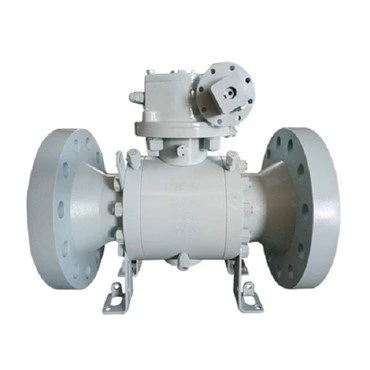
What about the parts that make up a typical top entry trunnion ball valve? Let’s list them out so you have a clear picture: first, the forged steel body (that’s the main part that connects to the pipe flanges). Then the two trunnion pins (top and bottom) that support the ball. The ball itself, usually made of forged steel with a hard coating or plated for wear resistance. The seat rings, which are soft (like PTFE) or metal, depending on the application, that seal against the ball. The stem that connects the ball to the actuator or handwheel outside the valve body. And the top entry cover, which is the bolted plate you remove to pull the internal cartridge out. All of these parts are precision-machined to tight tolerances, which is why quality matters so much here. As a supplier, I’ve seen cheap knockoff trunnion valves where the trunnions are too thin, or the top cover isn’t sealed properly, leading to leaks mid-operation. That’s not something you want when you’re working in a high-pressure line.
Another point: fire safety. A lot of top entry trunnion ball valves are designed to meet fire-safe standards, like API 607 or BS 6755. That means if there’s a fire, the valve’s seals won’t melt completely, preventing catastrophic leaks or explosions. That’s non-negotiable for industries like oil and gas, where fire risk is constant. The trunnion design helps with fire safety too, because the ball is held firmly in place, so it won’t warp or shift when exposed to high heat.
Wait, let’s circle back to the access feature because that’s the top reason industrial teams choose these valves. I once worked with a maintenance supervisor at a natural gas plant who had a side entry valve that failed. They had to shut down a 10-mile pipeline, cut the pipe out, rent a crane to lift the 2-ton valve out, replace the internal parts, weld the pipe back together, pressure test the line, and get everything back online. That took 3 days. If they’d had a top entry trunnion valve, they would have just pulled the top cover, pulled the cartridge out, swapped in a pre-built spare cartridge (I always recommend clients keep a spare on hand), put everything back, and been back up and running in 4 hours. No pipeline shutdown, no crane, no welding, no lost revenue. That’s the kind of value that doesn’t show up on the initial quote, but makes a huge difference.
Now, if you’re in the market for a top entry trunnion ball valve, there are a few things to look for. First, confirm the material is actually forged steel, not cast. Ask for material test reports—any reputable supplier will have those. Second, check the industry certifications: API 6D, ASME B16.34, API 607 for fire safety, whatever applies to your use case. Third, make sure the valve is sized correctly for your pipe and operating pressure. A valve that’s too small will cause flow restriction, and one that’s too big will be more expensive and slower to operate. Fourth, think about the trim (the internal parts that touch the fluid) – if you’re dealing with corrosive materials, you might need a trim made of stainless steel or alloy 20, for example. And finally, work with a supplier who actually knows their stuff, not just someone who buys valves from a middleman. As a forged steel trunnion ball valve supplier, I don’t just sell valves—I help my clients pick the right one for their specific job, because I’ve seen what happens when you get the wrong valve for the job.
I get it, if you’re not familiar with industrial valves, this can feel like a lot. But at the end of the day, a top entry trunnion ball valve isn’t just a component—it’s a tool that keeps your operations running safely, efficiently, and without unexpected downtime. I’ve been working with forged steel trunnion ball valves for over a decade, and I’ve seen first-hand how the right valve can save a company hundreds of thousands of dollars in maintenance and lost revenue. Whether you’re working on a new pipeline, upgrading an existing plant, or just replacing a failed valve, choosing the right top entry trunnion ball valve is worth taking the time to get right.
If you’re ready to talk about your specific application, or just have more questions about top entry trunnion ball valves, feel free to reach out. I’m here to help you figure out exactly what you need, no sales pitch, no pressure. Just real talk about valves that work for your business.
Pneumatic Ball Valve References
API Specification 6D, Pipeline Valves, 22nd Edition, American Petroleum Institute, 2020.
ASME B16.34, Valves – Flanged, Threaded, and Welding End, American Society of Mechanical Engineers, 2021.
API Standard 607, Fire Test for Soft-Seated Valves, 8th Edition, American Petroleum Institute, 2017.
Ball Valve Design and Selection Guide, Hydraulic Institute, 2019.
Zhejiang Bergamo Technology Co., Ltd.
As one of the most professional forged steel trunnion ball valve manufacturers and suppliers in China, our products have good reputation in the market. Please feel free to wholesale durable forged steel trunnion ball valve for sale here from our factory. Quality products and reasonable price are available.
Address: No.5 workshop, No.807 Jiulong Street, Bihu Town, Liandu District, Lishui, Zhejiang 323000 People’s Republic of China
E-mail: sales@bjm-valve.com
WebSite: https://www.bjmvalve.com/
