When I first started out as a bimetal side plates supplier, I’d get the same question from every equipment operator, maintenance manager, and even parts salesman who reached out: “Why would I pay more for bimetal when coated metal plates are half the price?” It’s a fair question. For decades, coated plates were the go-to choice for protecting industrial equipment from wear, and they’re still sold everywhere from small parts distributors to big box industrial supply stores. But over the past 15 years, as I’ve worked with hundreds of customers across mining, agriculture, material handling, and construction, I’ve watched bimetal side plates outperform coated options in nearly every real-world application. The difference isn’t just about cost upfront—it’s about total cost of ownership, and that’s where most buyers miss the mark when they only compare price tags. Bimetal Side Plates
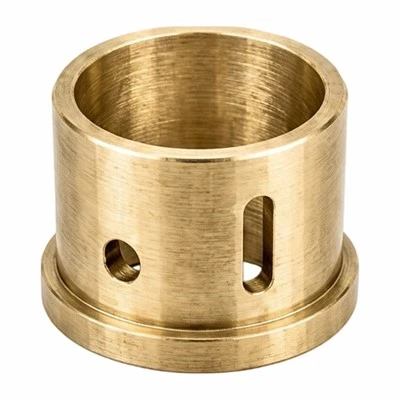
Let’s start with the basics, because a lot of people don’t fully grasp what separates these two products. Coated metal plates are usually just a standard steel base (like mild carbon steel) with a thin layer of wear-resistant material sprayed, welded, or bonded to the surface. That coating might be chrome, tungsten carbide, or even a polymer-based composite that’s applied to add hardness. Bimetal side plates, on the other hand, are made by metallurgically bonding two different metals at the molecular level: a durable, low-alloy steel for the base (to add structural strength and prevent bending or cracking under load) and a thick layer of hardfacing material—usually chromium carbide or a similar alloy—fused directly to the working surface. It’s not a surface coating; it’s a two-metal unit that’s engineered to work as one, not two separate parts. That difference in construction sounds small, but it’s the root of every performance gap between the two.
Take wear resistance, the biggest factor for anyone buying wear plates. I’ve had a customer in the coal mining industry who runs 12 underground conveyor systems. For years, he used coated side plates, and his teams would replace them every 6 weeks on average. The coated plates’ thin coating would start to chip or wear through within a few weeks of installation, especially when handling rough coal rock and constant impact from moving material. Last year, he switched to our bimetal side plates as a test. Now, he’s only replacing those plates once every 20 weeks. That’s almost a 3x increase in service life, and it all comes down to how the wear material is applied. A coated layer might be 0.5mm to 2mm thick, but it’s just sitting on top of the base steel. It can’t handle repeated impact or high abrasion without delaminating—small cracks will form, then spread, and the whole coating will peel off, leaving the soft base steel to wear away in a hurry. Bimetal’s hardfacing layer, though, is often 5mm to 10mm thick, and because it’s metallurgically bonded to the base metal, it doesn’t chip or peel easily. When it does wear, it wears evenly across the surface, not in uneven patches that leave gaps in protection.
Impact resistance is another area where coated plates fall short. Last summer, I got a call from a construction company that uses side plates on their asphalt crushing equipment. They’d been using coated plates, and whenever they’d run over a chunk of reinforced concrete or a large rock, the coated surface would crack and break off entirely. They’d have to shut down the crusher, replace the plates, and lose a full day of production—costing them thousands in downtime each time. When they tested our bimetal side plates, they reported no cracking after 3 months of heavy impact loading. Why? Coated materials are often brittle. They’re designed for abrasion, not sudden force, so a hard impact will shatter the thin layer. Bimetal’s combination of a tough base steel and a hardfacing layer that’s integrated with the base gives it flexibility. The two metals move together a little, instead of acting like two separate materials that fight against each other. That flexibility prevents cracks from forming, even when the equipment takes a direct hit.
I know what you’re thinking: “But bimetal costs more upfront. Is that worth it?” It’s the question every customer asks, and it’s where I have to be clear: the upfront cost is higher, but the total cost over time is lower. Let’s use that same coal mining customer as an example. A set of coated side plates for his conveyor system costs around $1,200. He replaces them every 6 weeks, so over a year, that’s 8 replacements, or $9,600. A set of our bimetal side plates costs $2,800—more than double the upfront price—but he only replaces them twice a year, so that’s $5,600 annually. That’s a $4,000 savings every year, plus he eliminates the labor cost of replacing the plates. His maintenance teams used to spend 16 hours every 6 weeks removing and installing coated plates; now they spend that time on other, more critical tasks around the mine. When you add in downtime costs—each replacement used to shut down a conveyor for 2 hours, costing $500 an hour in lost production—that’s another $800 every 6 weeks, or $6,400 a year. All told, the coated plates were costing him $16,000 a year, vs. $5,600 for bimetal. The math is undeniable, but a lot of buyers fixate on the upfront price instead of looking at the full picture.
There are other hidden benefits too. Bimetal side plates are more uniform in their composition, which means less variation in performance across every plate we make. With coated plates, even the best ones have inconsistencies in the coating thickness—one plate might have a thicker layer than another, which means it will wear faster. Bimetal’s hardfacing layer is applied uniformly during manufacturing, so every plate has the same level of wear protection. That’s especially important for large pieces of equipment, like bulldozer blades or excavator side plates, where one weak point can lead to a whole component failing prematurely.
I also want to be honest here: coated plates aren’t useless. There are applications where they make sense. If you’re using equipment for light duty, like moving dry, non-abrasive materials (say, flour or loose plastic pellets) or using the equipment only a few hours a week, a coated plate might be enough. If you’re working in an environment with very low impact—like a warehouse conveyor system that never handles large, heavy objects—you might not need the extra thickness and strength of bimetal. But for most industrial applications that deal with high abrasion, heavy impact, or continuous use, bimetal is the better long-term choice.
I’ve seen too many customers go with coated plates to save a few dollars upfront, only to end up calling me a few months later frustrated with replacements, downtime, and rising labor costs. That’s why, as a bimetal side plates supplier, I don’t push bimetal on every single customer. I take the time to ask about their application: what material do they move? How heavy is their load? How often do they run their equipment? What’s their downtime tolerance? If a coated plate is the right fit, I’ll tell them that. But 9 times out of 10, after I walk them through the numbers and explain the performance differences, they’re willing to pay the extra upfront cost to save money and hassle down the line.

At the end of the day, the goal of any equipment owner is to keep their machines running as long as possible without unnecessary costs. Coated plates seem like a bargain at first, but they’re a short-term solution. Bimetal side plates are an investment that pays off in longer service life, less downtime, lower labor costs, and fewer headaches for maintenance teams. If you’re tired of replacing worn side plates every few weeks and dealing with unexpected breakdowns, I’d encourage you to reach out to discuss your specific needs. We can work with you to find the right bimetal solution tailored to your equipment and workload, so you can stop worrying about wear parts and focus on growing your business.
Bimetal Strips & Sheets References
- ASM International. (2007). Bimetallic Components for Wear Applications. ASM Handbook, Volume 1: Properties and Selection: Irons, Steels, and High-Performance Alloys.
- Davis, J.R. (2001). Surface Engineering for Corrosion and Wear Resistance. ASM International.
- mining-technology.com. (2022). “Wear Part Selection: Bimetal vs. Coated Plates in Underground Mining.” Industry Analysis Report.
- NPTEL. (2019). Manufacturing Processes for Bimetallic Wear Components. Indian Institute of Technology, Kharagpur. Course on Wear and Corrosion Engineering.
Qingzhou Baiyun Anti-friction Products Co., Ltd.
With abundant experience, we are one of the most professional bimetal side plates manufacturers and suppliers in China. Please rest assured to wholesale customized bimetal side plates at competitive price from our factory. Welcome to contact us for quotation.
Address: Linglongshan North Road (south of the railway bridge), Economic Development Zone, Qingzhou City, Weifang City, Shandong Province
E-mail: byantifriction@gmail.com
WebSite: https://www.baiyunbimetal.com/
