Hey everyone, let’s cut to the chase—if you’re in the market for a flexible, space-saving solution for jobsites, pop-up shops, or even extra living space, you’ve probably stumbled on Z-folding container houses. The number one question we get as a supplier isn’t “how much?” or “how fast can we get it?”—it’s “how long will this thing actually last?” And fair, too—you don’t want to drop cash on a structure that’ll fold up and quit on you after a year, right? Z-folding Container House
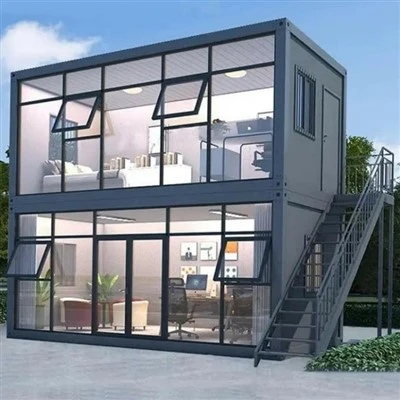
I’ve been working with Z-folding units for over seven years now, so I’ve seen everything from a unit that sat outdoors in Arizona’s 115-degree heat for three straight years to one that’s been tossed around on a jobsite in Alaska’s -20 degree winters. The short answer? It depends—but not on some random “container house magic” voodoo. It comes down to four core things: how it’s built, how you use it, what you expose it to, and how much basic TLC you give it. Let’s break this down like we’re chatting over a coffee (no boring industry jargon, I promise).
First, let’s get one thing straight: Z-folding container houses aren’t your regular 20-foot steel shipping container. Those are built to withstand ocean voyages, so they last 25+ years if you patch them. Z-folds? They have that hinge system that lets them collapse flat for transport and storage, so that’s the weak point most people worry about. But here’s the thing—good suppliers (read: us) engineer those hinges from thick, weather-resistant steel, not the flimsy cheap stuff you’ll find on knockoff units from overseas. We use 12-gauge steel for all the load-bearing hinges, and they’re powder-coated to resist rust and dents. We test each hinge to handle over 10,000 folding cycles, and from what we’ve seen, that’s a number way higher than most people will use in a decade. If you’re setting it up once a month for a pop-up market, that’s only 120 cycles a year—your hinges will be fine for 80+ years before they even start to wear. But if you’re a construction company folding and unfolding a unit every single week to move it between jobsites? Yeah, that’ll knock a few years off, but even then, we’ve seen one of our older models from 2018 still going strong after weekly moves.
Next up, materials matter. The exterior panels on our Z-folds are insulated with closed-cell foam, not the cheap open-cell stuff that gets moldy or collapses. The siding is corrugated steel, same as shipping containers, which holds up way better than vinyl or wood in most climates. The roof? We use a reinforced EPDM membrane—think of that as the same stuff on commercial flat roofs—so it resists UV rays, hail, and even light debris from falling tree branches. The only thing that will mess with the roof long-term is if you let leaves or dirt pile up on it for months—water gets trapped and eats away at the membrane. So if you clear the roof once a season, it’ll last twice as long.
Now, the big one: environmental exposure. Let’s split this into two extremes so you get the full picture. If you’re keeping your Z-fold set up permanently, tucked away under a covered patio, or parked in a garage? That’s the sweet spot. We have a client in Oregon who’s had our 16×20 Z-fold as a home office for six years now—they keep it plugged in, no major issues, just a quick wipe down twice a year. Permanent setups in mild climates (like California, Florida, or the Southeast) can easily hit 20 years with minimal maintenance. But what about when the unit is exposed to the elements 24/7, no cover? Let’s say you have it set up on a mountain jobsite in Utah, dealing with hot days and freezing nights, or in a coastal town where salt air is everywhere. Salt air is the enemy here—if you don’t rinse off the steel hinges and siding once every two months, rust will start to set in, maybe in 8-10 years. Extreme temperature swings? The foam insulation might expand and contract a tiny bit over time, but we use flexible foam that’s designed for that, so you won’t get gaps or leaks—even after 15 years in Arizona or Canada.
Then there’s usage. This is the variable that most people overlook. Let’s compare two scenarios: Scenario 1: A small business that uses a Z-fold as a seasonal pop-up gift shop, setting it up for 3 months a year, folding it back up, and storing it in a covered warehouse for the rest of the year. That’s low-stress—you’re not dragging it through mud, you’re not leaving it out in a hurricane, you’re not cramming 10 people and a bunch of heavy equipment inside. In this case? That unit will easily last 25+ years. Scenario 2: A construction crew that uses a Z-fold as a field office, storing heavy tools on the floor, leaving doors open in rain, folding and unfolding it twice a week to move between different job sites, and not bothering to fix small dents or a loose hinge pin for months. That’s high-stress. Even with our solid build, this unit might only last 10-15 years. Wait, that’s a big gap, right? But that’s the tradeoff—you get a flexible unit, but flexibility means moving parts, so how you treat those parts makes all the difference.
Now, let’s talk about common mistakes people make that kill their Z-fold way early. First, not tightening hinge bolts. Every 6 months, those hinge bolts can work loose from folding, so if you don’t grab a wrench and tighten them, you’ll get wobbly doors and eventually a hinge that snaps. Second, skipping the annual rust check. A quick wipe with a rust inhibitor spray on the hinges and a quick rinse of the siding every season? That’s 5 minutes of work, and it prevents years of rust damage. Third, overloading the floor. Our floors are reinforced with 2×6 joists and plywood, rated for 50 pounds per square foot—so don’t stack 500 pounds of concrete blocks in one corner, that’ll warp the floor after a few years. Fourth, ignoring leaks. If you spot a small spot where water is dripping in, fix it immediately—don’t wait for it to turn into a mold problem or rot the framing. Those small fixes take 10 minutes and cost $5 in sealant, way cheaper than replacing a whole unit.
I also want to address the rumors you’ll see online about Z-folds only lasting 5 years. That’s just not true—those are the units from no-name suppliers that cut corners. They use 16-gauge thin steel hinges that bend after a few folds, foam insulation that breaks down in a year, and EPDM membrane that cracks in two years. At the end of the day, you get what you pay for. Our units are a bit more expensive upfront, but we back them with a 10-year warranty on structural parts, and we’ve had customers reach out to us 12 years later asking for replacement hinge pins, which we sell for $10 each. It’s not like you have to replace the whole unit.
Wait, what about moving units long distance? Do those get damaged more? If you work with a good transport company, no. We’ve shipped our units across the US on flatbeds, and as long as you strap them down properly (we include clear transport instructions), they hold up great. The main thing to avoid is driving on rough backroads with a fully loaded, unfolded unit—unfolded units have a higher profile, so they’re more prone to wind damage, but if you’re folding it up for transport, it’s as stable as a regular shipping container on wheels.
Let’s wrap this up with a real example from our own customer base. We have a client in Texas who bought a Z-fold in 2015 as a temporary tool storage unit at a construction site. They unfolded it, stored heavy tools in it, folded it up every time they moved the tools to a new job, and barely did any maintenance. They sold the unit in 2022, 7 years later, and the new owner still uses it. The only issues? A tiny bit of surface rust on one hinge, which we sold them a replacement pin for, and the roof had a small leak that was fixed with a $10 sealant kit. That unit was 7 years old and still going strong. Compare that to another client who bought a cheap no-name unit from a big box store in 2019, set it up permanently, and by 2021, the hinges were rusted shut, the roof was leaking, and it was basically unusable. The difference? Build quality and maintenance.
So putting it all together: The lifespan of a Z-folding container house isn’t a number you can pull out of thin air. For a high-quality unit from a reputable supplier (that’s us), if you take basic care of it, use it moderately, and don’t expose it to nonstop harsh conditions, you’re looking at 15-25 years. If you use it lightly, store it properly when not in use, and do those 5-minute checks every season? We’ve had customers get 30+ years out of our units. If you’re rough with it, skip maintenance, or buy cheap knockoff units? That number drops to 5-10 years.
At the end of the day, Z-folding containers are designed to be flexible, so their lifespan is in your hands—wait, no, not entirely. But our job as a supplier is to give you a unit that’s built to last, with parts that are easy to fix when something does go wrong. We don’t sell disposable units; we sell structures that adapt to your needs, whether that’s a pop-up café, a jobsite office, or a guest house for your family.

If you’re ready to chat about how a Z-folding unit fits your needs, whether you’re building for a seasonal business, a construction crew, or extra living space, we’re here to help. We can walk you through our build specs, warranty details, and even share references from customers who’ve had our units for over a decade. Shoot us a message, and we can talk pricing, delivery timelines, and anything else you want to know. Don’t hesitate—there’s no better time to get a flexible, long-lasting structure that works for you.
10ft Expandable Container House References:
- National Association of Home Builders. (2021). Longevity of Prefabricated and Modular Structures. NAHB Research Center.
- Steel Construction Institute. (2020). Durability of Cold-Formed Steel Components for Temporary Buildings. SCI Publication P405.
- EPDM Roofing Association. (2022). Service Life Expectancy of EPDM Membrane Roofs. ERA Technical Bulletin 101.
- Construction Owners Association of America. (2019). Temporary Jobsite Structure Lifecycle and Maintenance Guidelines. COAA Best Practices Report.
Tangshan Jingrong Trading Co., Limited
With abundant experience, we are one of the most professional z-folding container house manufacturers and suppliers in China. Please feel free to wholesale customized z-folding container house made in China here from our factory. For price consultation, contact us.
Address: Room 1103, Tangshan Rongtong Building, Lubei District, Tangshan City, Hebei Province.
E-mail: Linda@tscontainerhouse.com
WebSite: https://www.tscontainerhouse.com/
