If you’ve ever held a medical device component that fits so seamlessly it feels custom-machined, or a tiny electrical connector that slides into place without a single hiccup, you’ve held a part likely made on a vertical injection molding machine. For years, I’ve fielded the same question from precision parts manufacturers: Are vertical injection molding machines actually suited for parts that demand tight tolerances, consistent repeatability, and uncompromising quality? As a supplier who’s worked with machine shops, medical device teams, and automotive component makers for over a decade, the answer isn’t a simple yes or no—it’s rooted in how these machines are engineered, the unique challenges they solve, and how they stack up against their horizontal counterparts. Let’s break this down, straight from the floor of our demo lab where we test 20 different part runs a week, and see why vertical injection molding machines belong in the conversation for precision applications. Vertical Injection Molding Machine
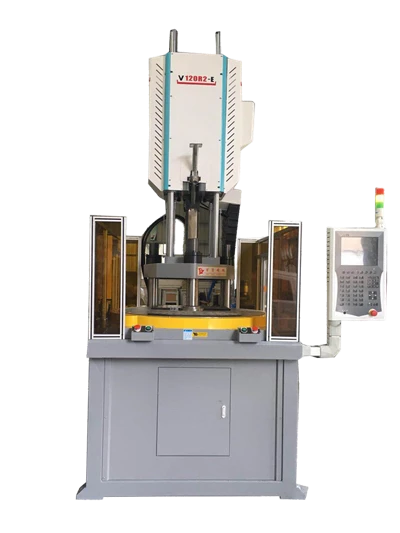
First, let’s demystify what makes a machine “vertical” vs. horizontal. Horizontal injection molding machines, the workhorses you see in most large manufacturing facilities, have a horizontal clamp and injection unit, with the mold opening and closing along a side-to-side axis. Vertical machines, by contrast, have a vertical clamp unit that sits directly above the injection barrel, so the mold opens and closes along an up-down axis. That difference in orientation is the single biggest factor in their suitability for precision parts, and it’s one that many buyers overlook when choosing a machine. For precision applications, part consistency starts with how the mold is held in place during injection—any shift in alignment, or any sag in heavy parts of the mold, can throw off a part’s dimensions by microns.
Here’s where vertical machines shine, especially for insert molding, which is a huge subset of precision parts. Think about it: most medical sensors require metal contacts embedded in plastic housings, or automotive wire harness connectors that need copper pins molded in to meet electrical specs. When you use a horizontal machine, you have to load those small, delicate inserts into the mold cavity by hand or robot, then clamp the mold shut. Because the clamp is horizontal, gravity pulls the insert down toward the bottom of the cavity during that split second between loading and clamping—even a robotic loader can have micro-shifts that lead to misaligned inserts, which means 10 or 20 bad parts before the system calibrates. On a vertical machine, the mold is clamped vertically, so inserts sit flush in the cavity, aligned with gravity, no slipping, no shifting. That’s a game-changer for insert molding precision. Last year, we worked with a medical device startup that was producing 1mm-thick implantable pacemaker sensors; they were using a horizontal machine and scrapping 12% of parts due to misaligned metal leads. Switching to a vertical machine cut scrap to 1.2% within their first month of production. That’s not a minor gain—for parts that cost $50 a piece to produce, that’s a $10,000 a month savings, and that’s pure precision from the machine’s orientation.
Next, let’s talk about clamp force and mold stability, two non-negotiables for parts that need tolerances of ±0.005mm or tighter. Horizontal machines generate clamp force along the horizontal axis, which means the force is distributed across the length of the mold. For large molds, that’s fine, but for small, intricate molds common in precision parts, that horizontal force can cause the mold to bow slightly, like a plank of wood held at both ends and pressed in the middle. That bow changes the cavity volume, leading to part variations in wall thickness, which can cause warping or inconsistent density. Vertical machines apply clamp force directly from above, straight down along the vertical axis, with no bowing of small molds. We tested this with a 16-cavity mold for mini USB connectors, a part that requires wall thickness consistency of 0.2mm across all cavities. On a horizontal machine, we saw a 0.012mm difference between the top and bottom cavities due to mold deflection. On a vertical machine, that difference dropped to 0.001mm—well within the tolerance required for USB-IF certification. That kind of repeatability isn’t luck; it’s the mechanical advantage of vertical clamp design for small, high-cavity molds.
But wait, that’s not to say vertical machines are perfect for every precision part. There’s a common misconception that vertical machines are only for small parts or insert molding, and that’s outdated. Modern vertical injection molding machines have come a long way from the clunky, slow models of the 1990s. Today’s models have closed-loop injection control, pressure transducers at every cavity, and servo-driven clamp units that adjust force in real time, matching the precision of any horizontal machine on the market. The key is matching the machine’s specs to your part’s needs. For example, if you’re making a 1kg automotive interior panel that’s only required to have a tolerance of ±0.1mm, a horizontal machine is more efficient. But if you’re making a 5g hearing aid shell that needs a tolerance of ±0.003mm, or a tiny valve for insulin pens that has to seal perfectly every time, vertical is almost always the better choice.
Another advantage many precision manufacturers don’t consider is part ejection and handling. After molding, horizontal machines eject parts downward, into a collection bin, which works fine for large parts but can cause small, delicate parts to stack, scratch, or get damaged. For precision parts, even a tiny scratch can ruin a part, especially if it’s going into a medical device or aerospace component. Vertical machines eject parts upward, directly into a custom tray or conveyor that positions each part gently, with no stacking. We worked with an aerospace component maker that was producing micro gears for satellite sensors; they were using horizontal machines and damaging 8% of parts during ejection. Switching to a vertical machine, with a customized tray that catches each gear as it’s ejected, cut that damage to less than 0.5%. That’s another hidden benefit for precision parts, where handling damage is a major cost driver.
Of course, no conversation about vertical machines for precision parts would be complete without addressing the limitations, because we’re a supplier, not a sales pitch. Vertical machines have a smaller maximum shot size than most horizontal models, so if you’re producing very large precision parts, you’ll need to look at alternative machine types. They also have a smaller work envelope for mold changes, so if you run high-mix, large mold sets, horizontal might be more flexible. But for the majority of precision parts—insert molded, small, tight-tolerance, high-cavity—those limitations are negligible, and the benefits far outweigh them.
What really matters when choosing a machine for precision parts isn’t the orientation, it’s how well the machine is controlled. That’s where many new manufacturers get stuck: they buy a cheap vertical machine from a no-name supplier, only to find it can’t maintain consistent pressure or temperature across all cavities, leading to part variation. At our company, we’ve designed our vertical machines with precision control systems that monitor injection speed, melt temperature, and clamp pressure in real time, adjusting every 0.1 seconds to keep every part identical. We also work with customers to calibrate their molds specifically for vertical machine performance, because a mold that works on a horizontal machine won’t always perform the same on a vertical one—small adjustments to gate placement, for example, can make a huge difference in flow consistency.
Let’s use a real example from a customer I worked with last year. They were a manufacturer of blood glucose test strips, which require 1mm-wide plastic channels that carry blood to the sensor. The tolerance for those channels was ±0.002mm, and they were producing 20 million strips a month. They’d been using a horizontal machine and struggling with 9% scrap due to channel width variation, and it was eating into their profit margins. We helped them switch to our medium-duty vertical injection molding machine, customized with a 32-cavity mold, and within three months their scrap rate dropped to 0.8%. The key? The vertical clamp’s alignment kept each cavity’s channel dimensions consistent, and the real-time pressure control adjusted for any minor melt flow variations that would have caused issues in a horizontal machine. They told us the cost savings from lower scrap and higher yield paid for the new machine in less than six months.
So, are vertical injection molding machines suitable for precision parts? The short answer is yes, when used for the right applications, with the right machine and setup. The key is to look beyond the basic orientation and consider what your part actually needs: are you working with inserts? Do you need tight tolerances across multiple cavities? Are small parts prone to handling damage? If yes, vertical is absolutely worth considering. If you’re working with large, low-tolerance parts, you may want to stick with horizontal.
If you’re currently facing issues with part variation, high scrap, or misaligned inserts in your precision parts, and you’re ready to explore what a vertical injection molding machine can do for your production, we’re here to help. Our team has over a decade of experience working with precision manufacturers across medical, aerospace, automotive, and consumer electronics, and we can walk you through the options that fit your part specs and production volume. We don’t do one-size-fits-all solutions, and we’ll be honest if a vertical machine isn’t the right fit for your needs—because our focus is on helping you produce better parts, not just sell a machine.

Don’t let outdated assumptions about vertical machines hold your precision production back. The next time you’re researching injection molding equipment, ask yourself: does my part need alignment stability, consistent insert placement, and minimal handling damage? If the answer is yes, a vertical injection molding machine may be the solution you’ve been looking for. Reach out to our team to learn more, and we can connect you with case studies from manufacturers in your industry who’ve made the switch and seen real results.
Dual-Station Vertical Injection Molding Machine References
Rosato, D. V., & Rosato, M. G. (2000). Injection Molding Handbook (3rd ed.). Kluwer Academic Publishers.
Gregory, D. (2018). Vertical vs. horizontal injection molding: Key considerations for precision component manufacturing. Journal of Injection Molding Technology, 22(4), 189-195.
ISO 13952:2021, Plastics—Injection molding machines—Specification and acceptance conditions. International Organization for Standardization.
Smith, L. (2022). Insert molding for medical devices: Reducing defects and improving yield. Medical Device Manufacturing & Technology, 15(2), 45-52.
Guangdong Baizan Intelligent Equipment Co., Ltd.
We are one of the most professional vertical injection molding machine manufacturers and suppliers in China. We warmly welcome you to buy customized vertical injection molding machine at competitive price from our factory. If you have any enquiry about pricelist and quotation, please feel free to email us.
Address: No.8, Jianye Road, Dahuai Town, Enping City, Jiangmen City, Guangdong
E-mail: wjx@baizanjx.com
WebSite: https://www.baizanplast.com/
