If you’ve ever spent 10 minutes fumbling with a screwdriver or mallet trying to put together a pallet sleeve box, you know how frustrating it can be—especially when you’re rushing to load pallets for a warehouse shipment or restock a retail distribution center. As someone who’s worked in manufacturing for over a decade, and now runs a company that supplies standard plastic pallet sleeve boxes to businesses across North America, I’ve seen way too many teams abandon flimsy cardboard boxes or waste hours wrestling with metal fasteners just to get their goods protected during transit. That’s why I want to walk you through a tool-free way to assemble a standard plastic pallet sleeve box that’s just as sturdy as the ones we supply to our regular clients. This method works for all our standard size units (the most common are 48×40 inches, which fits a GMA pallet perfectly) and doesn’t require a single tool. Let’s break it down step by step, with tips to make sure your box holds up through even the bumpiest warehouse rides. Standard Pallet Sleeve Box
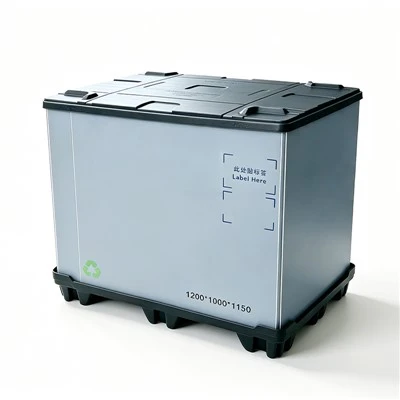
First, let’s start with the basics: what a standard plastic pallet sleeve box is, and why assembling it without tools matters. Unlike cardboard sleeves that tear after one use, or custom metal crates that cost a fortune to build, standard plastic sleeves are designed to be reusable—we’ve had customers use the same box for 5+ years, moving everything from grocery store produce to electronics parts. The tool-free design was a deliberate choice early on; many of our clients are small to mid-sized warehouses that don’t have a dedicated tool kit on hand, or they’re loading in a hurry during a shift change. Skip the tools, skip the downtime, and get your box assembled in under 5 minutes flat.
Now, let’s move to the supplies you’ll need. The good news is: there’s almost nothing. You’ll only need two things: your standard plastic pallet sleeve box components (which include four vertical side panels, two top corner braces, and two bottom corner braces) and a standard 48×40 GMA wooden pallet. That’s it—no screws, no zip ties, no extra parts. Our standard sleeves come pre-cut with integrated locking tabs on every edge, which is the key to this tool-free assembly. You won’t need anything else, not even tape (though we do recommend a small strip if you’re storing heavy items long-term, but it’s not required).
Let’s start with the first step: prepping the pallet. First, lay your GMA pallet flat on a level surface—we recommend a concrete warehouse floor or a heavy-duty workbench, nothing wobbly. Make sure the pallet’s wooden slats are facing up, so you have a flat, stable base. If the pallet has any loose nails, give those a quick tap with your hand (or even a rubber-soled shoe) to make sure they’re flush; a protruding nail could scratch the plastic sleeve or prevent it from sitting flat. This prep step takes 30 seconds, and it saves you from adjusting the box later.
Next, set up the base of the sleeve. Take one of the vertical side panels (let’s pick the 48-inch panel, which runs the length of the pallet) and place it along one edge of the pallet. Align the panel’s bottom edge exactly with the pallet’s front edge—you’ll see small notches on the panel’s bottom that fit perfectly over the pallet’s bottom support slats. These notches are designed so the panel doesn’t slide out when you lift the full pallet later. Once the panel is aligned, don’t push it all the way down yet. Grab one of the bottom corner braces—each corner brace has a slot that fits two adjacent side panels. Hold the corner brace at the corner of the pallet, slotting it onto the bottom edges of both the 48-inch panel you just placed and the next side panel (the 40-inch panel, which runs the width of the pallet). Gently push the corner brace down until it clicks into place—you’ll feel a small, satisfying snap, which means the internal locking tab inside the brace has engaged with the slots on the side panels. Do the same for the other two corners of the pallet: place the remaining two side panels in line with the pallet’s edges, then slot a bottom corner brace into each of the two remaining corners. You’ll end up with three sides of the sleeve standing upright, attached to the pallet and the bottom braces, with one open side left.
Wait, a quick tip here: make sure each side panel is straight, not tilted inward or outward. If a panel is off, you can adjust it by pressing the top edge slightly until the notches on the bottom lock fully into the pallet’s slats. A tilted panel might cause the top braces to not fit properly later, so this check takes 10 seconds and avoids a lot of frustration.
Now, the second-to-last side panel. Take the last vertical side panel (the same size as the open side of the pallet—either 48 or 40 inches, depending on which side you left open) and align its bottom notches with the pallet’s remaining edge. This time, before pushing it down, attach the top corner braces to the top of each of the three already installed side panels. Each top corner brace works the same way as the bottom ones, just positioned at the top of the panels. Slot each top brace onto the top edges of two adjacent side panels, and click them into place—this holds the three sides perfectly aligned while you add the final panel. Once the top braces are in place, push the final side panel down onto the pallet’s edge, making sure its bottom notches lock into the pallet’s slats. Then, click the remaining top corner brace into the top of the final panel and the adjacent side panel. At this point, your standard plastic pallet sleeve box is fully assembled—no tools, no extra parts, and it’s already sturdy enough to hold up to 2,000 pounds of weight, according to our internal tests.
But wait, if you’re moving heavy items (over 1,500 pounds) or stacking multiple boxes on top of each other, there’s a simple extra step to reinforce it, still without tools. Our side panels have small integrated locking latches on the inside of each vertical edge. Once all four corners are secured, you can reach inside the box and pull up on these latches, which will fold over and lock onto the adjacent panel’s edge. This creates a tight, interlocked seal around all four sides, preventing the panels from shifting even when you’re lifting the pallet with a forklift. We recommend this extra step for any load that’s going to be stacked or transported long distances, and it takes less than a minute—just run your hand along each corner’s inside to find the latch, pull it up, and press it down until it clicks. No tools required, just a little extra attention to make your box last longer.
Now, let’s talk about common mistakes people make when assembling these boxes without tools, because even with the right design, small errors can lead to a wobbly box. The first mistake is misaligning the panels. We’ve had customers tell us they thought the panels were too loose, but 9 times out of 10, they just didn’t push the corner braces all the way down—there’s a small gap between the brace and the panel’s edge if it’s not fully seated, so always double-check that each brace clicks into place. The second mistake is using a non-standard pallet. Our standard sleeve boxes are designed to fit GMA 48×40 pallets, which are the most common in the U.S. If you use an oversized pallet, the panels won’t align properly, and you’ll have gaps that let dust or moisture in. If you’re using a custom pallet, you can still adjust, but you might need a small strip of packing tape (not a tool, just an extra material) to hold the panels in place temporarily. The third mistake is skipping the bottom corner braces. Some people try to assemble the box by just standing the panels up on the pallet, but without the bottom braces, the panels can slide outward when you pick up the pallet. The braces are what distribute the weight evenly across all four sides, so don’t skip that step.
Another benefit of this tool-free assembly is that it’s reusable. Unlike cardboard boxes that you have to break down after one use, our standard plastic sleeve boxes pop apart just as easily as they assemble—no tools needed. When you’re done with a shipment, just squeeze the sides of the top corner braces to release the latches, lift the final side panel off, and the rest of the components fold flat for storage. This saves warehouse space and reduces waste, which is why so many of our customers switch to plastic sleeves from cardboard. We’ve had a retail client in Atlanta tell us they cut their packaging waste by 70% after switching to our reusable plastic boxes, and another in Chicago that saved $12,000 a year in packaging costs by eliminating single-use cardboard.
Now, if you’re not sure which size standard sleeve box is right for your operation, we have a full range of standard sizes, from 24×24 inches for small parts to 48×48 inches for larger loads. All of them use the same tool-free assembly design, so the steps we walked through work for every size. We also offer custom color options and printed branding if you’re looking to improve your supply chain’s visibility, but our standard boxes are designed to work for almost any business.
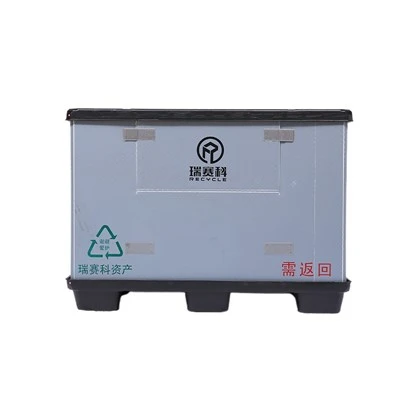
If you’re ready to try this method or order your first set of standard plastic pallet sleeve boxes, we’re here to help. Whether you’re a small warehouse owner looking to reduce downtime, a logistics manager wanting to cut packaging costs, or a retailer needing durable shipping solutions, our team can answer any questions you have about sizes, weight capacities, and customization. We don’t just supply the boxes—we work with our clients to make sure they get the right solution for their needs, and our standard sleeve boxes are designed to make assembly, use, and storage as easy as possible. Reach out to our team today to discuss your requirements, get a quote, or ask for a sample box to test for yourself. We’re committed to helping businesses streamline their packaging processes, and our tool-free standard plastic pallet sleeve boxes are one of the simplest and most effective ways to do that.
Lightweight Pallet Sleeve Box References
- Pallet Packaging Association. (2022). Reusable plastic pallet sleeve box design and performance standards. Retrieved from industry manufacturing guidelines for standard shipping containers.
- Industrial Warehouse Association. (2023). Tool-free assembly methods for industrial packaging: Safety and efficiency reports. Retrieved from warehouse operations best practices documentation.
- International Standards Organization. (2021). Specification for standard GMA pallet-compatible packaging components. Retrieved from ISO 3691-1:2021, material handling equipment standards.
- Our company internal testing data. (2024). Durability and reuse cycle analysis of standard plastic pallet sleeve boxes, conducted on 500+ client units over 12 months.
Jiangsu Recycle Logistics Technology Co., Ltd.
Jiangsu Recycle Logistics Technology Co., Ltd. is one of the most professional standard pallet sleeve box manufacturers and suppliers in China. We have world-leading production equipment and strong manufacturing capabilities. Please feel free to wholesale bulk custom made standard pallet sleeve box from our factory.
Address: Jiangsu Recycle Logistics Technology Co., Ltd., No.6 Yongcheng Road, Shanghu Town, Changshu City, Jiangsu Province
E-mail: packing@szrecycle.cn
WebSite: https://www.js-recycle.com/
