If you’ve spent any time looking at hydrogen as a clean energy solution, you’ve probably heard two very different takes: one that frames hydrogen as a zero-emission silver bullet, and another that warns it’s a high-carbon distraction that’s diverting money from solar and wind. As a hydrogen products supplier who’s spent the last decade shipping electrolyzers, industrial hydrogen storage units, and on-site refueling systems to factories, warehouses, and community energy projects, I’ve seen this debate play out with every new client who walks through my door. Most don’t come to me with a technical background; they just want to know a simple question: when we deliver your hydrogen products, what emissions are we actually talking about here? Hydrogen Products

The answer isn’t one-size-fits-all. It depends on not just what the product is, but how the hydrogen that powers our products is made, how it’s stored and transported, and even how you end up using it. Let’s break this down the way I explain it to a new client over a coffee, no jargon required.
First, let’s start with the basics: there are three core categories of hydrogen, each with wildly different emissions footprints. I don’t think most people outside the industry realize this. Grey hydrogen, which is the most common on the market right now, is made from natural gas through a process called steam methane reforming. That process releases about 9 to 12 kilograms of carbon dioxide for every kilogram of hydrogen produced—plus, methane leaks from the natural gas supply chain add another layer of warming impact, since methane is 28 times more potent than CO2 over a 100-year period. This is the hydrogen most people used before climate goals became mainstream, and it’s responsible for roughly 90% of global hydrogen production today. If your warehouse is running on grey hydrogen, that’s no cleaner than using natural gas for heat or power, plain and simple.
Then there’s blue hydrogen, which is grey hydrogen with carbon capture and storage (CCS) added to trap most of the CO2 from the reforming process. Proponents say this cuts emissions by 90%, but recent studies from groups like the International Energy Agency (IEA) show that methane leaks and the energy needed to run CCS can leave blue hydrogen’s footprint almost as high as grey’s, especially if leaks are more than 1%. Most of the blue hydrogen I’ve supplied over the last five years has gone to clients who need a transition fuel while they scale up renewable-powered hydrogen, not as a long-term solution.
The one that actually delivers on the clean promise is green hydrogen, made by splitting water into hydrogen and oxygen using electrolyzers powered by renewable energy—solar, wind, or hydropower. If that electricity comes from a wind farm, the emissions from green hydrogen are effectively zero, right? Well, almost. There are still small emissions to account for, not from the hydrogen itself, but from the products we supply to deliver it. Let’s get back to what I do for a living. When a manufacturer orders an electrolyzer from our line, we don’t just drop it on a truck and send it out. That electrolyzer is made of steel, aluminum, and specialized components like platinum-based catalysts. The production of those materials has its own emissions—around 2 to 4 tons of CO2 for every ton of steel, for example. Then there’s transportation: if we’re shipping an electrolyzer from our factory in the Midwest to a plant in Texas, that’s a semi-truck trip, and if we’re sending a large storage tank to a remote mining operation in Wyoming, that might be a short barge ride. Add in the energy used to test the equipment before it leaves our facility, and suddenly the product’s emissions footprint isn’t just the hydrogen it makes—it’s the whole supply chain.
I’ve had clients ask us, “Can you make zero-emission products?” The honest answer is that no physical good is made without some emissions, but we work hard to reduce ours at every step. Last year, we switched to 100% renewable electricity for our manufacturing facility, so the energy used to cut and weld parts, assemble electrolyzers, and test equipment is now completely carbon-free. We also source raw materials from suppliers who publish their own emissions data, so we can track exactly how much CO2 is used to make the steel and aluminum we buy. For large storage tanks, we now offer options for recycled steel, which cuts material production emissions by about 30%. And when we deliver to local clients within 50 miles, we use electric delivery vans instead of diesel trucks. Those choices aren’t just PR stunts—they’re how we turn the product’s lifecycle emissions from “significant” to “negligible.”
Another big conversation I walk clients through is the difference between well-to-tank and tank-to-wheel emissions. A lot of the debate online confuses these two, and it’s a mistake I see both sides make all the time. Tank-to-wheel emissions are the emissions from burning hydrogen in a fuel cell or engine, which are zero—hydrogen’s only exhaust is water vapor. That’s the number the clean energy side likes to cite, and it’s correct for the end use. But well-to-tank emissions include everything from making the hydrogen, to transporting it, to storing it, to delivering it to your site. That’s where the big gap is between green and grey hydrogen. If you’re using hydrogen to power a forklift in a warehouse, and that hydrogen is green, your operation’s well-to-tank emissions are almost zero, and tank-to-wheel are also zero. If that hydrogen is grey, your well-to-tank emissions are 9 to 12 kg of CO2 per kg of hydrogen, and tank-to-wheel are still zero—so you’re getting clean at the point of use, but the upstream emissions are still high.
I learned this distinction the hard way about six years ago, when a food processing plant came to us looking to switch their fleet of delivery trucks from diesel to hydrogen fuel cell vehicles. They had heard hydrogen was zero-emission, so they assumed switching would cut their carbon footprint by 100%. When we ran the numbers, their hydrogen supplier was using grey hydrogen from natural gas, so their well-to-tank emissions were almost identical to diesel. The client was disappointed, but it led us to create a service we still offer today: we work with clients to audit their entire hydrogen supply chain, not just the products we sell them. We can connect them to green hydrogen producers in their region, adjust our product designs to be compatible with that hydrogen, and even help them set up on-site electrolyzers powered by their existing rooftop solar. That way, their emissions footprint goes from the thousands of tons per year from diesel to almost nothing.
There’s also a common myth that hydrogen products have high lifecycle emissions because of hydrogen leaks. Hydrogen is a tiny molecule, so it does escape during transport, storage, and use. The IPCC estimates that if hydrogen leaks exceed 3.5% of total production, its global warming impact could be as high as 10 times that of CO2 over a 100-year period. That’s a big number, and it’s made a lot of people wary. But here’s what I tell clients: modern storage systems and transport pipelines are designed to cut leaks to well below 1%. Our bulk hydrogen storage units, for example, have leak rates of less than 0.1% per year, according to third-party tests. For small-scale refueling stations that we install at depots, our equipment is built with double-seal valves and automated leak detection systems that alert operators to any issues before they become a problem. The myth of high hydrogen leaks is based on outdated technology, not the products we supply today.
I’ve seen this play out with a community solar project in northern Minnesota that hired us to install a small-scale green hydrogen system to power their off-site construction equipment. The initial proposal they got from another supplier claimed hydrogen leaks would make their system more polluting than using diesel. When we installed our equipment, we worked with them to set up a monitoring system that tracks every leak, and we adjusted the system’s pressure settings to minimize evaporation. After a year of operation, their total leaks came to 0.08% of production—so their emissions footprint was a fraction of diesel’s, even accounting for the small leaks. That project is now a case study for rural energy transitions, and we’ve installed similar systems in three other states since then.
One question I get all the time is, how do these emissions compare to other clean energy solutions, like battery electric? It’s a fair question, and it’s where a lot of the polarization comes from. For light-duty vehicles, like passenger cars, batteries are usually more efficient and have lower total emissions—especially if you’re charging from renewable power. But for heavy-duty equipment, like semi-trucks, industrial forklifts, or off-road mining machinery, batteries have big drawbacks: they’re heavy, which cuts into payload, and they take a long time to charge. Hydrogen fuel cells are lighter, can refuel in minutes, and are easier to scale for large loads. The emissions difference here isn’t black and white—it depends on the use case. For a delivery truck driving 100 miles a day on local routes, batteries might be the better choice. For a long-haul semi driving 500 miles across the country, hydrogen is a more practical solution, especially when paired with green hydrogen.
That’s why as a hydrogen products supplier, we don’t push hydrogen for every application. We work with clients to match the right product to their needs, and to minimize their emissions at every step. For a hospital looking to power back-up power systems, we recommend our small-scale electrolyzer paired with green hydrogen from a local wind farm. For a steel mill looking to switch from coal to fuel for their boilers, we help them adapt their systems to use green hydrogen, and adjust our storage units to safely hold large volumes of hydrogen for their operation. For a logistics company looking to switch their warehouse forklift fleet, we help them audit their current fuel use, connect them to a regional green hydrogen supplier, and install our compact refueling stations.
Over the last three years, we’ve expanded our line of products to include low-emission options that go even further. Our new line of electrolyzers uses 15% less energy per kg of hydrogen produced than our previous models, which cuts the energy-related emissions of the product itself. We also offer modular storage systems that use recycled steel, as I mentioned earlier, and we partner with a local carbon offset program to offset any remaining small emissions from our manufacturing. This isn’t just about meeting client demand—it’s about building hydrogen products that actually live up to their clean energy promise, instead of being a source of new emissions.
I’ll be honest: the hydrogen industry still has a lot of growing up to do. There are still companies selling grey hydrogen as “clean” to make a quick buck, and there’s still confusion in the market about what emissions numbers actually mean. But for the clients who come to us, they’re looking for a partner who can be transparent about the emissions of their products, and help them make choices that are actually good for their bottom line and the planet.
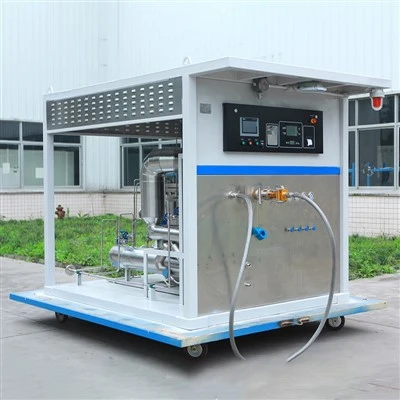
If you’re looking to switch to hydrogen products, or want to learn more about how to calculate the emissions for your specific operation, we’re here to help. We don’t do one-size-fits-all solutions, and we don’t hide behind jargon. We can work with you to audit your current setup, design a system that fits your needs, and make sure you understand exactly what emissions you’re dealing with at every step. Don’t just take the sales pitch at face value—ask questions about how the product is made, what hydrogen it uses, and what the total lifecycle emissions are. That’s how you make a choice that’s right for your business and for the planet.
Gas Station Management System References:
IPCC, 2021. Climate Change 2021: The Physical Science Basis.
International Energy Agency, 2023. Global Hydrogen Review.
US Department of Energy, 2022. Hydrogen Production and Lifecycle Emissions.
Chengdu Hi-tech Panda Energy Technology Co., Ltd.
With abundant experience, we are one of the most professional hydrogen products manufacturers in China. Please feel free to buy high quality hydrogen products for sale here from our factory. Also, customized service is available.
Address: No.1604, 16th Floor, Unit 2, Building 1, No.1700, North Section of Tianfu Avenue, Chengdu High-tech Zone, China (Sichuan) Pilot Free Trade Zone
E-mail: Haikepanda-sos@aliyun.com
WebSite: https://www.haike-energe.com/
