If you’ve ever moved into a studio apartment, you know how rare it feels to have a dedicated “dining zone”—that space that lets you eat without balancing a plate on your lap while sitting on your couch. As a dining table supplier who’s spent years helping small-space renters and homeowners make the most of their square footage, I get dozens of messages every week that start with the same question: “Can I actually use a dining table in my studio, or will it turn my place into a cramped maze of clutter?” The short answer? Yes—but it’s not just about grabbing any table that fits your space. It’s about choosing a table that works with how you live in a studio, not against it. Over the past decade, I’ve seen so many people write off dining tables for small apartments, only to later kick themselves when they realize they could have had a functional, stylish spot to eat and work without sacrificing walkability. Dining Tables
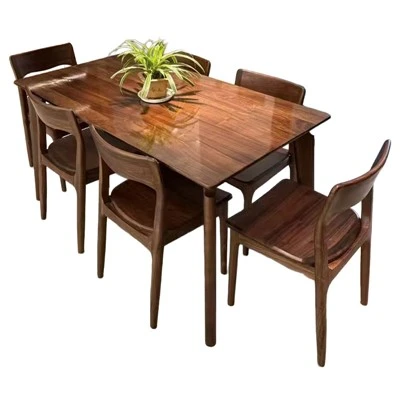
Let’s start with the biggest myth holding people back: that a dining table has to take up half your studio and block every door. For studios that usually clock in at 300 to 500 square feet, that’s a fair worry—but the key is ditching the traditional 36-inch-wide, 60-inch-long fixed table that most people default to. I’ve worked with hundreds of studio dwellers who’ve opted for space-saving designs that fit the room’s flow, and not one of them has ended up feeling cramped. For example, a 300-square-foot studio in Brooklyn’s Bushwick neighborhood might have a 10-foot-long wall that runs parallel to the living area; a small, drop-leaf dining table that measures 24 inches wide (when closed) and extends to 48 inches for meals can tuck right against that wall, leaving 30 inches of clear walkway between the table and the couch. That’s enough space to slide chairs out, grab a snack, or even roll a laundry cart across if needed. Another common win is a counter-height dining table that doubles as a makeshift desk for remote work—two functions in one, which is non-negotiable for anyone living in a studio where every piece of furniture has to pull double duty.
But here’s where I’ll push back a little: it’s not just about size. It’s about positioning. I’ve seen way too many people stick a random table in the middle of their studio, only to find that walking from the bedroom to the kitchen means squeezing between the table and the fridge. The sweet spot for a studio dining table is a spot that creates a natural “zone” without blocking circulation. Most studios have one clear line of traffic: usually from the entryway to the kitchen, or from the couch to the bathroom. Your dining table should never cross that line. For example, if your entryway is by the front door and your kitchen is on the opposite wall, tuck the table between the two—far enough from the couch that you don’t have to step over it to sit down, and close enough to the kitchen that carrying plates is a breeze. I recently sold a set of four compact dining tables to a teacher in Chicago’s Logan Square who uses her table to grade papers, eat dinner, and host monthly game nights for friends; she positioned hers along the wall that separates her “bedroom nook” (a twin bed tucked into a closet) from the kitchen, so it doesn’t disrupt her main walkway. That’s the kind of strategic placement that makes a dining table work, not just fit.
Another factor no one talks about enough: how a dining table can actually make your studio feel bigger, not smaller. It sounds counterintuitive, but it’s true if you pick the right style. A lot of people assume all small-space furniture is basic and boring, but modern designs prioritize slim profiles and light colors that don’t weigh down a room. A glass-top dining table with a metal frame, for example, takes up visual space without feeling bulky—your eyes can see through the top, so it doesn’t block the view of your couch or bed. Compare that to a dark wood, solid table that feels heavy and makes the room feel closed in. I also recommend pedestal base tables over four-legged ones for studios: the single center leg doesn’t stick out to catch bags or feet, and the open space underneath makes the table feel less intrusive. For studios with high ceilings (a rare but wonderful bonus), a round dining table with a turned wooden pedestal adds a touch of warmth without making the room feel cluttered. I’ve had customers tell me their studio feels twice as big after swapping a bulky coffee table for a slim dining table that sits flush against the wall—small changes, but they make a huge difference in how you perceive your space.
Now, let’s address the elephant in the room: what about when you have guests? A lot of people skip dining tables because they worry they can’t host more than one person, but that’s where expandable designs come in. I started carrying extendable dining tables about seven years ago, and they’re by far our fastest-selling product for small apartments. These tables have hidden leaves that fold out when you need extra space, and tuck away when you don’t. A 48-inch extendable table can fit two people for daily use, and stretch to 72 inches for four or five guests—perfect for a small dinner party or a holiday meal with family. I recently helped a couple in Austin’s East Austin neighborhood plan their studio for a friend’s wedding dinner; they used a 54-inch extendable dining table for 10 guests, and then folded the leaves up the next day to use the extra space for a home gym. That flexibility is key for studios, where you don’t want furniture that only works for one occasion. Another underrated hack: bench seating instead of chairs. A slim wooden bench tucks under the table when not in use, so you can pull it out for extra seats or slide it back to clear the walkway. It’s less bulky than four chairs, and it gives you more room to move around.
Of course, there are a few scenarios where a dining table might not be the right fit—and I’m upfront about that with every customer who comes to me. If your studio is under 250 square feet, for example, and you already have a full-size bed, a couch, and a kitchen table, a dining table might just add too much clutter. But even then, there are workarounds: a wall-mounted drop-leaf table that you fold up when you’re not using it, so it doesn’t take up permanent space. If you have mobility issues and need clear, unblocked access to every part of the studio, a dining table with low clearance might not work, but a counter-height table that’s easy to slide under or around is a better option. I never push a dining table on someone if it doesn’t fit their lifestyle, because the best piece of furniture for a studio is one that works with how you live, not just how it looks on paper.
Over the years, I’ve also learned that a dining table can be more than just a place to eat—it’s a focal point that ties your studio together. So many studios feel disconnected, with separate areas for sleeping, cooking, and lounging that don’t flow. A dining table acts as a bridge between the kitchen and the living area, creating a natural space where you can cook a meal, sit down to watch TV, or work on a project without feeling like you’re in separate parts of the same room. I had a customer in New York City who told me before buying her dining table, her studio felt like three random spots: her bed in the corner, her microwave on the floor next to the couch, and her laptop on her lap. After adding a small dining table, she started hosting friends for dinner, setting up her laptop at the table for work, and even using it to fold laundry. It didn’t just add a piece of furniture—it added a purpose to her space.
If you’re still on the fence about whether a dining table works for your studio, here’s a quick checklist to help you decide: first, measure your space before you buy. I always tell customers to measure the spot where they want the table, and leave at least 30 inches of clear space around it for walking and sliding chairs. That’s the minimum clearance you need to avoid feeling cramped. Second, think about your lifestyle. Do you need a spot to work? Get a counter-height table. Do you host friends often? Get an extendable table. Do you want to save space? Get a table with a slim profile or wall-mounted design. Third, prioritize functionality over style—though that doesn’t mean you have to sacrifice looks. The best small-space dining tables are the ones that look good, work hard, and don’t make your studio feel smaller.
At the end of the day, the question isn’t “Can I use a dining table in a studio apartment?” It’s “How do I use a dining table in my studio apartment?” And with the right size, placement, and design, the answer is a resounding yes. I’ve seen it work for renters in 200-square-foot studios who eat at their table every night, for remote workers who use their table as a desk, and for people who host dinner parties without ever feeling cramped. It’s not about choosing between a spacious studio and a functional dining area—it’s about choosing a table that fits both.
If you’re ready to find a dining table that works for your studio, our team is here to help you pick the right size, style, and feature to match your space and lifestyle. Reach out to our procurement team to discuss your needs and find the perfect dining solution for your home.
Dining Tables References
- Small Space Living Institute. (2022). Furniture Design for Urban Studio Apartments.
- National Association of Home Builders. (2021). Space-Saving Furniture Trends for Small Residences.
- Interior Design Magazine. (2023). Maximizing Function in Open-Concept Studio Spaces.
- Urban Dweller’s Association. (2022). Accessibility and Furniture Placement for Small Apartments.
- Residential Spaces Journal. (2021). Dual-Purpose Furniture Solutions for Modern Urban Living.
Hebei Muyuanquan Furniture Co., Ltd.
As one of the most experienced dining tables manufacturers and suppliers in China, we also support customized service. Please feel free to wholesale bulk high quality dining tables in stock here from our factory. Welcome to contact us for quotation.
Address: Gengdong Village, Longwangli Township, Dongguang County, Cangzhou City, Hebei Province
E-mail: muyuanquan-inquiry@163.com
WebSite: https://www.muyuanquan.com/
