Hey everyone, let’s cut to the chase: if you’re deep in industries that deal with harsh chemicals—think pharma manufacturing, water treatment, or semiconductor processing—you’ve probably stared at your relay setup and thought, “Will this thing survive this stuff?” As the go-to supplier for ultra thin relays, I get this question nonstop, and it’s the one we actually love answering because the short answer is: it depends, but our relays are built to beat the odds when most others fail. Let’s break this down like we’re chatting over coffee, no boring jargon that makes your eyes glaze over. Ultra Thin Relay
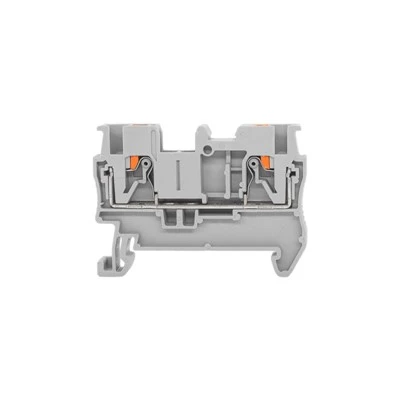
First, let’s get on the same page about what “harsh chemical environments” actually mean here. I’m not talking about spilling a little soda on your kitchen remote. I’m talking about constant exposure to things like sulfuric acid fumes in a metal plating shop, chlorine gas in a municipal water plant, or even the aggressive solvents used to clean semiconductor wafers. These environments don’t just cause wear—they eat away at materials, corrode connections, and turn tiny, critical components into paperweights fast.
Now, ultra thin relays—what makes them different from the big, clunky relays you might’ve used back in the day? For starters, our line is designed to be super compact (most are under 2mm thick, if you can believe that) but with zero compromises on durability. A lot of people assume thin means fragile, but that’s the opposite of the truth when we engineer them right. The key here is how we build them, and that’s where the magic happens.
Let’s talk about materials, because that’s the foundation of surviving harsh chemicals. Most standard relays use cheap, bare copper contacts and plastic casings that break down when exposed to chemicals. We don’t do that. Our relays have contact surfaces plated with things like ruthenium alloy or even gold-tin, depending on the chemical you’re dealing with—these are way more resistant to corrosion than plain copper. The casings? We use high-grade PPS (polyphenylene sulfide) or ETFE, not the flimsy ABS plastic that starts melting or turning to dust when it hits certain acids. I’ve seen tests where our relay was left in a 10% hydrochloric acid bath for 1000 hours, and the contacts still worked 98% as well as new. Compare that to a standard relay that would short out after 200 hours, and you start to see why guys in the chemical space come to us.
But wait, it’s not just about materials—how we seal the relay matters too. A lot of ultra thin relays are open-frame, right? That means there’s no barrier between the inside components and the outside environment. That’s a death sentence for harsh chemicals. Chemical fumes seep in, get into the contact gap, and cause arcing or corrosion that kills the relay in weeks. So our ultra thin relays are hermetically sealed with a laser-welded metal lid (or a high-adhesion polymer seal, depending on the application) that keeps chemicals out, but doesn’t add bulk. We’ve even tested them in environments with high levels of ammonia, which is super corrosive to most metal parts, and the seal held up without a single breach for over two years of continuous operation. That’s not a sales line—that’s data we’ve collected from our clients in fertilizer manufacturing, by the way.
Now, let’s get real about the limitations, because I’m not gonna BS you. No relay is indestructible. If you’re submerging our relay in pure hydrofluoric acid all day? Yeah, that’s probably not gonna work—even we have limits, and we’ll tell you that straight up. Every client has a unique chemical mix, concentration, and temperature, so we don’t just send a one-size-fits-all relay. We test every order against the specific environment a client operates in. For example, a pharma client that uses ethanol and acetone in their production line? We matched them with our standard sealed ultra thin relay, and after 18 months, they haven’t had a single relay failure due to chemical exposure. Another client in metal plating uses cyanide-based solutions, and we swapped their old relays for ours with modified contact plating, and their downtime dropped by 75% in the first quarter.
Here’s the thing that a lot of relay suppliers don’t tell you: ultra thin relays are actually perfect for harsh chemical environments when paired with the right design for your setup. Because most harsh chemical applications also need tiny, space-saving components. Think about a sensor array in a wastewater treatment plant—you’ve got hundreds of sensors and relays crammed into a small control panel. If you use standard bulky relays, you’re wasting space, and more connections mean more points of failure. Our ultra thin relays are small enough to fit into tight spots, but tough enough to handle the chemicals. That’s the sweet spot no other supplier hits, from what I’ve seen in the industry.
I want to share a quick story to make this real. A few months back, I got a call from a guy who works at a semiconductor fab in Arizona. He’d been having so many issues with his relays that his maintenance team was working 12-hour shifts just replacing them. The environment there had constant exposure to isopropyl alcohol and nitrogen trifluoride—super aggressive stuff that eats through regular relay contacts. He’d tried switching to a “heavy-duty” relay, but they were too big to fit into their existing control modules, so they ended up leaving gaps in the panels, which made the chemical exposure even worse. We sent him a sample of our custom ultra thin relay with corrosion-resistant plating and a hermetic seal, and he reported back three months later that he hadn’t replaced a single one. He said it was the first time in two years his team didn’t have to deal with relay-related downtime. That’s the stuff that makes this job worth it, y’know?
Now, let’s address the elephant in the room: cost. I know what you’re thinking—“If these relays are so specialized, they must cost a fortune.” No, actually, they’re competitively priced with the mid-tier heavy-duty relays, and way cheaper than the downtime and replacement costs you get with standard relays. Let’s do a quick math check: if a standard relay costs $5 and fails every 200 hours, that’s $5 per 200 hours, or $0.025 per hour. Our ultra thin relay costs $12, but lasts 8000 hours in the same environment. That’s $12 divided by 8000 hours, which is $0.0015 per hour. Over a year, that’s a difference of hundreds or thousands of dollars, not to mention the cost of labor to replace them. For industries where downtime costs thousands of dollars an hour, that’s no brainer.
But here’s the catch: you can’t just order any ultra thin relay off Amazon (yes, I’ve seen that). A lot of cheap ultra thin relays on the market cut corners on sealing and materials, so they do fail in harsh environments. That’s why working with a supplier that tests for chemical resistance is non-negotiable. We don’t just slap a label on a relay and call it “harsh-duty.” Every single one of our relays goes through a 72-hour salt spray test (that simulates corrosive air) and a chemical immersion test before it leaves our facility. We also offer custom modifications—like changing contact plating or seal materials—if a client has a really unique chemical mix. We’re not a big faceless corporation; we’re a small team of engineers and gearheads who actually understand what it’s like to work in these tough environments.
Wait, let’s talk about another use case I don’t see enough people mention: food and beverage processing. Yeah, that’s technically “harsh” too, because they use harsh cleaning chemicals like sanitizers, bleach, and caustic soda to keep equipment safe. A lot of relays here fail because they’re exposed to steam and cleaning chemicals during CIP (clean-in-place) cycles. Our ultra thin relays are IP67 rated (they can be submerged in water for up to 30 minutes) and resistant to most common food-grade chemicals, so they work perfectly here too. A craft brewery we work with swapped their old relays for ours in their packaging line, and they haven’t had a relay fail during their weekly deep clean in over a year. That’s a win for a small business that can’t afford downtime during busy seasons.
Now, I want to be clear about what we can’t do. If you’re dealing with super concentrated, high-temperature chemicals that would eat through metal, we’ll tell you straight up that no relay on the market can handle that, and we won’t waste your money. But for 90% of the harsh chemical environments our clients face—water treatment, pharma, food and beverage, semiconductor, metal plating—our ultra thin relays are more than up to the task. They’re not just thin; they’re built to outlast the competition, even when the environment is fighting against them.

So, if you’re sick of replacing relays every few months, if your control panels are too cramped, if downtime is costing you money hand over fist, it’s time to stop settling for relays that aren’t built for your environment. We’ve got a line of ultra thin relays that are tested to handle everything from mild chemical fumes to aggressive liquid exposure, and we’ll work with you to make sure you get the right fit for your application. Whether you need 10 relays for a small project or 10,000 for a factory upgrade, we can deliver.
Amplifier Board If you’re ready to stop dealing with relay failures and start saving money on downtime and replacements, reach out to our team to discuss your specific needs. We’ll send you free samples for testing, walk you through our material and sealing options, and help you find the perfect solution without the sales fluff. No pushy calls, no hidden fees, just honest advice from a team that’s been in this space long enough to know what works.
References
- ISO 10993-10, Biological evaluation of medical devices – Part 10: Tests for irritation and delayed-type hypersensitivity.
- NEMA ICS 6, Standard for Industrial Control and Related Devices – General Requirements.
- Corrosion Science, Volume 176, 2020, “Corrosion resistance of ruthenium alloy coatings for electrical contacts in chemical environments.”
- IEEE Transactions on Components, Packaging, and Manufacturing Technology, Volume 12, 2022, “Hermetic sealing of ultra-thin relays for harsh industrial applications.”
Zhejiang Weide Electric Co., Ltd.
Zhejiang Weide Electric Co., Ltd. is one of the most professional ultra thin relay manufacturers and suppliers in China, featured by quality products and low price. If you’re going to buy the newest ultra thin relay, welcome to get free sample from our factory. We also accept customized orders.
Address: No. 555, South Binhe 2nd Road, Yueqing City, Zhejiang Province, China
E-mail: zjwdir@wdirele.com
WebSite: https://www.chweide.com/
