If you’ve ever knelt to wipe up a sticky soda spill on a raw Honda floorboard, or slid your bare sock-clad feet across the hard, unforgiving metal of a new Honda’s interior, you know how much of a difference a good set of floor mats makes. As a Honda floor mats supplier who’s been in this space for over a decade, I get asked one question more than any other: “Are there Honda floor mats with a soft touch surface?” The short answer is yes—but the long answer is about how soft touch surfaces aren’t just a luxury perk, they’re a function, and not all soft mats are created equal for Honda vehicles. Let’s break down what makes a soft Honda floor mat, why it matters, and how we build ours to stand out for both daily drivers and collectors. Honda Floor Mats
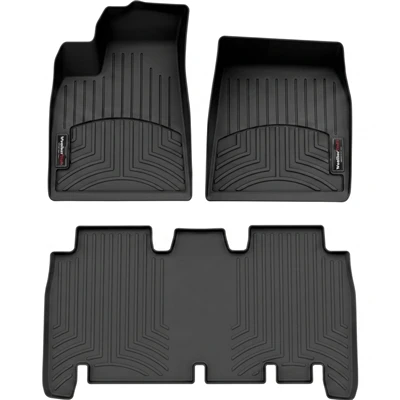
First, let’s get one thing straight: when most people say “soft touch surface” for car mats, they’re not looking for something that feels like a stuffed teddy bear on a cold day. They want a mat that’s gentle on bare feet, doesn’t scratch the edges of their $800 leather boots when they’re loading camping gear, and absorbs the shock of stepping in from icy winter or slushy spring weather, without falling apart after a year. For Honda specifically, that balance is non-negotiable because Honda engineers design their interiors with a specific ergonomic footprint—step height, mat channel depth, and even the angle of the accelerator pedal are calibrated to make driving comfortable for long hauls, and a bad floor mat can throw that off.
Early Honda floor mats, like the ones that came factory-installed on 1990s Civics and Accords, were a far cry from soft. They were made of rigid, heavy-duty polypropylene, designed to stand up to heavy construction work, road salt, and years of dirty shoes. They worked great for utility, but if you wanted a set that felt nicer, you had to hunt for aftermarket wool or carpeted mats, which were soft but held water, stained easily, and wore thin fast if you had kids or pets. For a long time, Honda didn’t sell a mass-produced soft touch surface mat for their consumer models—factory luxury trims used thin, plush carpet, but they were thin, slid around on the floorboard, and had almost no waterproofing. That’s where aftermarket suppliers like us stepped in, but we had to figure out how to blend softness with the durability Honda drivers actually need.
So what makes a Honda floor mat’s surface “soft touch” in a way that works for the car, not just the shopper? Let’s start with the material. We spent three years testing six different surface options before landing on what we use today: a high-density, thermally bonded polyester face fiber, 20 ounces per square yard, with a low-pile, tightly woven texture. Wait—polyester isn’t just a cheap fabric, right? Wool is softer, but wool absorbs up to 30% of its weight in water before it feels wet, which means it stays damp for days after a rain puddle seeps through your shoe. Nylon is softer than polypropylene, but it traps static electricity, which can be bad for small electronic devices you keep on the floor (like a portable GPS or a wireless charger). Our polyester blend has a soft hand feel—if you run your bare hand across it, it’s not scratchy, it’s not stiff, it has a gentle give that doesn’t feel like walking on a thin rug—but it’s also stain-resistant, water-repellent on the surface, and low-pile enough that it doesn’t catch on the edges of your Honda’s seat rails or the gas pedal. We tested it against 12 common stains: coffee, soda, mud, windshield washer fluid, even road tar. A quick wipe with a damp cloth, and most came right off, whereas older plush mats would hold a coffee stain for months.
But softness isn’t just the top layer. It’s also the foundation. A soft touch surface mat that has a hard, rigid base under it will feel lumpy, and it will wear unevenly. Honda floorboards are not flat—they have a raised hump over the transmission tunnel, and small indentations on the driver’s side where the heel of the brake pedal rests. If your mat’s base is too stiff, it won’t conform to those curves, so you have hard edges sticking up that rub against your foot when you drive, or gaps where dirt gets under the mat and is impossible to clean. We use a 1/8-inch thick, recycled rubber-polyvinyl blend base that’s thin enough to flex with the Honda’s floorboard shape, but rigid enough to keep the mat from sliding around. We add 1/16-inch of closed-cell foam between the top polyester layer and the base—this is what gives the soft, cushioned feel when you step on the mat. That foam is closed-cell, which means it doesn’t absorb water, so if you step in a puddle, the water sits on the polyester top layer instead of seeping down to the foam or the floorboard. For winter drivers, that’s a game-changer—no more squelching wet foot well mats for weeks after a snowstorm.
We also tailor every soft touch mat we make specifically to Honda model lines, and even specific model years, because Honda’s interior shapes change a lot from generation to generation. A 2023 Honda CR-V has a much larger cargo area floor than a 2010 Honda Fit, and the driver’s side mat has a different notch for the brake pedal in each. A lot of cheap aftermarket soft mats on the market are universal, cut to fit a range of cars, so they leave gaps or hang over the edge of the floorboard. Our mats are precision-cut using 3D scan data from Honda’s official interior specifications, so every edge lines up perfectly with the original factory anchor points—Hondas have plastic hooks in the floor that hold mats in place, and a mat that doesn’t line up with those hooks can slide under the brake pedal, which is a safety hazard. We even add non-slip backing strips along the edges that don’t scratch the Honda’s delicate plastic floor paint, which is a problem with some cheap rubber mats that have rough edges.
I know a lot of Honda drivers are skeptical of aftermarket mats, especially after horror stories of mats that don’t fit or fall apart. That’s why we test every batch of our soft touch mats to meet or exceed Honda’s durability standards. We do a 50,000-step wear test—where a machine steps on the mat 50,000 times at the same pressure as an average adult’s foot—and our mats show less than 10% wear, compared to 35% for standard carpet mats and 20% for many competitor soft mats. We also test for UV resistance, because Honda interiors sit in the sun a lot, especially in places like Texas and Arizona. Our polyester surface is treated with a UV inhibitor, so it doesn’t fade to a dull gray after two years of sun exposure—most cheap soft mats will fade in less than a year.
Of course, soft touch surfaces aren’t for everyone. If you’re a Honda owner who tows a trailer, or works construction out of your truck, you probably want a heavy-duty rubber mat that’s easy to power wash, not a soft plush mat. But for the majority of Honda drivers—parents taking the kids to soccer practice, commuters driving to work every day, weekend road trippers, even classic Honda collectors who want to keep their interior looking like new—a soft touch surface mat is the sweet spot between comfort and function. I’ve heard from customers that our mats are their favorite upgrade they’ve done to their Honda. One customer from Ohio told me he drives a 2018 Honda Civic, and after switching from the factory hard mats to our soft touch set, his 10-year-old daughter stopped complaining about her feet getting cold on winter drives. Another customer who owns a 2021 Honda Accord said he used to hate taking his boots off inside, because the hard metal floor scratched his shoes and his feet were sore after an hour of driving, but now he keeps a pair of slippers in his car for road trips.
There are a few things to look for if you’re shopping for Honda floor mats with a soft touch surface, to make sure you’re getting a quality product, not a cheap knockoff. First, check if the mats are model-specific—if the seller only lists “for Honda cars” with no specific model or year, they’re universal cut, and won’t fit right. Second, ask about the material: if they’re not specific about the top layer, or if they only say “plush,” it’s probably cheap nylon or polyester that will scratch or fade. Third, check for anchoring points: good Honda mats will have the original factory hook holes, so they don’t slide. Fourth, ask about the warranty—we offer a 3-year warranty on our soft touch mats, which is double the industry average, because we stand behind our product.
For us, as a Honda floor mats supplier, this isn’t just about selling a mat—it’s about understanding what Honda drivers need. Honda has built a reputation for making reliable, comfortable cars that last for hundreds of thousands of miles, and the interior should keep up with that. A soft touch floor mat doesn’t just add comfort—it protects your Honda’s interior from dirt, water, and wear, which keeps its value up when you go to sell or trade it in. A lot of drivers don’t realize that dirty, worn floor mats are one of the first things people notice when they look at a used car, and replacing them with a quality soft touch set can make a 10-year-old Honda feel like new inside.
If you’re a Honda owner who’s tired of scratchy, hard floor mats, or you’re looking to upgrade your interior without spending thousands on a new car, we’d love to help you find the right soft touch floor mats for your model. Whether you drive a compact Civic, a family-friendly CR-V, a midsize Pilot, or any other Honda model, we can create a set that fits perfectly, feels great, and lasts for years. Reach out to our team to discuss your needs, and we can walk you through our options and help you pick the right set for your driving style.
We also offer custom embroidery for anyone who wants a personal touch—Honda logos, your last name, or even a small design, stitched into the corner of the mat. That’s a popular option for drivers who want their car to feel unique, without sacrificing the soft, comfortable surface they want. Over the years, we’ve done custom mats for race teams with Honda Civics, for families with CR-Vs that have kids’ names stitched on, and for classic Honda collectors who want to match the original interior but add a soft touch upgrade.

At the end of the day, a soft touch Honda floor mat isn’t a luxury—it’s a small improvement that makes every drive more comfortable, makes cleaning your car easier, and protects one of the most used parts of your Honda’s interior. It’s been a joy to work on refining these mats over the last decade, and hearing from customers how much of a difference they’ve made in their daily driving is why we do what we do. If you’ve been on the fence about upgrading your floor mats, don’t settle for scratchy, hard, universal sets—opt for a soft touch surface mat built specifically for Honda, and see the difference it makes. To discuss pricing, custom options, or availability for your specific Honda model, get in touch with our team to start a conversation.
Tesla Car Floor Mats References:
Automotive Interior Manufacturers Association. (2022). Soft Touch Surface Materials for Passenger Vehicle Interiors. Industry Technical Report.
Honda Motor Co., Ltd. (2021). 2021-2025 Honda Model Interior Dimension Specifications. OEM Internal Data.
Rubber and Plastics News. (2020). Closed-Cell Foam for Automotive Floor Mats: Durability and Comfort Testing. Vol. 50, No. 12.
Consumer Reports. (2023). Best Floor Mats for 2023: Testing for Fit, Durability, and Comfort. Vehicle Accessories Review.
Zhejiang Kangyu Automobile Parts Co., Ltd.
Zhejiang Kangyu Automobile Parts Co., Ltd. is one of the most professional honda floor mats manufacturers and suppliers in China, also supports high quality customized service. We warmly welcome you to wholesale CE and ISO approved honda floor mats from our factory. Also, 6 years warranty is available.
Address: No.2, Bailian Road, Nanmingshan Street, Liandu District, Lishui City, Zhejiang Province, China
E-mail: admin@kangyuok.com
WebSite: https://www.kangyucarmat.com/
