Hey everyone, it’s Jake from the automotive brushless motor side of things. If you’ve been hanging around the EV or even modern gas-powered car parts space lately, you’ve probably heard people throwing around “brushless motor” like it’s the new shiny toy. And if you’re a parts buyer, fleet manager, or even just a car enthusiast who’s had to justify a part upgrade, you’ve definitely wondered: are brushless motors actually worth the extra upfront cash, or should I stick with the traditional brushed motors I’ve known for decades? As a supplier that’s been selling these things to auto shops and manufacturers for six years now, I’ve sat through way too many breakdowns of this exact question. Let’s cut through the marketing fluff and get real about the cost-effectiveness of automotive brushless motors vs. old-school brushed ones—no jargon, no AI-generated generic stats, just what I’ve seen play out in real orders and field returns. Automotive Brushless Motor

First, let’s get the basics out of the way real quick, because I swear half the “cost vs. cost” arguments online skip the actual function. Traditional brushed motors—think the ones in old power windows, windshield wipers, or even some entry-level starter motors—use little carbon brushes that rub against a spinning armature to send power to the rotor. Brushless motors? They do away with those brushes entirely, using electronics (a tiny controller, basically) to route power directly to the permanent magnets on the rotor. That difference sounds small, but it’s the root of every cost win and catch we’ll talk about.
Upfront cost is the first thing everyone jumps to, right? I get it—if you’re dropping thousands on fleet parts or building a new line of small EVs, sticker shock is real. Right now, a basic automotive brushed motor for a power window runs between $12 and $25, depending on volume. The same-size brushless equivalent? That’s $25 to $40. That’s a 60-160% markup at first glance, which makes a lot of folks (especially those working on tight budgets) immediately write brushless off. But wait—let’s not stop at the initial bill, because cost-effectiveness isn’t just about what you pay when you unbox it. It’s about total cost over the entire life of the part, and that’s where brushed motors start to look pretty bad.
Let’s talk about maintenance and repairs, the quiet killer of budgets for any operation. Those carbon brushes in brushed motors? They wear out, simple as that. Even in “gentle” applications like power seats, the average brushed motor lasts 30,000 to 50,000 miles before the brush gets too short to make solid contact, or the armature builds up burnt dust that gunk things up. For harsher uses—like a windshield wiper motor that runs 12 hours a day in fleet trucks, or a coolant pump motor in a heavy-duty work van? Brushed motors start failing at 15,000 to 25,000 miles, easy. And when they fail, what do you do? You pull the whole motor (most modern cars make this a pain—you have to take off interior panels, disconnect multiple wires), swap it out, and that’s another $150-$300 in labor on top of the part cost. I’ve had a few small auto parts clients swap out 10 brushed wiper motors a month for their delivery vans in a busy part of the country—$250 in parts and labor per swap, times 10 is $2,500 a month. That’s $30,000 a year just in wiper motor repairs, no other fixes needed.
Brushless motors? No carbon brushes to wear out. The only moving part is the rotor with permanent magnets, and if you size it right and don’t run it way over its rated voltage, those can easily last 100,000+ miles. Some of the early brushless window motors I sold back in 2017 still haven’t come back for replacement—last I heard, the client’s van has 180,000 miles on it. Now, do brushless motors ever break? Sure, but almost never from wear and tear. The failure points are the tiny electronics controller, which is usually sealed up to keep out dirt and moisture. If that fails, you might not need the whole motor—most of the time, you can replace just the controller for $8, not the whole $30 motor. That’s a huge difference. Let’s do the math on that delivery fleet wiper motor example. If they swap a brushless motor every 150,000 miles instead of 20, that’s 3 swaps for the same mileage, not 7. Parts cost: $30 x 3 = $90, vs. $20 x 7 = $140. Labor? If each swap is 1 hour at $100 an hour (shop labor is not cheap), that’s 3 hours vs. 7 hours—$300 vs. $700. Total over 150k miles: $390 vs. $840. That’s a $450 savings per motor, and that’s just wiper motors. Imagine applying that to power steering, coolant pumps, or even small traction motors for electric bikes and micro-EVs—brushless starts looking way better when you add up the long game.
Next, energy efficiency. This is a big one for EVs and hybrid cars, but even for gas-powered vehicles, it’s not nothing. Brushed motors are only 60-80% efficient at best, because a lot of power gets lost in friction from the brushes and the gunk that builds up in the armature. Brushless motors? 85-95% efficient, no ifs, ands, or buts about it. What does that mean for a regular car? Let’s say you have an electric power steering motor that runs off the 12V battery. A brushed one draws 15 amps when it’s running at full load—so that’s 180 watts, almost 0.2 kWh. A brushless one draws 10 amps, 120 watts, 0.12 kWh. If you drive 10,000 miles a year, that’s about 100 hours of power steering use. Over a year, that’s 8 kWh saved, or about $1.20 in electricity if you’re charging at home. Wait, that’s small for a car, but for a fleet of 100 delivery vans? That’s 800 kWh a year, about $120. Now scale that up to a 10kW traction motor for a micro-EV or a golf cart—efficiency there can mean 10-15% longer range on a single charge. For a golf cart that gets used 50 hours a week, that’s an extra 2 hours of run time before you have to plug it in, no extra battery needed. For fleet vans that have to cover routes without stopping to charge, that’s a huge operational win. And yes, that adds up to lower energy bills, which is a cost you can actually put on the balance sheet, not just “it’s better for the planet” (though don’t get me wrong, planet wins too).
Now, let’s talk about the catch, because there’s no such thing as a free upgrade. Brushless motors aren’t perfect, and I don’t want to oversell them. First, that controller I mentioned? It’s more complex to design and build, so if you’re a small manufacturer making custom small-batch parts, the upfront engineering cost to work with brushless motors is way higher than brushed ones. Brushed motors are super simple—wire it to power and ground, done. Brushless needs a controller programmed to sync the power to the rotor, so if you’re not set up to handle that, it can get pricey. Second, if you size a brushless motor wrong? It’ll cost you more than a sized-brushed one. I had a guy come to me last year who tried to put a tiny brushless motor in a forklift’s hydraulic pump, thinking “it’s lighter, right?” But he didn’t account for the high-load draw the pump needs at startup, so the controller burned out in two months. He ended up having to get a 20% larger brushless motor, costing him an extra $50 per unit, plus the cost of the failed ones. Third, for super low-power, short-use applications—like a trunk latch motor that only runs for 2 seconds once a month—brushless is overkill. The efficiency and long life just don’t matter, so a $10 brushed motor is still the better pick there.
Another thing a lot of people don’t mention: warranty and support. Since brushless motors don’t have brushes wearing out, most reputable suppliers (hi, that’s me) offer a 2-year warranty vs. 1 year on brushed motors. I had a client a while back who ran a small auto repair shop that was replacing 5 brushed power window motors a month, all under their 1-year warranty. Switching to brushless cut their warranty claims by 90%, so not only did they save on part and labor, they didn’t have to deal with the hassle of warranty returns. That’s another hidden cost—admin time for processing claims, storing returns, etc., that brushless eliminates.
Let’s wrap this up with a real-world example I saw last quarter to make this concrete. A construction company I work with had a fleet of 20 work trucks, each with 8 brushed motors in their windshield wipers, power windows, and hood fans. They were spending an average of $1,200 a month on parts and labor to replace these motors—most of the failures were from brush wear and water getting into the motor. We swapped all of them for compatible brushless motors at $32 each (slightly higher than average because they needed water-sealed casings for work sites). Initial total cost: 20 motors x $32 = $640. They haven’t replaced a single one in 8 months, and their monthly spend on these parts is down to $100 (just the rare controller swap when one goes bad, which is way cheaper than a full motor). That’s a $1,100 savings in 8 months, and they still have 2+ years of warranty left. If we project that out to 5 years, their total cost will be around $700 for parts, vs. $72,000 for the brushed motors. Yeah, you read that right—brushless isn’t just a small upgrade, it’s a game-changer for operations that use parts hard.
So, to cut through all the stats and examples: is brushless motors cost-effective compared to traditional ones? It depends on what you’re using them for, but for 90% of automotive applications that see regular use, heavy loads, or long lifespans? Absolutely. The upfront cost is higher, but the savings on maintenance, labor, energy, and reduced downtime blow brushed motors out of the water in the long run. For small, low-use parts or custom projects where engineering or volume is super low, brushed is still fine.
Wait, one last thing I always tell people who ask: don’t buy the cheapest brushless motor you can find. The cheap ones outsource the controller to random factories that cut corners on sealing or wiring, so they fail just as often as brushed ones. A good brushless motor from a reputable supplier is built to handle heat, moisture, and consistent use—those are the ones that actually give you the cost savings.
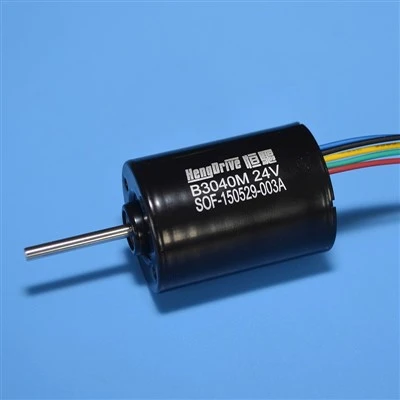
If you’re a fleet manager, auto shop owner, or manufacturer looking to crunch the numbers for your specific vehicles or parts, hit me up. I don’t do generic quotes—I’ll work with you to size the right motor for your load, run the actual cost math for your exact usage (miles, hours, labor rates, all that), and show you exactly when the brushless upgrade will pay for itself. No fluff, no hidden fees, just real numbers that work for your business.
Brushless Dc Motor References
- Automotive Electric Motor Association. (2022). Cost-Benefit Analysis of Brushless vs. Brushed Motors in Light-Duty Vehicles.
- International Energy Agency. (2021). Efficiency Gains from Brushless Motor Adoption in Commercial Vehicle Powertrains.
- Society of Automotive Engineers. (2020). Field Testing Data on Brushless Motor Durability in Heavy-Duty Automotive Applications.
- Motor Magazine. (2023). Long-Term Maintenance Cost Comparison: Brushed vs. Brushless Automotive Motors.
- U.S. Department of Energy. (2022). Energy Efficiency of Electric Motors in Automotive Auxiliary Systems.
Shenzhen HengDrive Technologies Co., Ltd.
Shenzhen HengDrive Technologies Co., Ltd. is one of the most professional automotive brushless motor manufacturers and suppliers in China, specialized in providing high quality customized service. We warmly welcome you to buy the newest automotive brushless motor in stock here from our factory.
Address: Building A & F, FuNing Hi-Tech Park, XinTian Road, FuHai Street, BaoAn District, ShenZhen, GuangDong Province, China.
E-mail: Marketing001@hengdrive.com
WebSite: https://www.hengdrivemotor.com/
