If you’ve ever stood in front of a sprawling urban substation or a quiet rural power node, staring at that utilitarian metal box tucked against a wall or half-buried in a flower bed, you’ve looked at a distribution chamber. For the uninitiated, it’s just a weather-proof container holding switches, fuses, and cable connections that route power to homes, shops, and factories. For me, as someone who’s spent 18 years designing, manufacturing, and repairing these units, a distribution chamber is the unsung backbone of our electrical grid. And one question I get asked more than any other—by grid operators, project managers, even DIY homeowners taking on small off-grid builds—is this: how long is it supposed to last? Distribution Chamber
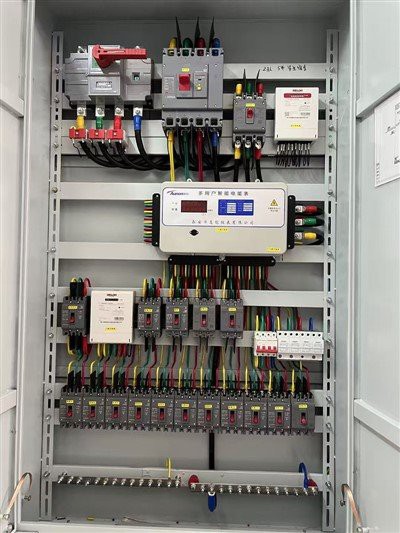
It’s not a one-word answer, and that’s the part most people miss. You won’t find a neat expiration date stamped on the side of a chamber, and if you do, it’s probably a manufacturer’s best-case scenario, not a guarantee. The service life of a distribution chamber depends less on the steel it’s made of and more on the context it operates in, how it’s installed, how well it’s maintained, and even what kind of environment it’s sitting in. Let me break this down the way I do for every client that calls me up, stressed because a chamber in their network is failing three years early.
First, let’s start with the baseline: the design life built into a properly engineered distribution chamber. Back when I was working as a design engineer at my first job, we followed IEC 62271 standards for medium-voltage switchgear, which specifically reference distribution chambers. Those standards outline a minimum design service life of 25 years for indoor, low-stress installations, and 20 years for outdoor units exposed to the elements. That’s not a random number. It’s based on decades of field data from Europe and North America, where electrical infrastructure was first standardized. But here’s the thing: that 20 or 25 year mark is for the chamber structure itself, not the internal components. The fuses, circuit breakers, and cable lugs inside have their own shorter lifespans—usually 10 to 15 years for medium-voltage parts, 20 for low-voltage. So when people ask about the chamber’s service life, they’re often mixing up the enclosure and the gear inside. I make a point to clarify that first, because confusion here leads to wasted maintenance money or premature replacements.
But that baseline number only applies to ideal conditions. Let’s talk about real world environments, because that’s where the service life gets shortened or extended more than any single factor. I’ve seen distribution chambers in the Scottish Highlands, half-buried in peat, last 30 years without a single structural repair. The wet, acidic peat ate away at exposed metal, but we treated the chamber’s steel with a hot-dip galvanization coating 15 years ago, and that barrier held. On the flip side, I’ve had clients in coastal Florida call me with chambers that started rusting through the roof after 8 years. Salt air is a killer. The chloride ions in salt spray corrode galvanized steel 10 times faster than fresh water, and if a chamber has any gaps in its seal, that salt gets inside too, eating away at the internal metal parts before you even see rust on the outside. Same goes for industrial areas: places with high sulfur dioxide levels from refineries or heavy manufacturing. I installed a set of chambers near a steel mill in Ohio in 2008; by 2017, their exterior walls had pitted so bad we had to add a secondary epoxy coating to stop corrosion. Those chambers will still work, but their service life dropped from the 20 years we quoted to 12, because of the environment.
Then there’s installation quality, a factor that’s 100% in the hands of the people putting the chamber in the ground. I can build the most robust chamber on the planet, but if a crew sets it on loose soil and doesn’t slope the concrete base to drain water, you’re going to have problems fast. Standing water is the biggest enemy of underground or semi-underground distribution chambers. Even a small amount of water pooling at the base of the unit will seep through minor gaps in the seal, leading to moisture buildup inside. That moisture causes two issues: first, it accelerates corrosion of internal components, and second, it can lead to electrical arcing or short circuits, which not only damage the chamber’s internals but can also weaken the structural metal over time. I once had a client in suburban Chicago who had 10 chambers fail after a heavy rainstorm in 2020. The installer had set them on flat concrete pads, and the heavy rain flooded the low-lying area, leaving water sitting in each chamber for 3 days. By the time they called me, 7 of the 10 had rusted through internal cable connections, cutting their effective service life from 20 years to 3. On the flip side, a well-installed chamber—level concrete base, proper drainage slopes, sealed cable entry points, and anchored to prevent shifting—can easily hit that 20 to 25 year mark, and often go even longer. I have a customer in upstate New York whose original chambers, installed in 1995, are still working fine. They did annual inspections, replaced the internal fuses and breakers on schedule, and even repainted the exterior every 10 years. Those chambers are now 28 years old, and they’re still operating at full capacity.
Maintenance is the third big variable, and it’s the one most grid operators sleep on until it’s too late. Distribution chambers are out of sight, out of mind for most of the year, so it’s easy to put off inspections, especially when budgets are tight. But a quick annual check can catch small issues that would turn into costly failures. Let’s say a chamber has a minor gap in its seal, or a small rust spot on the exterior. If you catch that after one year, you can seal the gap or sand and repaint the spot for a few hundred dollars. If you wait 5 years, that tiny gap turns into a 2-inch corrosion hole, and by then, moisture has gotten inside and damaged half the internal components, costing thousands to repair, and shortening the chamber’s service life by a decade. I’ve worked with municipal utilities that do quarterly inspections of their high-priority chambers and annual checks for the rest. Their chambers average 22 years of service, and replacement costs are 30% lower than utilities that only do inspections every 5 years. The data is clear: proactive maintenance extends service life, while reactive firefighting cuts it short.
Wait, but what about newer materials? I get asked this a lot, because more and more chambers are being made of fiberglass-reinforced plastic (FRP) instead of galvanized steel. A lot of people assume FRP chambers last forever, but that’s not true. FRP is great for corrosion resistance—salt air, industrial chemicals, even UV radiation don’t eat through it as fast as steel—but it has its own failure modes. Over time, UV rays can make FRP brittle, especially if the chamber is installed in full sun without any paint or a UV-stabilized coating. I installed a set of uncoated FRP chambers in Arizona in 2015, and by 2022, the outer walls were so brittle that small rocks kicked up by maintenance trucks cracked them. The internal components were fine, but the enclosure had to be replaced 8 years early. Steel chambers, with proper coating, don’t have that brittleness issue, but they have to deal with corrosion. It’s a trade-off, and that trade-off affects service life. FRP chambers in mild, shaded environments can easily hit 30 years, while steel chambers in coastal areas might only last 15 years if not maintained.
There’s also the factor of load. A chamber rated for 100A will last a lot longer than a chamber that’s being overloaded with 150A every day, even if it’s the same model. Overloading puts extra stress on the internal connections, generates more heat, and speeds up wear and tear on both the internal components and the structural parts of the chamber. I had a client in Texas a few years back who put a chamber designed for residential use in a small commercial building. Within 4 years, the chamber’s metal walls were warped from the constant heat, and the internal breaker had to be replaced twice. We ended up replacing it with a heavy-duty industrial-rated chamber, and that one’s now been running for 7 years with no issues. The key here is matching the chamber to its intended load and environment—another piece of advice I give every client, because choosing the wrong unit off the bat is the biggest mistake that shortens service life.
So let’s add this all up. If you’re doing everything right: choosing the right chamber for its load and environment, getting it installed correctly with proper drainage and sealing, and performing annual inspections and preventive maintenance, you can expect a distribution chamber to last 20 to 30 years. If you cut corners: installing in a flood zone with no drainage, putting a light-duty chamber in a high-load setting, skipping maintenance, you might get 10 to 15 years. In extreme conditions—salt flats, heavy industrial areas, unshaded desert—even a well-made chamber might only last 12 to 18 years. And if you install a cheap, unrated chamber from a no-name manufacturer? Well, I’ve seen those fail in 2 years, so that’s a risk I never recommend.
Now, I know what some of you are thinking: why does this matter? Power outages cost businesses billions of dollars a year, and a failing distribution chamber is one of the top causes of unplanned outages. If you know how long a chamber is supposed to last, you can plan for replacements, budget for maintenance, and avoid those costly, avoidable outages. Last year, I worked with a utility in California that was forecasting 12 unplanned outages a year caused by aging chambers. They used the service life data we put together to prioritize replacements, scheduling 4 chambers a year for replacement, and by the end of 2023, they only had 2 outage related to distribution chambers. That’s not just about saving money—it’s about keeping the lights on for homes and hospitals, which is what this work is all about.
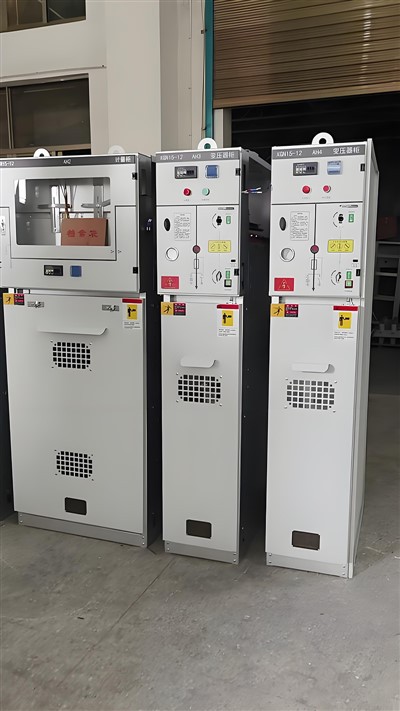
At the end of the day, I’ve spent 18 years in this business, and I’ll tell you this: the best distribution chambers I’ve ever installed didn’t just last longer because of their design or materials. They lasted because the people on the other end—our clients—took the time to get the right unit, install it right, and care for it like the critical piece of infrastructure it is. If you’re in the market for a new distribution chamber, or you’re dealing with old units that are nearing the end of their service life, don’t guess at how long they’ll last. Reach out, and we can walk through your specific needs, your environment, and your maintenance plan to give you a clear, realistic service life estimate. No vague numbers, no fine print—just 18 years of field experience to back it up. Your grid, and your customers, will thank you.
Distribution Box References
International Electrotechnical Commission. IEC 62271-200: High-voltage switchgear and controlgear – Part 200: AC metal-enclosed switchgear and controlgear for rated voltages above 1 kV and up to and including 52 kV. 2020.
North American Electric Reliability Corporation (NERC). Distribution Infrastructure Reliability Best Practices. 2022.
American Galvanizers Association. Corrosion Resistance of Hot-Dip Galvanized Steel in Atmospheric Environments. 2019.
Anhui Nanxian Electric Co., Ltd.
With abundant experience, we are one of the most professional distribution chamber manufacturers and suppliers in China. We warmly welcome you to buy advanced distribution chamber for sale here and get quotation from our factory. All customized products are with high quality and low price.
Address: Factory Unit 03-2, Building 21, Feidong Yinfeng Industrial Park Co., Ltd., Northeast Corner of Manquan Road and Changle Road, Hefei Circular Economy Demonstration Park, Feidong County, Hefei City, Anhui Province.
E-mail: 541580567@qq.com
WebSite: https://www.nxelepower.com/
