If you’ve ever walked through a prefabricated warehouse, a cold storage facility, or a modern modular office building, chances are you’ve come into contact with EPS sandwich panels without even realizing it. As someone who’s been supplying these panels for over a decade, I can tell you that one of the most common questions I get from architects, builders, and DIY enthusiasts alike is: “What is the thickness range of EPS sandwich panels?” It’s a fair question—panel thickness isn’t just a random spec; it directly impacts everything from structural integrity and insulation performance to cost and ease of installation. Today, I want to break this down in plain, practical terms, not the jargon-heavy stuff you’ll find in technical manuals that make your eyes cross. EPS Sandwich Panels
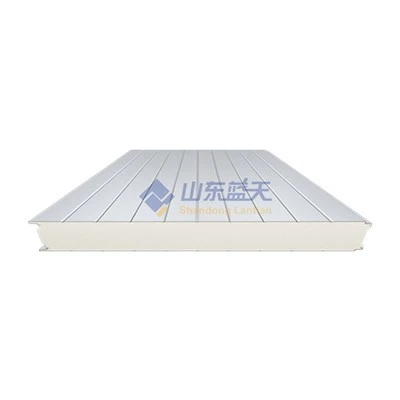
First, let’s start with a quick primer for anyone new to EPS sandwich panels, just to set the stage for why thickness matters. EPS stands for expanded polystyrene, the rigid, lightweight foam core that gives these panels their name. They’re made by sandwiching that EPS core between two outer layers—usually galvanized steel, aluminum, or sometimes fiberglass, depending on the application. The core is the heart of the insulation, and its thickness is the main driver of how well the panel keeps heat in or out, while the outer skins handle structural loads, weather resistance, and durability. If you get the thickness wrong, you’ll end up with a building that’s either too drafty (thinner is worse for insulation) or overspent on unnecessary material (thicker isn’t always better), so getting this range right is non-negotiable for any project.
Now, to answer the core question: the thickness range of standard EPS sandwich panels typically falls between 20 millimeters (0.79 inches) and 200 millimeters (7.87 inches). But here’s the thing—this isn’t a one-size-fits-all range. Where a panel lands in that spectrum depends entirely on what you’re using it for. Let’s walk through the most common applications, because that’s where you’ll actually see the practical thicknesses in play.
Starting with the thinnest end of the range: 20mm to 50mm panels. These are the lightweight, low-profile panels you’ll see in things like interior partition walls, ceiling liners, or non-load-bearing decorative cladding. I often see these used in office fit-outs, where you need to split a large open space into smaller meeting rooms or storage closets without adding extra bulk. The 20mm to 50mm thickness is perfect here because they’re easy to cut, transport, and install—you don’t need heavy-duty structural supports to hold them up, and they provide just enough basic insulation to prevent sound transfer between rooms (though they’re not designed for temperature control in extreme climates). A few years back, I worked on a project for a small marketing agency that needed to divide their open floor plan into three private offices. We went with 40mm EPS panels for the partitions, and the client was thrilled—they were up in a single day, didn’t require any major construction work, and kept noise levels low enough for focus work. For that use case, going thicker would have been overkill; 50mm is the max for interior non-insulating applications, because beyond that, you start adding unnecessary weight and cost with no real benefit.
Next, moving into the middle range: 60mm to 150mm. This is the sweet spot for most exterior building applications, and it’s the thickness we supply for the majority of our regular clients—industrial warehouses, retail storefronts, cold storage units, and residential modular homes. Let’s break that down further. For standard warehouse walls, where you need good insulation to keep heating and cooling costs manageable, 80mm to 100mm panels are the go-to. These give an R-value (a measure of thermal resistance) of roughly 2.8 to 3.2 per inch of EPS thickness, so a 100mm panel (about 4 inches) gives an R-value of around 11.2 to 12.8, which is more than enough for temperate climates where average temperatures don’t swing more than 50 degrees Fahrenheit between seasons. For colder climates, though, like parts of Canada or the northern United States, builders will often go to 120mm or 150mm panels, because higher R-values mean less energy loss in winter. I had a contractor client in Minnesota last year who was building a new distribution warehouse. He initially quoted 100mm panels, but after we walked through the local climate data, we adjusted to 150mm. The upfront cost was a bit higher, but he calculated he’d save an estimated $12,000 a year on heating bills, which paid for the extra panel cost in less than two years. That’s the tradeoff most clients need to weigh.
Then there’s the heavy end of the spectrum, 160mm to 200mm. These are the thickest EPS panels we supply, and they’re reserved for specialized applications where maximum insulation and structural performance are non-negotiable. The biggest use case here is commercial cold storage and freezer facilities. If you’ve ever been in a grocery store’s walk-in cooler, or a warehouse that holds frozen food at -20 degrees Fahrenheit or lower, the walls are made of 160mm to 200mm EPS panels. Why so thick? Because when you’re maintaining a temperature that far below ambient, even the smallest amount of heat transfer can add up to massive energy costs. A 200mm EPS panel has an R-value of around 16, which is critical for keeping the cold air in and the warm air out. These panels also need to handle heavier structural loads—freezer warehouses often have racking systems that hold thousands of pounds of goods, so the thicker core adds the necessary rigidity to support those loads without sagging. I also see these thicker panels used in prefabricated cold rooms for hospitals or research labs that need strict temperature control for vaccines or biological samples. There’s no cutting corners here; for these applications, thinner panels just won’t deliver the performance required.
But wait—before you start thinking, “I just need the thickest panel, so I’ll order 200mm for everything,” there are important caveats that go beyond just the core thickness. First, the outer skin thickness also plays a role in overall panel thickness, though that’s a much smaller variable. Most standard outer skins (galvanized steel) are 0.4mm to 0.6mm thick, so adding that to the EPS core gives you a total panel thickness that’s just a hair more than the core alone. But for high-wind areas, like coastal regions or places with frequent tornadoes, builders will often use thicker outer skins (0.8mm to 1.0mm) which adds a tiny bit to the total overall thickness. That’s a good thing, though—it makes the panel more durable and resistant to wind damage, so it’s worth the minimal extra thickness.
Another thing to consider: density of the EPS core. Not all EPS is the same. Some EPS cores are low-density (10 to 15 kg/m³) for lightweight interior use, while high-density EPS (25 to 35 kg/m³) is used for structural exterior applications. A high-density 100mm panel will be more rigid and have slightly better insulation than a low-density 100mm panel, so even if the thickness is the same, the performance can vary. That’s why it’s important to talk to a supplier who can match not just thickness, but also EPS density, to your specific project needs. I always tell new clients that thickness is a starting point, but it’s not the only factor—working with someone who knows the difference between low and high density EPS will save you headaches down the line.
I also get asked a lot about custom thicknesses. Do we make panels outside the 20mm to 200mm range? Rarely. We once had a client who needed a 10mm panel for a very specific tiny interior application, but that was a one-off, and we don’t keep stock of anything under 20mm because it’s not cost-effective to produce for mass use. On the other end, we’ve had inquiries for panels thicker than 200mm for super-insulated buildings, but most of those end up being custom made with multiple panels laminated together, since producing a single 250mm EPS panel is too heavy and hard to handle for installation.
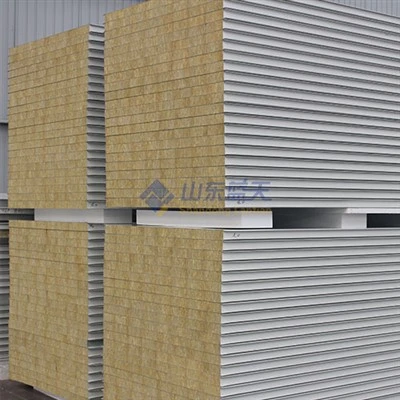
Let me also address a common misconception about EPS panels vs. other types of sandwich panels, like mineral wool. Some people think EPS is less insulating than other core materials, but that’s not exactly true—EPS has a very consistent R-value per inch, and it’s far more lightweight and affordable than mineral wool. The thickness range for EPS is well-suited to most commercial and residential projects, which is why it’s the most popular sandwich panel material on the market today. As a supplier, I’ve seen other core materials come and go, but EPS has stayed the top choice because it’s versatile, reliable, and fits that perfect thickness range for almost every application.
So, putting this all together, the answer to the question is clear: the standard thickness range of EPS sandwich panels is 20mm to 200mm, with specific thicknesses tailored to your project’s purpose. For interior partitions, stick to 20mm to 50mm. For standard exterior walls and warehouses, go with 60mm to 150mm, adjusting for your local climate. For cold storage or specialized temperature-controlled facilities, 160mm to 200mm is the right call. And remember, thickness isn’t everything—pair the right thickness with the right EPS density and outer skin thickness for your needs, and you’ll end up with a panel that’s efficient, durable, and cost-effective.
If you’re planning a project and aren’t sure which thickness is right for you, don’t second-guess it. I’ve worked with hundreds of builders, architects, and small business owners over the years, and I can help you calculate exactly what you need. No sales pitches, no confusing jargon—just straight talk about what will work best for your project, your budget, and your long-term goals. Get in touch to discuss your requirements, and we’ll put together a customized solution that fits.
Clean Room Ceiling Sandwich Panels References
- American Society for Testing and Materials (ASTM). Standard Specification for Rigid Cellular Polystyrene Thermal Insulation. ASTM C578, 2022.
- National Building Code of Canada. Part 9: Housing and Small Buildings. National Research Council Canada, 2020.
- Insulation Institute. Thermal Resistance of Common Building Insulation Materials. 2021.
- Sandwich Panel Association. Global Standards for Sandwich Panel Design and Installation. 2023.
Shandong Lantian New Material Technology Co., Ltd.
Shandong Lantian New Material Technology Co., Ltd. is one of the most reliable manufacturers and suppliers of eps sandwich panels in China, featured by quality products and low price. Please rest assured to buy bulk eps sandwich panels for sale here from our factory. Contact us for pricelist and customized service.
Address: North End of Wanshida Road, Dianzi Town Industrial Park, Boxing County, Binzhou City, Shandong Province
E-mail: Lantian023@ltaaaaa.com
WebSite: https://www.ltpirpanels.com/
