Can a high voltage diesel generator set be used in residential areas?
When I first started talking to homeowners about high voltage diesel generator sets, I saw a lot of confused faces. Most people think residential backup power just needs a regular low-voltage unit – you know, the ones that plug into your transfer switch like a big extension cord. But as a supplier who’s been in this game for over a decade, I’ve learned that the line between what works for homes and what works for larger properties is blurrier than most folks assume. Today, I want to break down whether a high voltage diesel generator set can actually belong in a residential neighborhood, based on real installations I’ve supported, customer feedback, and the technical facts that matter. High Voltage Diesel Generator Set

First, let’s clear up a definition: what is a high voltage diesel generator set for residential use? I’m not talking about the industrial 13.8kV units powering entire factory parks. For homes and multi-unit residential buildings, we’re talking about units rated between 480V and 600V – that’s 3 to 4 times the voltage of a standard home’s 120/240V service. Most residential properties only have 240V service, so this seems counterintuitive at first. But let’s talk about why anyone would even ask about this. I recently worked with a family in a 10-unit townhome complex in suburban Ohio. After a 2022 ice storm knocked out power for 10 days, they were fed up with their old 240V generators. Those units could only power 4 units at a time, and running them meant dragging long, heavy cables through snow and ice to feed the farthest units. They reached out to us because they wanted a generator that could power the entire complex at once without that messy, inefficient setup. That’s when the idea of a high voltage unit came up – and it got me thinking about how many other residential scenarios could benefit from this.
The biggest question I get from homeowners and property managers is: safety. “Higher voltage means more danger, right?” That’s the first concern, and it’s a valid one – but only if you don’t install and maintain the unit correctly. Modern high voltage diesel generator sets designed for residential applications come with built-in safety features that match or exceed the protections on standard low-voltage units. We’re talking about ground fault interrupters (GFIs) rated for high voltage, insulated bus bars, automatic shutoff if there’s a fault, and enclosed cabinets that prevent accidental contact with live parts. The Ohio townhome complex I mentioned worked with a licensed electrician who specialized in multi-unit installs, and the final setup was inspected and approved by the local building department without any issues. The key here is that high voltage doesn’t have to equal unmanageable risk – as long as you follow code requirements. That’s why I always tell customers: don’t cut corners on installation. A generator is only as safe as the team that wires it.
Next up: efficiency. This is where high voltage really shines for residential properties that need more power. When you transmit electricity, the lower the current, the less energy you lose as heat. A standard 100kW 240V generator puts out about 417 amps. A 100kW 480V generator puts out only 120 amps. That’s a huge difference when you’re running long distances. For large homes, farmhouses, or multi-unit buildings, the distance between the generator and the main electrical panel can be 100 feet or more. With a low-voltage unit, that 100 feet of cable is carrying 417 amps, which means you need very thick, expensive copper wire. For the townhome complex, that would have cost them about $15,000 in cable and installation for their old setup. With our 100kW high voltage unit, they needed about 1/3 the size of cable, cutting that cost down to $5,000. Over time, they’re also saving on fuel: the lower current means less energy loss during transmission, so the generator runs more efficiently, using up to 10% less fuel during long outages. For a residential property that might run a generator for 50 hours a year during peak winter or summer, that’s a real cost savings that adds up.
But wait – what about existing home electrical systems? Most residential panels are rated for 240V, so how does a high voltage generator connect? That’s where a step-down transformer comes in, and it’s simpler than you might think. The generator outputs high voltage, which is then stepped down to the standard 120/240V service that your home or building uses. It’s the same technology that power companies use to deliver electricity to your neighborhood – just scaled down for residential use. I’ve installed these setups for single-family homes with whole-house backup needs, too. A customer in rural Pennsylvania has a 5,000 square foot home with a heated pool, home theater, and a separate guest house. Their old low-voltage generator couldn’t power all of it at once without tripping breakers. We installed a 75kW high voltage unit with a step-down transformer, and now they can run everything – including the pool heater, which draws a lot of power – without any issues. The key here is that the transformer is sized to match your home’s electrical needs, so you’re not modifying your home’s internal wiring at all. It’s a plug-and-play solution that works with your existing system.
Now, let’s talk about noise – something every residential neighbor cares about. I know what you’re thinking: industrial generators are loud. And older high voltage units were, too. But modern high voltage diesel generator sets for residential use come with sound attenuation technology that’s designed to meet local noise ordinances. The townhome complex I worked with has the generator installed in a soundproofed enclosure in the back parking lot, and during testing, it only measured 62 decibels at the property line – that’s about the same noise level as a normal conversation. We also offer options for even quieter operation, like enclosed units with extra insulation and variable speed engines that adjust RPM based on the load. For single-family homes, we can install the generator in a backyard shed or a specially designed utility building, so the noise is barely noticeable. I’ve had customers tell me that their neighbors don’t even know they have a generator until the power goes out. That’s a far cry from the loud, obtrusive units people associate with industrial sites.
Cost is another big factor, and I won’t sugarcoat it: a high voltage diesel generator set has a higher upfront cost than a comparable low-voltage unit. But when you look at the total cost of ownership, it often evens out or even saves money over time. Let’s break it down. A 100kW low-voltage generator costs about $12,000 upfront, with an additional $15,000 for cable and installation for a 10-unit complex. A 100kW high voltage unit costs about $15,000 upfront, with only $5,000 for cable and installation. So the total upfront cost is $3,000 higher for the high voltage unit. But over 10 years, the fuel savings add up: if the generator runs 50 hours a year at $3 per gallon, and the high voltage unit uses 10% less fuel, that’s $450 per year in savings, or $4,500 over 10 years. Plus, high voltage units often have longer lifespans because they run at lower current, reducing wear on the engine and electrical components. I see a lot of customers who choose high voltage because they know they’re making an investment that will last longer and save them money in the long run.
Of course, it’s not for everyone. If you have a small 1,500 square foot home with basic needs – a refrigerator, lights, and a few outlets – a standard 240V low-voltage generator is more than enough, and it’s the more cost-effective choice. High voltage units make sense for larger residential properties, multi-unit buildings, homes with high-power appliances (like heated pools, electric cars, or home theaters), or properties located far from the main electrical panel. I always start by asking customers what their specific needs are: how big is the property, how much power do they need to run, how far is the generator from the panel, and what’s their budget for upfront and long-term costs. That way, I can recommend the right solution, whether it’s a standard low-voltage unit or a high voltage diesel generator set.
I also want to address common misconceptions that I hear all the time. One customer asked me, “Will a high voltage generator interfere with my Wi-Fi or TV?” The short answer is no, as long as the unit is properly grounded and installed. We follow all electromagnetic compatibility (EMC) standards, so the generator won’t cause any interference with your home electronics. Another question: “Do I need a special permit for a high voltage generator?” Most areas require a permit for any backup generator, regardless of voltage. But the installation process is similar to a low-voltage unit, and the electrician will handle the permitting and inspection process. I always work closely with local contractors to make sure all installs meet building and electrical codes, so customers don’t have to worry about fines or code violations.
Looking at real-world feedback from customers, it’s clear that high voltage diesel generator sets are a great option for many residential applications. The Ohio townhome complex I mentioned earlier had a power outage last winter, and the generator worked perfectly, powering all 10 units for 8 days without any issues. Before that, their old generator could only power half the units, and some residents had to stay in hotels at a cost of $1,000 per night. In that one outage, they saved $8,000 in hotel costs, which almost covers the difference between the high voltage unit and their old low-voltage unit. The Pennsylvania homeowner with the guest house and heated pool says he hasn’t had a single trip since installing the high voltage setup, and he no longer has to choose between running the pool heater or the guest house. Those are the kind of results that make me proud to be a supplier of these units.
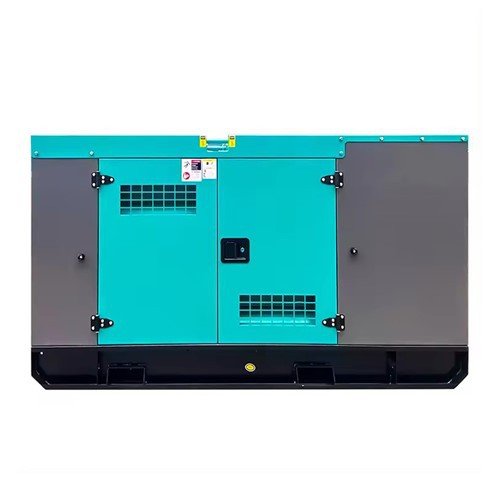
At the end of the day, the decision comes down to matching the right generator to your specific residential needs. High voltage diesel generator sets aren’t the right choice for every home – but for many larger properties, multi-unit buildings, and homeowners who need reliable, efficient backup power, they’re a game-changer. I’ve seen too many customers settle for a low-voltage unit that can’t handle their needs, leading to frustration, higher costs, and lost time during outages. That’s why I take the time to walk through every customer’s situation, explain the pros and cons, and help them make an informed decision.
Silent Diesel Generator Set If you’re tired of struggling with a generator that can’t power your home or property during outages, or if you want to save money on installation and fuel costs long-term, I encourage you to reach out to us for a consultation. We’ll assess your specific needs, provide a personalized recommendation, and walk you through every step of the process, from installation to maintenance. Don’t let another power outage leave you in the dark – whether you need a standard low-voltage unit or a high voltage diesel generator set, we’re here to help you find the right solution for your residential property.
References
- National Electrical Code (NEC) 2023, Article 445: Generators
- U.S. Energy Information Administration, 2022: Residential Generator Efficiency and Cost Savings
- Noise Control Act of 1972, Residential Generator Noise Standards
- International Residential Code (IRC) 2021, Chapter 8: Fuel Gas and Generators
- Electrical Construction Maintenance Magazine, 2023: High Voltage Generator Installations for Multi-Unit Residential Properties
Dianbida Power Equipment (Jiangsu) Co., Ltd.
We’re well-known as one of the leading high voltage diesel generator set manufacturers and suppliers in China. We warmly welcome you to buy advanced high voltage diesel generator set at competitive price from our factory. If you have any enquiry about pricelist and quotation, please feel free to email us.
Address: No. 23, Nanhuan Road, Jiangdu District, Yangzhou City, Jiangsu Province
E-mail: 19962469616@163.com
WebSite: https://www.js-dbdpower.com/
