As a supplier of medical hydrogel adhesive, I’ve witnessed firsthand the remarkable versatility and potential of this innovative material in the medical field. One of the most frequently asked questions I encounter from medical professionals, researchers, and product developers is whether medical hydrogel adhesive can be customized for specific medical needs. The answer is a resounding yes, and in this blog post, I’ll delve into the details of how customization is not only possible but also a key advantage of medical hydrogel adhesive. Medical Hydrogel Adhesive
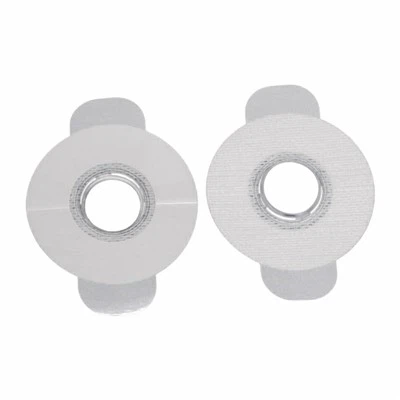
Understanding Medical Hydrogel Adhesive
Before we explore customization, let’s briefly understand what medical hydrogel adhesive is. Medical hydrogel adhesive is a type of biocompatible adhesive that is composed primarily of a water – based polymer network. These networks can absorb and retain large amounts of water, giving hydrogels their soft, flexible, and often transparent properties. This makes them ideal for a wide range of medical applications, from wound dressings to electrodes and drug delivery systems.
Hydrogels offer several unique advantages in the medical field. They are biocompatible, which means they are well – tolerated by the human body, reducing the risk of adverse reactions. They also provide a moist environment, which is beneficial for wound healing. Additionally, their flexibility allows them to conform to irregular body surfaces, ensuring good adhesion and contact.
Customization at the Molecular Level
One of the primary ways to customize medical hydrogel adhesive is at the molecular level. The polymers used to form the hydrogel network can be carefully selected and modified to achieve specific properties. For example, the choice of monomers can influence the mechanical strength, water absorption capacity, and degradation rate of the hydrogel.
If a specific medical application requires a strong and long – lasting adhesive, polymers with high cross – linking density can be used. Cross – linking refers to the chemical bonds that connect the polymer chains in the hydrogel network. A higher cross – linking density generally results in a stronger and more rigid hydrogel. On the other hand, if a more flexible and stretchable adhesive is needed, polymers with lower cross – linking density or more flexible polymer chains can be selected.
The water absorption capacity of the hydrogel can also be tailored. For applications such as wound dressings, a high water – absorbing hydrogel may be desirable to absorb excess wound exudate. In contrast, for applications where a dry surface is required, a hydrogel with lower water absorption can be developed.
Tailoring Adhesive Properties
Another crucial aspect of customization is the adjustment of adhesive properties. The adhesion strength of medical hydrogel adhesive can be tuned to meet different requirements. For some applications, such as skin – attaching electrodes, a gentle adhesion is needed so that the electrode can be easily removed without causing skin irritation. In this case, the adhesive formulation can be adjusted to reduce the cohesive and adhesive forces.
Conversely, for applications like surgical drapes or ostomy products, a strong and reliable adhesion is essential to ensure proper coverage and functionality. By modifying the surface chemistry of the hydrogel and the type of adhesive additives, we can increase the adhesion strength.
The tackiness, or the ability of the adhesive to form an immediate bond upon contact, can also be customized. In some medical procedures, a high – tack adhesive is required for quick and easy attachment, while in others, a more controlled – tack adhesive may be preferred.
Incorporating Functional Additives
In addition to adjusting the polymer and adhesive properties, customization can also involve the incorporation of functional additives. These additives can enhance the performance of the medical hydrogel adhesive and provide additional benefits for specific medical needs.
Antibacterial agents can be added to the hydrogel to prevent infections in wound dressings or other applications where there is a risk of microbial growth. Silver nanoparticles, for example, are well – known for their antibacterial properties and can be incorporated into the hydrogel network without significantly affecting its physical properties.
For drug delivery applications, active pharmaceutical ingredients can be loaded into the hydrogel. The hydrogel acts as a reservoir, releasing the drug in a controlled manner over a specific period. This allows for targeted and sustained drug delivery, improving the effectiveness of treatment.
Bioactive molecules, such as growth factors or cytokines, can also be added to promote tissue repair and regeneration. These molecules can stimulate cell growth and migration, accelerating the healing process in wounds or injured tissues.
Customizing for Different Medical Applications
Medical hydrogel adhesive can be customized for a diverse range of medical applications. Here are some examples:
Wound Dressings
Wound dressings require a hydrogel adhesive that can provide a moist environment, absorb exudate, and promote healing. Customized hydrogels for wound dressings can be designed with different thicknesses, water absorption capacities, and levels of adhesion. They can also incorporate antibacterial agents or growth factors to enhance the wound – healing process.
Electrodes
Medical electrodes are used for measuring electrical signals from the body, such as electrocardiograms (ECGs) and electromyograms (EMGs). The hydrogel adhesive used in electrodes needs to have good electrical conductivity, low impedance, and gentle adhesion to the skin. By customizing the hydrogel formulation, we can improve the signal quality and reduce skin irritation.
Drug Delivery Systems
Drug delivery systems based on hydrogel adhesives can be tailored to release drugs at a specific rate and location. The hydrogel can be designed to respond to different stimuli, such as temperature, pH, or enzymes, to control drug release. For example, a pH – sensitive hydrogel can be used to deliver drugs in the acidic environment of the stomach or tumors.
Surgical Applications
In surgical applications, hydrogel adhesives can be used for tissue sealing, wound closure, and as a barrier to prevent adhesions. Customized hydrogels for surgery need to have strong adhesion, biocompatibility, and the ability to withstand the mechanical forces during the surgical procedure. They may also be designed to degrade over time, eliminating the need for removal.
The Process of Customization
The process of customizing medical hydrogel adhesive typically involves close collaboration between the supplier and the customer. The customer first needs to clearly define their specific medical needs, including the application, the required properties, and any regulatory requirements.
Based on this information, the supplier’s research and development team will conduct experiments to develop a customized hydrogel formulation. This may involve screening different polymers, additives, and processing conditions to achieve the desired properties.
Once a promising formulation is identified, it will undergo extensive testing to ensure its performance, biocompatibility, and safety. This includes in – vitro tests, such as cytotoxicity and adhesion strength measurements, as well as in – vivo tests in animal models if necessary.
After successful testing, the customized medical hydrogel adhesive can be produced on a commercial scale, following strict quality control procedures to ensure consistency and reliability.
Conclusion
In conclusion, medical hydrogel adhesive can indeed be customized for specific medical needs. Through molecular design, adjustment of adhesive properties, and incorporation of functional additives, we can develop hydrogel adhesives that meet the unique requirements of various medical applications.

As a supplier of medical hydrogel adhesive, I am committed to providing customized solutions to our customers. Our team of experts has the knowledge and experience to develop innovative and high – quality hydrogel adhesives tailored to your specific needs. Whether you are a medical device manufacturer, a researcher, or a healthcare provider, we are here to support you in achieving your goals.
Medical Double-sided Adhesive Tape If you are interested in exploring customized medical hydrogel adhesive solutions for your specific medical needs, I encourage you to reach out to us for a detailed discussion. We can provide you with samples, technical information, and guidance throughout the customization process. Let’s work together to develop the next generation of medical hydrogel adhesive products.
References
- Peppas, N. A., Bures, P., Leobandung, W., & Ichikawa, H. (2000). Hydrogels in pharmaceutical formulations. European Journal of Pharmaceutics and Biopharmaceutics, 50(1), 27 – 46.
- Lee, K. Y., & Mooney, D. J. (2001). Hydrogels for tissue engineering. Chemical Reviews, 101(7), 1869 – 1879.
- Ratner, B. D., Hoffman, A. S., Schoen, F. J., & Lemons, J. E. (Eds.). (2004). Biomaterials science: An introduction to materials in medicine. Elsevier.
Shenzhen Omori Biological Technology Co., Ltd.
We’re well-known as one of the leading medical hydrogel adhesive manufacturers and suppliers in China. We warmly welcome you to wholesale high quality medical hydrogel adhesive made in China here from our factory. If you have any enquiry about customized service, please feel free to email us.
Address: Floor4, No43, Langkou Industrial park, Dalang Street, Longhua District, Shenzhen City, Guangdong Province, China
E-mail: wya@omorimed.com
WebSite: https://www.omorimed.com/
