Do laser – cut keychains rust?
As a supplier of laser – cut keychains, I often get asked a variety of questions from potential customers. One of the most frequently asked questions is, "Do laser – cut keychains rust?" This is an important question, especially for those who are considering purchasing keychains in bulk or for long – term use. In this blog, I’ll delve into the factors that determine whether laser – cut keychains rust and provide some insights to help you make an informed decision. Laser-cut Keychains

Understanding Laser – Cut Keychains
Before we discuss rust, let’s briefly understand what laser – cut keychains are. Laser cutting is a manufacturing process that uses a high – powered laser beam to cut and engrave materials. This method allows for intricate designs, precise cuts, and high – quality finishes on keychains. Laser – cut keychains can be made from a wide range of materials, including metals (such as stainless steel, aluminum, copper, and brass), plastics, wood, and leather.
Rust and Its Causes
Rust is a form of corrosion that occurs when iron or iron – containing metals (ferrous metals) react with oxygen and water. The chemical reaction that causes rust is known as oxidation. When iron is exposed to oxygen in the presence of water or moisture, iron oxide (rust) is formed. The general chemical equation for the rusting of iron is:
4Fe + 3O₂ + 6H₂O → 4Fe(OH)₃ (which decomposes to form rust, Fe₂O₃•nH₂O)
The rate of rusting depends on several factors, including the type of metal, the presence of electrolytes (such as salt in water), temperature, and humidity.
Rusting in Different Types of Laser – Cut Keychain Materials
1. Stainless Steel Keychains
Stainless steel is a popular material for laser – cut keychains because of its durability and aesthetic appeal. Stainless steel contains chromium, which forms a thin, protective layer of chromium oxide on the surface of the metal. This layer prevents oxygen from reaching the iron in the steel, thus inhibiting rust formation.
However, not all stainless steels are created equal. Some grades of stainless steel are more resistant to corrosion than others. For example, 304 and 316 stainless steel are known for their good corrosion resistance. In most normal environments, laser – cut keychains made from high – quality stainless steel will not rust. But if the keychain is exposed to harsh chemicals, high – salt environments (such as near the ocean), or if the protective chromium oxide layer is damaged, rust may occur.
2. Aluminum Keychains
Aluminum is another metal commonly used in laser – cut keychains. Aluminum forms a natural oxide layer when exposed to air. This oxide layer is thin, transparent, and self – healing, which means that if it is scratched or damaged, it will reform quickly. As a result, aluminum keychains do not rust in the traditional sense because rust is a term specifically used for the corrosion of iron.
However, aluminum can corrode under certain conditions. For example, if the keychain is exposed to highly acidic or alkaline substances, the aluminum oxide layer can be damaged, leading to corrosion. Also, in a water – rich environment with the presence of certain salts, pitting corrosion may occur.
3. Copper and Brass Keychains
Copper and brass (an alloy of copper and zinc) do not rust because they do not contain iron. But they do undergo a similar process called oxidation. When copper is exposed to air and moisture over time, it develops a greenish – blue patina, which is a form of oxidation. Brass may also develop a patina, although the color and appearance can vary depending on the composition of the alloy.
The patina on copper and brass keychains is often considered aesthetically pleasing by some, as it gives the keychains an antique look. However, if you prefer the original shiny appearance of the keychains, you may need to take steps to prevent or remove the patina.
4. Plastic, Wood, and Leather Keychains
Keychains made from plastic, wood, or leather do not rust because these materials do not contain iron. However, they have their own set of issues. Plastic keychains can become discolored or brittle over time, especially when exposed to sunlight or certain chemicals. Wood keychains can warp, crack, or develop mold if they are exposed to excessive moisture. Leather keychains can dry out, crack, or lose their shape if not properly cared for.
Preventing Rust and Corrosion in Laser – Cut Keychains
As a supplier, I always want my customers to get the best – quality keychains that last a long time. Here are some tips to prevent rust and corrosion in laser – cut keychains:
- Choose the right material: If rust is a concern, opt for materials that are highly resistant to corrosion, such as high – quality stainless steel or aluminum.
- Proper storage: Store keychains in a dry place. Avoid leaving them in areas with high humidity, such as bathrooms or basements. If possible, store them in a sealed container with a desiccant to absorb moisture.
- Regular cleaning and maintenance: Clean keychains regularly with a soft cloth and mild soap. Avoid using abrasive cleaners that can scratch the surface and damage the protective layer. For metal keychains, you can apply a thin layer of clear wax or protective coating to enhance corrosion resistance.
Conclusion
In conclusion, whether laser – cut keychains rust depends on the material they are made of. Keychains made from iron – containing metals can rust if they are exposed to oxygen and water, while non – ferrous metals and other materials like plastic, wood, and leather do not rust but may have other forms of degradation.
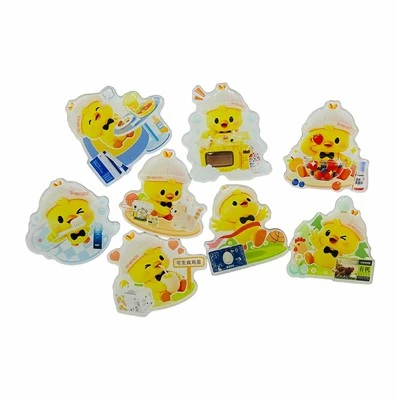
Epoxy Fridge Magnet If you are interested in purchasing laser – cut keychains for your business, promotion, or personal use, we can offer a wide range of materials and designs to meet your needs. Our keychains are made with high – quality materials and advanced laser – cutting technology to ensure durability and a perfect finish. Please feel free to contact us to discuss your requirements and start a business partnership.
References
- Metals Handbook: Properties and Selection: Irons, Steels, and High – Performance Alloys. ASM International.
- Corrosion Science: Principles and Applications. Jörg K. N. Ilevbare, et al.
- Materials Science and Engineering: An Introduction. William D. Callister, Jr., and David G. Rethwisch.
Wenzhou Qumange Craft Co., Ltd.
With abundant experience, we are one of the most professional laser-cut keychains manufacturers in China. Welcome to wholesale bulk customized laser-cut keychains at competitive price from our factory. If you have any enquiry about pricelist and free sample, please feel free to email us.
Address: Room 802, Building A1, Yuehu Light Industrial Park, Taishun County, Wenzhou City, Zhejiang Province, China
E-mail: 13806616181@139.com
WebSite: https://www.qmgcraft.com/
