If you’ve ever worked in mining, geothermal drilling, or water well excavation, you know DTH (Down-the-Hole) drill pipes are the unsung heroes of heavy drilling operations. These rugged tubes transfer torque from the drill rig’s rotary head to the DTH hammer, while also channeling high-pressure air to power the hammer and flush cuttings out of the borehole. But with constant exposure to abrasive rock, extreme torque, and harsh downhole conditions, damage is inevitable—often leading operators to wonder: Can these critical pipes be repaired, or are they destined for the scrap yard? DTH Drill Pipe
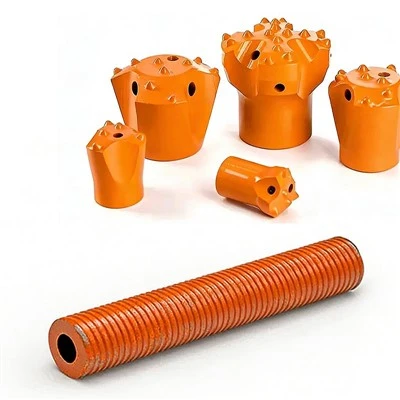
As a DTH drill pipe supplier with nearly 15 years on the ground, I’ve fielded this question hundreds of times. I’ve seen a pipe bent back into shape, a thread repaired to match new, and a worn pin restored to service. I’ve also watched a pipe crack beyond viable repair, and learned that the line between fixable and scrap depends on a lot more than just visible damage. Today, I want to break down what DTH drill pipe damage looks like, what repairs are possible, and when it’s better to invest in new pipe instead—all from the perspective of someone who works with these pipes every day, not just in a lab.
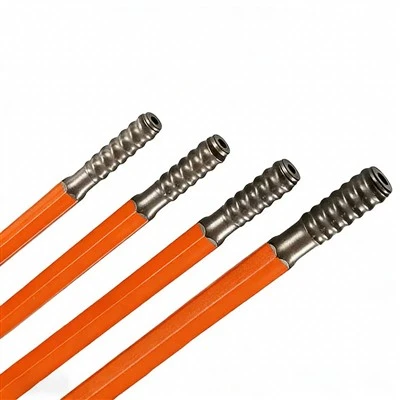
First, let’s get clear on what a DTH drill pipe is, because not all pipe is created equal. Most of the pipes we supply are made from high-grade alloy steel—typically 4140 or 4145—heat-treated for strength, impact resistance, and wear. They come in lengths from 10 to 30 feet, with tool joints (the threaded ends that connect to the hammer and drill string) made from even harder alloy steel, often hardened to 30–35 HRC (Rockwell hardness scale). This design is intentional: the pipe needs to be tough enough to handle the axial load of pulling the drill string, the torque of rotation, and the bending stresses of navigating uneven rock formations. It also needs a smooth internal and external surface to ensure unobstructed air flow, which is critical for the DTH hammer to function.
Damage comes in three main categories, each with its own set of repair rules. Let’s start with the most common: thread damage. This is far and away the issue I see most often, because the threads are the part that connects pipe to pipe, or pipe to hammer, and they take the brunt of misalignment during make-up (screwing two pipes together). I’ve seen two types of thread damage: stripped threads, which happen when you over-torque a connection, cross-thread it, or try to pull a stuck connection without the right tools; and worn threads, which result from repeated make-and-break cycles, small debris getting caught between threads during assembly, or even corrosion from prolonged exposure to moist downhole air.
Can thread damage be repaired? The short answer is: sometimes. Minor issues—like a few nicks or a slight flattening of the thread crest—are easy to fix with a thread chaser, a tool that’s basically a hardened steel tap and die designed to clean and reshape threads without removing too much material. But here’s the key: you can only use a thread chaser on damage that’s localized, and you have to make sure you don’t alter the thread pitch or depth beyond the manufacturer’s specifications. For example, if your 4 ½-inch DTH pipe has API regular threads, the chaser has to match exactly the number of threads per inch (usually 4, 4 ½, or 5, depending on pipe size). I’ve seen people use a general-purpose thread chaser and end up with a connection that binds, which is a recipe for a stuck pipe or a broken drill string downhole.
If the thread damage is more severe—like a cracked thread root, or a thread that’s worn so thin it’s lost 10% or more of its wall thickness—thread chasers won’t work. That’s when we turn to CNC machining: a machinist will cut off the damaged tool joint (the end of the pipe with the bad threads) and weld on a new, pre-hardened tool joint, then machine and test the new threads to match the original spec. This is a more involved process, and it’s only feasible if the pipe’s main body isn’t damaged. But it’s also a cost-saver: a new tool joint is usually a third of the cost of a new DTH pipe, so this repair makes total sense if the rest of the pipe is in good shape.
The second type of damage is bending or deformation. This happens when a pipe is dropped on the rig floor, or when the drill string gets stuck in a crooked borehole, leading to a bend in the main pipe body. I once saw a contractor drop a 20-foot 6-inch pipe from a hoist 20 feet, and it bent so bad it looked like a banana. But when we straightened it in a hydraulic press, the wall thickness was still intact, and the threads were undamaged—so we sent it back out for another 6 months of work. That said, not all bends are equal. If the bend is more than 2 degrees per foot of length, or if it’s located within 3 feet of a tool joint, repair is risky. Bending creates internal stress in the steel, and even if you straighten it, that stress can lead to a hidden crack that will fail later, often deep in the borehole where you can’t see it. We have a strict rule at our shop: if a pipe’s bend is more than 1.5 degrees per foot, or if it shows any signs of stretching (like a thinned wall on the outer curve of the bend), it’s scrap. Straightening only works for small, tight bends away from tool joints, and even then, we always do a magnetic particle inspection (MPI) after repair to check for hidden cracks.
The third, and most serious, type of damage is wall loss or cracking. Wall loss happens when the pipe’s outer surface rubs against abrasive rock for thousands of feet, or when high-velocity air carries small rock cuttings against the pipe’s interior, eroding the wall. If a pipe’s wall is worn down to less than 80% of its original thickness, it’s no longer safe to use—even a bend or a slight torque load could cause it to split. Cracks, on the other hand, can be surface or subsurface. Surface cracks, especially if they’re small (less than 1/8 inch) and not near a thread or tool joint, can sometimes be repaired with weld overlay: a machinist will grind out the crack, then deposit a layer of matching alloy steel, machine it smooth, and MPI it to make sure no new cracks formed. But subsurface cracks, which you can only find with ultrasonic testing (UT), are a red flag. These often start in the middle of the pipe wall, caused by repeated stress from rotation and axial load, and they’re impossible to repair reliably. We had a pipe come through our shop last year with a 1-inch subsurface crack in the middle of its 25-foot length—we tested it twice, and even if we ground it out, there was a 50% chance it would split at 2,000 psi of downhole pressure. Scrap, no question.
Now, let’s talk about the process of repairing DTH drill pipes, because it’s not something you can do in a backyard garage. There’s a lot of specialized equipment and testing that goes into a proper repair, and cutting corners here is a quick path to a catastrophic failure. First, every pipe that comes in for repair gets a visual inspection, a UT test to check for subsurface damage, and an MPI test to find surface cracks. If the tool joints are damaged, we’ll remove them with a cold cut saw (no oxy-acetylene torches, because heat can alter the steel’s hardness and create weak points) and weld on new ones using a low-hydrogen welding rod that matches the original pipe’s alloy. After welding, the pipe goes through stress relieving in a furnace, because welding creates internal stress that can cause cracks later. Then we machine the new threads, test them with a go/no-go gauge to make sure they fit correctly, and do a final UT test to confirm no damage occurred during repair.
I can’t tell you how many times I’ve heard a contractor say, “I saved $500 by repairing that pipe instead of buying new,” only to call us a month later because the repaired pipe split 500 feet down, taking the hammer and 3 more feet of new pipe with it. That incident cost them over $10,000 in downtime and replacement parts, just to save $500 on a repair. The key here is to know your pipe’s specs: if it’s a high-pressure pipe for deep geothermal drilling, you can’t cut corners on repair. If it’s a smaller pipe for shallow water wells, maybe a minor thread chaser is okay, but always follow the manufacturer’s guidelines for repair limits.
Another thing I get asked a lot is, “Do repaired DTH drill pipes have the same lifespan as new ones?” The answer is no. Even the best repairs can’t match the original steel’s uniformity. The original pipe is forged from a single piece of alloy, heat-treated evenly, and machined to exact tolerances. A repaired pipe has a weld joint, a new tool joint, and altered stress points, so it’s always going to be slightly weaker. We recommend using repaired pipes for non-critical parts of the drill string, like the lower sections that don’t carry as much torque, or for temporary use while you wait for new pipe to arrive. Never run a repaired pipe as the top pipe near the rotary head, where the load is highest.
So, what’s the takeaway here? DTH drill pipes can be repaired, but only if the damage is minor and localized, and only if you use a reputable repair shop that follows industry standards. If the damage is severe—cracks, extreme wall loss, or bends too close to tool joints—it’s better to scrap the pipe and invest in new. And as a supplier, I always tell our customers to track their pipe’s condition: keep a log of how many hours they’ve drilled with each pipe, how many times they’ve made and broken connections, and any signs of damage they notice during rig checks. That way, when a pipe comes in, you have a history to reference, which makes it much easier to decide if repair is worth it.
Now, if you’re working in drilling operations and you have damaged DTH drill pipes sitting in your yard, don’t guess at whether they’re repairable. A lot of operators try to fix pipes on their own and end up spending more in the long run. We offer free inspections for any DTH drill pipe, no strings attached—we’ll test your pipes, tell you exactly what’s fixable, what’s scrap, and give you a fair quote for repair if it makes sense. Whether you’re a small water well contractor with a half-dozen pipes, or a large mining company with a fleet of 50, we can work with you to keep your operations running without wasting money on unnecessary replacements or dangerous repairs.
If you’re looking to streamline your pipe maintenance, get more hours out of your existing assets, or replace worn pipe with quality new stock, reach out to our team to discuss your needs. We work with operations across mining, geothermal, water well, and foundation drilling, and we know how critical reliable pipe is to keeping your projects on schedule and on budget.
DTH Drilling Tools References:
- API Specification 7, Specification for Rotary Drilling Equipment, American Petroleum Institute, 2021.
- DTH Drill Pipe Manufacturing and Repair Best Practices, International Drilling Contractors Association, 2019.
- Metallurgy of Drill Pipe Steels, Steel Market Development Institute, 2020.
- Non-Destructive Testing Standards for Oilfield Equipment, American Society for Nondestructive Testing, 2022.
Super Rock Machinery Equipment (Qingdao) Co., Ltd.
We are one of the most professional DTH drill pipe manufacturers and suppliers in China, featured by quality products and good price. Please feel free to buy advanced DTH drill pipe for sale here from our factory. Welcome to view our website for more information.
Address: No.45, Pengwan Road, Qianwan Bonded Port Area, Qingdao Sub-district, Free Trade Pilot Zone, Shandong China
E-mail: sales@superrocktools.com
WebSite: https://www.superrocktools.com/
