Alright, let’s cut to the chase—if you’re reading this, chances are your welding robot’s feeling a little long in the tooth. Maybe it’s spitting inconsistent beads, taking way too long to switch parts, or your ops team is begging for less downtime. I’ve been on this side of the fence for over a decade, selling welding robots, and I can tell you: upgrading your rig isn’t just about buying a brand-new unit. It’s about making the right tweaks to the one you already have without breaking the bank. Let’s break this down like we’re in a shop floor huddle, no corporate jargon. Welding Robot
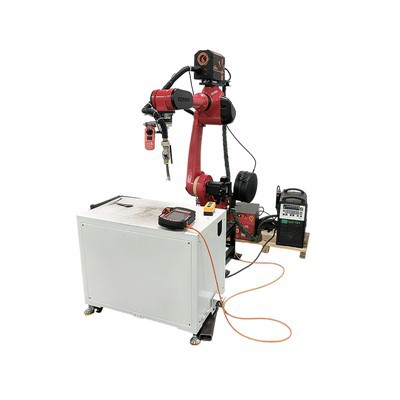
First off, let’s figure out if you actually need to upgrade, or if you’re just wasting cash on a whole new robot. I see this all the time—folks panicking ‘cause their old unit acts up, but the fix is way simpler than a full replacement. Let’s start with the basics: what’s your robot’s current spec? If it’s a 6-axis FANUC or ABB (the workhorses most shops run) from 10+ years ago, it’s still got a solid frame—those things don’t die easy. The problem’s almost always the “brains” or the “tools,” not the arm itself. That said, if your robot can’t handle your latest high-volume, thin-gauge aluminum parts, or it’s constantly throwing error codes that repair techs can’t patch, then yeah, an upgrade’s in order.
Now, let’s talk about the low-hanging fruit first—no major hardware swaps here. This is what I call “refresh tweaks.” The big one is updating the robot’s controller firmware. I can’t tell you how many shops skip this ‘cause they think, “If it ain’t broke, don’t fix it.” But old firmware has gaps: it might not support new wire feeders, or it doesn’t have the advanced seam tracking tech that cuts defects by 30%+. Last quarter, a guy in Detroit had a 2015 Motoman robot that was misbehaving on auto body panels. We pushed a firmware update, swapped his old wire feeder, and he got 2x more parts per shift. Total cost? Under $1,500, vs. $80k for a new robot. And pro tip: never do this yourself if you’re not tech-savvy. We send a certified tech out to do the update ‘cause one wrong command can brick the controller.
Next up on the refresh list: end-of-arm tooling (EOAT). This is the part that actually does the welding, right? If you’re still using a generic torch holder that only fits one wire diameter, upgrade to a modular EOAT. Modern ones swap torches in 2 minutes instead of 20, and some even have air or electric grippers for part handling—so your robot isn’t just welding, it’s loading/unloading too. A lot of weld shops run a separate robot for handling parts, but combining that with a tooling upgrade doubles your line’s output without adding another rig. Oh, and don’t sleep on the torch itself. If you’re using a 400A torch for thin aluminum, swap to a 200A water-cooled one. It’ll spatter less, last 3x longer, and you won’t have to stop every hour to clean it.
Now, if your refresh fixes aren’t cutting it, it’s time for a “mid-tier upgrade”—this is when you swap key hardware components. The first big one here is the wire feeder. Old wire feeders use analog controls, which are finicky—they’ll feed uneven wire, leading to burn-throughs or weak beads. New digital wire feeders sync directly with the robot’s controller, so feed speed is consistent within 0.1 volts. That’s game-changer for aluminum, ‘cause aluminum wire’s super sensitive to feed inconsistencies. Last year, a guy in Cleveland was running gas metal arc welding (GMAW) on heavy steel brackets; his old feeder was causing 15% defect rate. Swapped to a digital feeder, defects dropped to 2%. Mid-tier upgrades like this run around $5k-$10k, and the ROI is usually 6 months or less ‘cause you’re not wasting material on bad parts.
Another mid-tier upgrade: seam tracking. If you’re welding parts that have minor fit-up issues (let’s be real, no one’s parts are perfect), seam tracking is non-negotiable. Old robots use touch sensing, which works but is slow. New vision-based seam tracking systems use a small camera mounted on the torch that can see the weld joint in real time and adjust the robot’s path on the fly. This eliminates the need to manually fixturing every part, which saves hours of setup time per shift. I’ve had shops go from 1 setups per hour to 4, just adding a $3k vision system.
Now, let’s get to the full-on robot upgrade—this is when you’re replacing the arm, but not just any arm, upgrading to a higher payload or faster axis speed. Wait, but why would you replace a perfectly good arm? Let’s say your old robot has a 10kg payload, but now you’re welding heavy steel parts that need a 20kg payload. The old arm can’t handle the weight, so it’s sluggish and unsafe. Or, if your parts require 7 axes (for complex joints like car frames), most older 6-axis robots can’t reach those angles without repositioning, which slows you down. A 7-axis upgrade adds flexibility, so you can weld in tight spaces without moving the whole robot. Full arm swaps are pricier—$40k-$60k—but they’re worth it if you’re scaling to new products. Last year, a heavy equipment shop we worked with upgraded their 6-axis to a 7-axis robot and saw a 40% jump in output ‘cause they could weld 2 more joints per part.
Wait, but let’s talk about a common mistake here: retrofitting a robot with stuff it can’t handle. I see shops try to add a 10-axis external axis to a robot that’s only rated for 6, and it causes all kinds of errors. Always check your robot’s payload, axis speed, and controller compatibility before buying new parts. That’s why we do a free site assessment for customers—we roll up, look at their floor, their current robot, their parts, and tell them exactly what they need, no fluff. No selling them a $50k upgrade when a $2k firmware fix will work.
Another big thing: training. I don’t care how good your upgrade is—if your welders or operators don’t know how to use it, it’s wasted. Old-school welders might be wary of new tech, so we offer on-site training that’s hands-on, not just a 1-hour webinar. Last month, a shop in Chicago upgraded their controller and had their lead welder quit ‘cause he couldn’t figure out the new interface. We sent a trainer out for 2 days, walked the whole shift through programming, troubleshooting, and basic maintenance, and now they’re running 10% faster than before. Training isn’t an afterthought—it’s part of the upgrade.
Also, don’t forget connectivity. If you’re not running your robot on a network, you’re missing out. Modern welding robots can connect to your factory’s MES (manufacturing execution system), so you can track parts, monitor downtime, and even predict maintenance before a breakdown happens. That’s called Industry 4.0, and it’s not just a buzzword—last quarter, a customer used connectivity to cut unplanned downtime by 25%. They got alerts when the torch was wearing out, so they swapped it during a scheduled break instead of waiting for it to fail mid-shift.
Let me wrap this up with a quick checklist so you don’t get overwhelmed. Step 1: Do a quick audit of your current robot. Check firmware version, EOAT, defect rate, and output. Step 2: If audit shows small issues, do the refresh tweaks (firmware, torch, wire feeder). Step 3: If you need more speed or less defects, add vision or seam tracking. Step 4: If your payload/axis count is holding you back, upgrade the arm. Step 5: Never skip training and connectivity—those are the secret sauce.
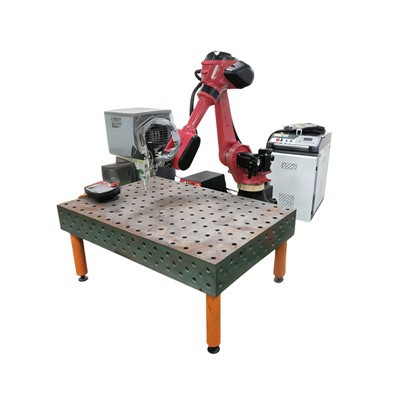
Here’s the thing: upgrading a welding robot doesn’t have to be complicated or expensive. It’s about matching the upgrade to your actual needs, not the latest shiny tech. If you’re tired of dealing with inconsistent welds, long setup times, or constant breakdowns, we can help. We’ve worked with shops big and small, from mom-and-pop fabricators to major auto manufacturers, and we know exactly how to get your robot working better without breaking the bank. If you want to chat through your current setup, ask questions, or get a custom quote, just reach out to our team for a no-obligation consultation.
Loading and Unloading Robot References
- International Welding Institute. "Retrofit vs. Replacement: Cost-Benefit Analysis for Industrial Welding Robots." 2022.
- Robotics Industries Association. "Seam Tracking and End-of-Arm Tooling Upgrades for Welding Automation." 2023.
- American Welding Society. "Industry 4.0 Connectivity in Welding Robots: Reducing Downtime and Defects." 2021.
Dongguan Chuanglida Intelligent Equipments Co., Ltd.
As one of the most professional welding robot manufacturers and suppliers in China, we also support customized service. Please feel free to buy discount welding robot in stock here from our factory. For price consultation, contact us.
Address: Room 201, Building 2, No. 61, Shachang 1st Road, Dalang Town, Dongguan City, Guangdong Province
E-mail: haoguangli001@outlook.com
WebSite: https://www.boruntestech.com/
