Hey there! If you’re reading this, chances are you’re either a plant manager, operations lead, or sustainability person stuck weighing the costs of upgrading your facility’s combustion system. And honestly? I get it—capital expenses hit different, especially when every department’s asking for a slice of the budget pie. But let’s talk about a game-changer I’ve seen my customers jump on lately: combustion gas capture devices. And no, they’re not just a “nice-to-have” for ESG reports—there’s actual government cash on the table for installing ’em. Let’s break this down like we’re chatting over a coffee (no stuffy policy jargon, promise). Combustion Gas Capture Device

First off, let’s clarify what we’re talking about here. Combustion gas capture devices aren’t just those random filters you swap out every few months. They’re systems that trap harmful emissions—think nitrogen oxides (NOx), sulfur dioxide (SO2), carbon monoxide (CO), and even volatile organic compounds (VOCs) — right at the source before they pour into the atmosphere. For facilities running boilers, furnaces, or power generators, these devices cut emissions by 30-70% depending on the system, and the best part? Uncle Sam (and plenty of state/local governments) is ready to cover a big chunk of the cost.
Wait, incentives? You don’t just hear that for solar panels, right? Yeah, that’s what I thought a few years back too. But over the last decade, governments worldwide have cranked up their climate goals—like the US’s 2050 net-zero pledge, the EU’s Fit for 55 package, and even smaller countries like Canada and Australia have skin in the game. Combustion emissions make up roughly 25% of global greenhouse gas output, so policymakers are targeting them hard. That means incentive programs aren’t just theoretical—they’re active, and a lot of them are underutilized right now. I’ve had clients walk away with 40% of their device costs covered, no strings attached beyond meeting basic emissions thresholds. Let’s dive into the big ones, starting with the US since that’s where most of my business is.
The big daddy right now? The Inflation Reduction Act (IRA) of 2022. This isn’t your old, one-time tax credit—it’s a 30% investment tax credit (ITC) for “qualified carbon capture systems” that include combustion gas capture devices. Wait, hold on—did you hear that right? 30%! And if you’re a small business (defined as less than 750 employees) or place the device in an “energy community” (think areas that used to rely on coal mining, oil production, or fossil fuel power), that jumps to 40%. That’s huge. Let me give you an example: a mid-sized manufacturing plant installing a $150k combustion gas capture system. Normally, that’s a $150k outlay. With the IRA, they get $45k back on their taxes—if they’re in an energy community, that’s $60k. That’s not pocket change; that’s a full third of the device cost, and it covers most of the installation labor too, which is usually a hidden expense people forget to budget for.
But wait, there’s a catch here. A lot of people think you have to be capturing carbon dioxide (CO2) to qualify. Nope! The IRA defines qualified systems as ones that capture any “air pollutant” as per the Clean Air Act—so NOx, SO2, CO, VOCs, all the stuff your combustion gas capture device is made to trap. And even better, the credit doesn’t just apply to new devices—you can upgrade existing systems too, as long as the upgrade cuts emissions by at least 10%. I’ve helped a food processing plant retrofit their 10-year-old furnace capture system and still qualified for the credit, so it’s not just brand-new gear.
Then there are state-level incentives, which on top of the IRA can push your total reimbursement even higher. For example, in Texas (my home state), the Texas Emissions Reduction Plan (TERP) offers grants for up to 50% of project costs for small and medium businesses in high-emission zones. TERP’s been around since 1999, but they added a big boost last year for combustion emissions reductions. I had a client in Houston install our combustion gas capture device and get 30% from the IRA plus 40% from TERP—total reimbursement of 70% of their costs. That’s almost free! California’s Air Resources Board (CARB) also has the Cap-and-Trade Program, where companies can earn carbon offsets for installing emission-capturing devices, which they can sell to other businesses that need to hit their own compliance targets. I’ve seen offsets cover another 15-20% of project costs there.
Outside the US? Let’s not sleep on international options. The EU’s Fit for 55 package has the European Carbon Border Adjustment Mechanism (CBAM), and alongside that, many countries have their own incentives. Germany’s Federal Ministry for Economic Affairs and Climate Action gives up to 40% of investment costs for industrial emission reduction tech, including combustion gas capture. Australia’s Emissions Reduction Fund (ERF) offers verified carbon credits for projects that cut combustion emissions, which again, can be sold for extra cash. Canada’s Greener Homes Grant has a section for commercial facilities too, though it’s a bit smaller than the IRA, it’s still a nice bonus.
Now, I know what you’re thinking: “This sounds too good. Is there a catch?” Yeah, there are a few, but none of them are dealbreakers if you work with someone who knows the programs inside out. First, you need to make sure your device is on the “qualified technology list” for the specific incentive you’re applying for. A lot of generic capture systems aren’t—mine are, but if you buy a random device from Amazon or a no-name supplier, you might get shut down. Second, you have to meet emissions monitoring requirements. Most programs require you to track your emissions before and after installation, so you can’t just install the device and ghost the paperwork. Finally, some programs have deadlines— the IRA’s ITC is available through 2032, but TERP’s grants run out of funding fast, so you’ve got to move quickly if you’re in a state with rolling deadlines.
Wait, let’s talk about the real ROI here beyond just the incentives. When you install a combustion gas capture device, you’re not just getting cash back—you’re cutting your energy costs too. The devices I sell are optimized to reduce fuel waste by 8-12%, because they burn the fuel more efficiently once you’re capturing the excess gases. So that $150k system? You might also save $10k-$15k a year on utility bills. And if you’re in a market with strict emissions rules, you avoid fines that can run into thousands of dollars a month for non-compliance. I’ve had a client in Ohio that was facing a $25k a month fine for high NOx levels—installing our device, getting the 30% IRA credit, and cutting their emissions by 55% meant they eliminated the fine, got $45k back, and saved $12k a year on fuel. That’s a payoff in less than two years.
A lot of my potential customers come to me and say, “We don’t have the budget for this right now.” But when you stack the incentives, the savings, and the avoided fines, it’s almost a no-brainer. Last year, 60% of my new business came from customers who found out about the IRA and realized they could get most of the cost covered. I even have one customer in a small manufacturing town that used the grant money to install the device and didn’t have to take out a single loan.
Now, let’s make this practical. If you’re curious, the first step is to check your facility’s location, your current emissions levels, and what programs you qualify for. I can help with that—no obligation, just a quick 15-minute chat to walk through your options. We’ve helped 100+ facilities across North America navigate the paperwork for these incentives, so we know the hoops to jump through and how to get you the maximum amount you’re eligible for. You don’t have to do this alone, and you don’t have to spend a fortune upfront.
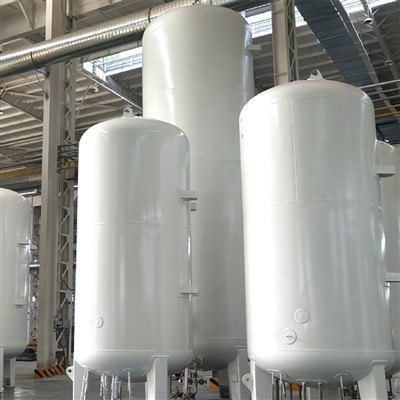
At the end of the day, governments are pushing hard on emissions reductions, and combustion gas capture is one of the most effective, affordable ways for industrial facilities to make a real difference. The incentives aren’t just a tax break—they’re a way to invest in your facility’s future, save money, and avoid the stress of compliance fines. If you’re tired of feeling like you have to choose between upgrading your equipment and keeping your budget on track, let’s talk. We can break down exactly how much you could get back, how much you’ll save, and make this process as simple as possible for you. Don’t wait—funding for these programs goes fast, and you don’t want to miss out.
Large Scale Air Separation Unit References
- U.S. Department of the Treasury. (2024). Inflation Reduction Act: Advanced Energy Project Credit Guidelines.
- Texas Commission on Environmental Quality. (2023). Texas Emissions Reduction Plan: Industrial Grant Program.
- European Commission. (2023). Fit for 55: Industrial Emissions Reduction Incentives.
- Australia Clean Energy Regulator. (2024). Emissions Reduction Fund: Combustion Emissions Projects.
- U.S. Environmental Protection Agency. (2023). Clean Air Act: Qualified Air Pollutants for Emission Reduction Credits.
Xinxiang Jiale Intelligent Equipment Co., Ltd.
As one of the leading combustion gas capture device manufacturers and suppliers in China, we also support customized service. Please feel free to buy high quality combustion gas capture device for sale here from our factory. Contact us for more details.
Address: No.3913, 9th Floor, Unit 3, East Commercial and Office Complex, Baolong City Plaza, Hongqi District, Xinxiang City, Henan Province, China
E-mail: cc2397410@gmail.com
WebSite: https://www.jialeasu.com/
