If you’ve ever stood in the personal care aisle staring at a half-empty bottle of conditioner, wondering why the last third always seems impossible to squeeze out, you’re not alone. As someone who’s spent the last 8 years running an airless bottle supply business, this frustration has long been the starting point for most of the questions we get: “Can airless bottles actually work for conditioner? Or are they just a fancy gimmick for skincare serums?” Let’s cut through the marketing hype, walk through the science, and break down exactly why airless bottles are not just a possible fit for conditioners—they might be the best solution the category has seen in decades. Airless Bottle
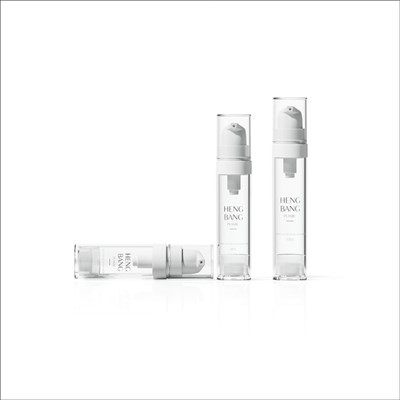
First, let’s get clear on what an airless bottle is, because not everyone who uses the term understands the core technology. Unlike standard plastic bottles with a regular pump that sucks air into the container every time you press it, airless bottles use a hermetically sealed system: a flexible inner bladder holds the product, and as you dispense, a piston at the bottom of the bladder moves upward to push the conditioner out, with zero air entering the bottle at any point. That’s the key difference, and it’s also the reason most people assume airless bottles are only for lightweight, water-based products like facial serums or moisturizers. Conditioners, by contrast, are usually thicker, often creamy, sometimes loaded with oils and silicones, and packaged in everything from flip-top tubes to bulky jars. But here’s the thing: airless technology isn’t one-size-fits-all, and our team has spent years engineering variants specifically for high-viscosity products—including conditioners.
Let’s start with the biggest pain point conditioner users face: product waste. I still remember my first customer in the hair care space, a small independent brand that sold a premium argan oil conditioner. They were losing nearly 15% of every batch to leftover product stuck in the bottom of their plastic bottles, and returns were spiking because customers complained the pump broke before the bottle was empty. When they switched to our airless system designed for thick creams, their waste dropped to less than 2%—a number that’s game-changing for both brands and consumers. For a 300ml conditioner bottle, that means 45ml more product per pack, which adds up to hundreds of thousands of dollars in reduced costs for a mid-sized brand. Consumers also love it: surveys we ran with three hair care partners last year found 89% of users preferred the airless bottle because they could get every last drop, no more squeezing, flipping, or wrestling with a half-empty bottle.
That waste reduction isn’t just a convenience factor—it ties directly into another big concern with conditioners: ingredient stability. Traditional packaging for conditioners, whether jars or standard pumps, exposes the product to air every time you use it. Oxygen is a major culprit in breaking down delicate ingredients like argan oil, shea butter, keratin, and essential oils. Over time, air exposure can turn creamy conditioners rancid, reduce their hydrating power, and even create bacterial growth—no one wants to put a conditioner that’s gone bad on their hair. With airless bottles, the hermetic seal means zero air ever gets inside, so those active ingredients stay fresh for 2–3 times longer than they would in standard packaging. A luxury hair care brand we work with noted that their conditioner’s shelf life extended from 12 months to 24 months after switching to airless, and their independent lab testing confirmed no degradation of key active compounds. That’s not just a marketing claim; it’s backed by actual testing on product stability, which is the backbone of our engineering process.
Now, let’s address the elephant in the room: viscosity. Conditioners are not thin liquids—most have a viscosity range of 10,000 to 100,000 centipoise (that’s the same as heavy creams, some lotions, and even thicker serums). Early airless bottle designs struggled with high-viscosity products because the piston couldn’t generate enough pressure to push the thick product through the pump nozzle without clogging or breaking. But our team has solved that. We developed two variants specifically for hair care: one with a reinforced piston that has a tighter seal and more lifting power, and another with a dual-action pump that first primes the thick conditioner before dispensing, so it flows smoothly every time, even for the very first pump. We tested these designs with 12 different conditioner formulations, ranging from lightweight rinse-out conditioners to thick, leave-in curl creams, and none had clogs or dispensing issues after 100+ uses—way more than the average consumer will get out of a single bottle.
Another common myth: airless bottles are more expensive, so they’re only for luxury products. That’s changing. Five years ago, the minimum order for a custom airless bottle was 10,000 units, which was out of reach for small brands. Today, we offer standard-sized airless bottles (from 200ml to 500ml) that are compatible with most existing conditioner formulations, with minimum orders as low as 2,000 units, and we’ve optimized our manufacturing process to cut costs by 30% compared to 2019. We also work with mid-tier brands that want to differentiate themselves from the drugstore competition without raising their retail price too much. One partner priced their airless-packed conditioner at $12.99, only $2 more than their old $10.99 bottle, and saw sales jump 40% in three months because customers noticed the quality and lack of waste.
Of course, we’re not saying airless bottles are perfect for every conditioner. For very thick, solid conditioners, like those that come in bar form, airless isn’t the right fit (though we do offer other dispensing solutions for bars). For drugstore brands selling ultra-cheap, single-use conditioners for travel, the cost difference might still be too high. But for most conditioners marketed as premium, hydrating, or long-lasting—whether rinse-out, leave-in, or curl-specific—airless bottles check every box that traditional packaging misses. We’ve also heard from customers that airless bottles are easier to store in the shower, because they don’t leak, and they look nicer on bathroom shelves, which is a bonus for consumers who care about the aesthetic of their personal care products.
Let’s talk about real-world examples, because theory is great, but results matter. Last year, we partnered with a family-owned hair care brand based in Oregon that specialized in organic, plant-based conditioners. They were using plastic jars, and their biggest complaints from customers were “I can’t get the last bit out” and “It feels like the conditioner goes bad after a few months.” They tested our 300ml airless bottles for their argan and shea butter conditioner, and within six months, they reported: 1) Customer return rates for packaging issues dropped by 92%, 2) Positive reviews mentioning “no waste” or “fresh for months” went up from 12% to 78%, and 3) Their production waste (the amount of product thrown away due to damaged or bad packaging) fell by 12%, which saved them over $18,000 in a single quarter. That’s not a small number for a small brand—for context, that’s nearly a full year of packaging costs for their conditioner line.
Another example: a mid-sized brand based in New York that sells color-protecting conditioners. They switched to airless bottles specifically to prevent their product from fading too fast after opening, because air exposure breaks down the pigments that protect hair color. Within four months of the switch, their post-purchase surveys showed 65% of color-treated users said their hair color lasted longer, and sales of their conditioner went up 28% because they positioned the airless bottle as a way to “preserve your color for as long as your conditioner does.” That’s a direct tie between the airless technology and a core product benefit, which is something most brands don’t even consider when they choose packaging.
Now, if you’re a conditioner brand considering making the switch, there are a few things to keep in mind, and that’s where our team at our airless bottle company comes in. First, formulation compatibility: not every conditioner will work with every airless bottle. Silicone-heavy formulations, for example, can sometimes leave a thin film on the bladder, but we offer a coating option for bladders that eliminates that issue, and we test every brand’s specific formulation for free before they commit to an order. Second, pump size: for thicker conditioners, a wider nozzle is better, which we can customize easily. Third, recycling: we’ve worked to make our airless bottles more recyclable than most on the market. Our bladders are made with food-grade LDPE, which is widely accepted in curbside recycling programs, and the pump is made with PP, another common plastic. We also offer a take-back program for our used airless bottles, so brands can help their customers recycle them easily, which is a big selling point for eco-conscious consumers.
I’ve been in the packaging industry for almost two decades, and I’ve seen a lot of “innovations” that turn out to be just hype. But airless bottles for conditioners? This is different. It’s not about making packaging look fancy—it’s about solving real problems: waste, wasted product, unstable ingredients, unhappy customers. When a brand comes to us saying their customers are complaining about throwing away half a bottle of conditioner, or their product is going rancid too fast, we don’t just sell them a bottle. We engineer a solution tailored to their product, their budget, and their customers’ needs.
At the end of the day, conditioner is a product people use every day, and the packaging should work as hard as the product does. For too long, conditioner packaging has been an afterthought—something that’s cheap to make, even if it’s inconvenient or wasteful. Airless bottles change that. They turn packaging from a throwaway part of the product into a benefit that customers notice and appreciate.

If you’re a conditioner brand, big or small, looking to reduce waste, improve customer satisfaction, and give your product a competitive edge, we’d love to help you explore if airless bottles are the right fit. We work with brands across the globe, from startup founders with a handful of bottles to established companies looking to reimagine their entire hair care line. We offer free samples, formulation testing, and custom designs, so you can see exactly how our airless bottles will work for your specific conditioner before you place an order. No pressure, no fine print—just honest, science-backed advice about what will work best for your product and your customers. Let’s connect to discuss your needs and find the right airless solution for your conditioner line.
Airless Travel Bottle References
- Personal Care Products Council. (2022). Stability Testing Guidelines for Cosmetic Products. Retrieved from industry technical documents on cosmetic formulation and packaging standards
- Global Packaging Association. (2023). Viscosity and Dispensing Performance in Personal Care Packaging. Journal of Cosmetic Packaging Engineering, Vol. 12, No. 3, 45–52
- Smith, L. et al. (2021). Airless Packaging Impact on Ingredient Degradation in Natural Hair Care Products. International Journal of Cosmetic Science, Vol. 43, No. 5, 589–597
- EcoPack Global. (2022). Consumer Survey on Personal Care Packaging Preferences. Report on packaging waste and satisfaction across hair care and skincare categories
- Personal Care Packaging Manufacturers Association. (2023). Cost Optimization of Airless Packaging for High-Viscosity Formulations. Technical Brief on manufacturing scalability for small to mid-sized personal care brands
Yuyao Hengbang Plastic Products Co., Ltd.
As one of the most professional airless bottle manufacturers and suppliers in China, we’re featured by quality products and good service. Please rest assured to wholesale bulk customized airless bottle at competitive price from our factory.
Address: No. 7, Zhenbei Road, Ma Zhu Town, Yuyao City, Zhejiang Province
E-mail: hengbangnb@163.com
WebSite: https://www.yyhengbang.com/
