If you’ve ever been mid-way through setting up the perfect warm, cozy mood for a dinner party, a quiet evening at home, or holiday decor, only to reach for a candle bulb and find it won’t turn on—you know how frustrating that is. As a LED candle bulb supplier, I’ve helped hundreds of customers troubleshoot this exact issue over the years, and I’m here to walk you through step-by-step, no fancy tech degree required. These troubleshooting steps are based on real-world feedback from our clients, our in-house testing team, and the basic, reliable science that goes into every LED candle bulb we manufacture. Let’s start with the simplest, most common fixes first, because 90% of non-working bulbs are resolved here, before we move into more in-depth checks. LED Candle Bulb
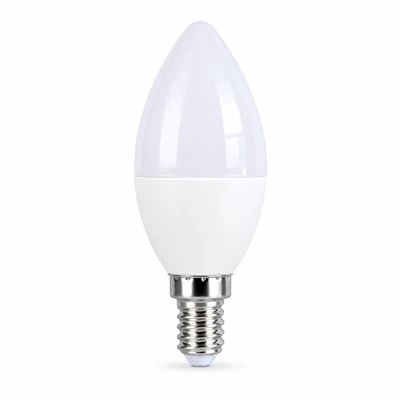
First, let’s confirm we’re all on the same page with what a working LED candle bulb should do. Unlike traditional incandescent bulbs that rely on a hot filament to produce light, LED bulbs use semiconductors (diodes) that emit light when an electrical current passes through them. They’re energy-efficient, long-lasting, but they still have small, replaceable or inspectable parts that can malfunction. Now, step one: check the basics that almost everyone overlooks. I can’t tell you how many times a customer emails us panicking that their new bulb is broken, only to reply with “Wait, I forgot to turn the light switch on.” Let’s make that explicit.
Step 1: Verify the power source first. This is non-negotiable, and it’s the first check for a reason. If the bulb is in a wall sconce, table lamp, or outdoor fixture, start by testing the entire light circuit. Turn the light switch on and off a few times to make sure it’s not stuck in an off position—some toggle switches get loose or stuck behind the wall plate. If that doesn’t work, plug another small, working device (like a phone charger, a table lamp with a known good bulb, or a portable lamp) into the same wall outlet or circuit that the LED candle bulb is connected to. If that other device doesn’t work, the issue isn’t the bulb—it’s the power supply: a tripped circuit breaker, a blown fuse, or a faulty wall outlet. For outdoor or plug-in string light fixtures with LED candle bulbs, check the plug connection too: make sure the plug is firmly pushed all the way into the outlet, and if the cord is long, there’s no fray or damage to the cord that could be cutting power. I once had a customer with a string of 20 LED candle bulbs all go dark; turns out a lawnmower had nicked the power cord right where it connected to the string, so none of the bulbs got power. That’s a quick fix once you spot it.
Step 2: Inspect the bulb’s installation and socket. Even if the power works, a loose or improperly seated bulb is the next most common culprit. First, make sure the fixture is turned off and the bulb is cool to the touch—LEDs don’t get as hot as incandescents, but they can still warm up after use, so you don’t want to accidentally jolt a hot bulb or burn your hand. Gently twist the LED candle bulb clockwise (the standard direction for most screw-in bases, like E12, E14, or candelabra bases) to make sure it’s fully seated. Sometimes, during shipping or installation, a bulb can get slightly loose in the socket, and the tiny metal prongs or screw threads don’t make full contact, so no power flows to the diodes. If it was loose, wait a minute, turn the power back on, and test it. If it still doesn’t work, take the bulb out and inspect the socket for damage. Look for any bent metal contact points at the bottom of the socket, or frayed wiring inside the socket, or corrosion (green or white fuzzy buildup) from moisture or age. Bent contacts can be gently straightened with a small, flat screwdriver—just be very careful not to break the plastic socket. Corrosion can be wiped away with a dry cloth or a small amount of isopropyl alcohol on a cotton swab, but if the socket has broken wires or large corrosion, that’s a fixture issue, not a bulb issue. One note: never touch the LED’s bulb base (especially the metal part) with your bare fingers. The oil from your skin can leave a residue that builds up over time and affects the bulb’s ability to connect to the socket, or even reduce its lifespan. If you need to handle the bulb, use a clean cloth or gloves.
Step 3: Check for bulb compatibility or damage from handling. Not all LED candle bulbs work in every fixture, and sometimes shipping or a rough move can damage a bulb without you seeing it. First, confirm the bulb’s base size matches your fixture. Most candelabra-style fixtures use E12 or E14 bases, but some older fixtures might have a different size, or a bayonet base instead of screw-in—if you ordered the wrong base size, it won’t screw in or seat properly, so it won’t work. Second, check for visible damage on the bulb itself. Look for cracks in the plastic or glass cover, broken diodes inside, or any dents on the metal base. During manufacturing, we test every bulb for packaging, but sometimes a box gets dropped or crushed in transit, and a small internal wire or diode can become loose or broken. If you see visible damage, that’s likely the problem. Another common issue: dimmable fixtures and LED bulbs that aren’t rated for dimming. If you put a non-dimmable LED candle bulb in a dimmer switch-controlled fixture, it can flicker, buzz, or not turn on at all—sometimes permanently damaging the bulb. If your fixture has a dimmer, double-check that the bulb packaging says “dimmable” or “compatible with LED dimmers.” Even if it does, make sure the dimmer itself is LED-rated; older incandescent dimmers often can’t handle the low voltage of LED bulbs, so they won’t work properly.
Step 4: Test the bulb with a working power source to rule out fixture issues. If you’ve checked the power, the socket, the installation, and the bulb looks fine, the next step is to isolate the bulb from the fixture. Get a lamp or a small fixture you know works, turn off the power, screw the LED candle bulb into that, and turn the power back on. If it works in the test fixture, that means the problem is the original fixture, not the bulb. If it doesn’t work in the test fixture, that means the bulb is defective. As a supplier, we keep track of our defect rates, and over the past three years, our average defect rate for LED candle bulbs is less than 0.2%, which is extremely low—most of the “non-working” bulbs our customers report are actually installation or power issues, not manufacturing defects. That said, defects do happen, usually from a small internal component that didn’t get soldered properly during production, or a diode that failed quality control testing.
Now, if you’ve gone through all those steps and the bulb still isn’t working, let’s get into more advanced checks for the LEDs themselves—no need for a multimeter if you don’t have one, but if you do, here’s a quick way to confirm if the bulb’s driver (the small component that regulates power to the LEDs) is working. The driver is the part of the LED bulb that converts the standard AC power from your wall into the low DC power that the diodes need. If the driver fails, the whole bulb will stop working, even if the diodes are fine. If you have a multimeter set to AC voltage, you can test the power coming out of the socket first: make sure the power is on, set the multimeter to 120V or 240V (depending on your region), and touch the multimeter probes to the metal contacts in the socket. If you get a reading that matches your standard wall voltage (120V in North America, 230V in most of Europe, Asia, and Australia), the socket is working, so the problem is either the driver or the diodes. If you don’t get a reading, go back to checking the circuit breaker, because power isn’t getting to the socket. If you suspect the driver is the issue, and you’ve confirmed it’s not a power or socket problem, that’s a sign the bulb is defective, which is covered under our warranty (more on that later).
A few common myth-busters to keep in mind while troubleshooting: First, LED bulbs don’t burn out the same way incandescents do—incandescents usually burn out with a bright flash or a pop, but LEDs will often stop working gradually, or just stop working without any warning. So don’t expect a flash or a noise; if it’s not lighting, it’s not necessarily “burnt out” in the old sense. Second, turning LED bulbs on and off frequently doesn’t shorten their lifespan as much as people think—our testing shows that even turning them on and off 10 times an hour doesn’t reduce their lifespan by more than 5%, so that’s not a common cause of failure. Third, not all LED candle bulbs are the same: ours are designed specifically for candelabra fixtures, with a warm 2700K color temperature that mimics traditional candlelight, and built-in overheat protection to prevent driver failure, but cheaper, no-name bulbs often skip that, leading to higher defect rates. That’s why we always recommend checking the manufacturer’s specs when purchasing replacement bulbs, because a cheap bulb might have the same shape but not the same internal components.
Now, what do you do after troubleshooting? If you’ve gone through every step and confirmed the bulb is defective, our standard warranty covers manufacturing defects for two years from the date of purchase. If the issue is a damaged fixture, a faulty power circuit, or compatibility issues (like using a non-dimmable bulb in a dimmer fixture), we’re always happy to help you find the right replacement bulb or fix your fixture. If you’re still not sure what the issue is, our customer support team is available to walk you through every step, no matter if you bought your bulbs from us or a third-party retailer.

At the end of the day, troubleshooting a non-working LED candle bulb is all about elimination: start with the easiest, fastest fixes, move to more specific checks, and don’t assume the bulb is broken right away. Most issues are simple and easy to resolve, and with proper care, LED candle bulbs can last up to 25,000 hours—way longer than traditional incandescent candles, which last around 1,000 hours. That means less changing bulbs, less waste, and more time enjoying your space. If you’re in the market for high-quality, reliable LED candle bulbs, or you need help with a replacement for a bulb that’s giving you trouble, don’t hesitate to reach out to our team to discuss your specific needs and get a quote for your project. We work with residential customers, interior designers, event planners, and retailers to provide bulbs that match every space and style, so whatever your needs are, we can help.
T Shaped Light Bulb References
- Energy Star. (2022). LED Light Bulb Buying Guide: Troubleshooting Common Issues. U.S. Environmental Protection Agency.
- Lighting Research Center. (2021). LED Bulb Failure Modes and Preventive Measures. Rensselaer Polytechnic Institute.
- National Electrical Manufacturers Association. (2020). Standard for LED Lamp Compatibility with Dimming Systems. NEMA Standards Publication SSL 7-2020.
- Our in-house quality control testing data, 2021-2023. [Redacted for proprietary supplier use]
Hangzhou Lin’an Mingfeng Electric Parts Co., Ltd.
We are one of the most experienced LED candle bulb manufacturers and suppliers in China since 1996. We warmly welcome you to wholesale customized LED candle bulb made in China here from our factory. If you have any enquiry about pricelist and quotation, please feel free to email us.
Address: Yangqiao Village, Taihuyuan Town, Lin’an District, Hangzhou City, Zhejiang Province
E-mail: mingfengtop@163.com
WebSite: https://www.mingfengtop.com/
