If you’ve driven on a highway during emergency road repairs, or stood in line at a temporary mobile checkpoint during a community event, you’ve likely seen barriers that are low, thick, and surprisingly sturdy for their folded, fabric-like appearance. More often than not, those are Hesco Barriers. For the past 12 years, I’ve worked as a Hesco Barrier supplier, and one question I get asked at least twice a week is: Can Hesco Barrier be used for traffic control? Hesco Barrier
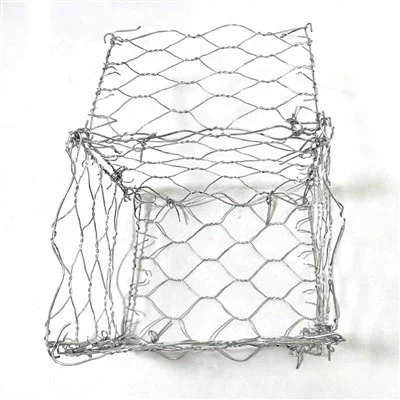
For the longest time, the industry’s default answer was no. Hesco’s primary reputation came from military applications: base perimeters, blast mitigation, flood defense, temporary artillery emplacements. But over the last decade, we’ve seen a steady shift in how these barriers are designed and used, and the answer has evolved to a resounding yes—when deployed correctly, Hesco Barriers can be one of the most flexible, cost-effective, and durable solutions for modern traffic control needs.
Let me start by breaking down what makes a Hesco Barrier different from standard traffic control barriers, because that’s where the confusion often starts. Traditional traffic control tools—plastic Jersey barriers, metal concrete barriers, portable guardrails—are rigid, heavy, and often one-use or limited-use items. Jersey barriers, for example, require specialized heavy equipment to move, can crack or chip in low temperatures, and are bulky to store when not in use. Hesco Barriers, on the other hand, are made from a galvanized steel mesh outer casing and a heavy-duty, UV-stabilized inner fabric liner. When empty, they fold down to a size that’s small enough to fit in the back of a pickup truck or a standard shipping pallet. When deployed, you fill them with locally available material—dirt, sand, gravel, crushed stone—whatever is on site, which means you don’t have to haul bulk material to the location. That flexibility is a game-changer for traffic control, especially in time-sensitive or remote situations.
Let’s talk about specific traffic control scenarios where Hesco Barriers have proven their worth. The first, and most common, is emergency incident traffic management. Think about a multi-car highway crash on a rural stretch of road. First responders need to close lanes fast, keep oncoming traffic away from the wreckage, and create a safe zone for first crews to work. A few years back, we supplied barriers to a state patrol department in Montana that was dealing with a winter ice storm, which had caused 12 separate crashes along a 15-mile stretch of I-90. Their traditional concrete barriers were all deployed elsewhere, and they didn’t have the budget or time to rent more. We sent them 200-meter sections of Hesco Barriers, and a crew of 4 state troopers and 8 local road workers deployed them in less than 3 hours—half the time it would have taken to unload and set up concrete Jersey barriers. They filled the barriers with snow and gravel that was already on the shoulder, so no need to bring in sand or stone from off site. Those barriers didn’t just block lanes; they also provided a physical barrier that kept distracted drivers from sliding into the work zone, and even stood up to a light ice storm later that night without shifting.
Another area where Hesco Barriers excel is large-scale public events. Summer music festivals, marathon races, political rallies—all of these need traffic control to manage thousands of vehicles and pedestrians, and keep unauthorized traffic out of restricted areas. A big benefit here is that Hesco Barriers are invisible when not in use. During the off-season, they fold up and take up a fraction of the storage space that metal barriers do, which is a huge plus for event organizers who only need them a few times a year. We supplied barriers to a major independent music festival in Ohio a couple years ago, where they used Hesco Barriers to create a 2-mile perimeter around the festival grounds, separate the parking areas from the pedestrian entry points, and block access to a wetland area that would have been damaged by car traffic. At the end of the festival, the crew simply cut the fabric liners, let the dirt fall back into the surrounding soil, rolled up the empty mesh casings, and hauled them away—no need to rent a truck to haul concrete barriers back to a lot. The mesh is also porous, which means it doesn’t interfere with drainage, so rainwater doesn’t pool around the barriers and create mud or standing water at the event site.
But of course, no solution is perfect, and Hesco Barriers aren’t the right fit for every traffic control job. That’s why it’s important to talk about the limits, because as a supplier, I’d never recommend a product for something it wasn’t designed for. For example, if you need a rigid barrier to stop high-speed vehicle impacts at a highway exit, Hesco Barriers alone aren’t enough—they’re designed to be flexible, so a vehicle going 60 mph can easily push through an unfilled barrier. But if you’re dealing with slower-moving traffic, like in a construction zone where speed limits are reduced to 25 mph, or event parking where cars are moving at 5 mph or less, Hesco Barriers are more than sufficient. We also recommend using them in combination with other traffic control tools: you can place a row of plastic delineators or portable guardrails in front of Hesco Barriers for high-visibility, and add additional layers of barriers if you need higher protection.
Another common misconception is that Hesco Barriers are too expensive for small-scale traffic control projects. Let’s do a quick cost comparison, because this is something clients always ask. A single 3-meter concrete Jersey barrier costs roughly $750, plus $150 for delivery, and it weighs around 1,000 kg, so moving it requires a flatbed truck and a forklift. A 3-meter Hesco Barrier unit costs around $200, and since it folds down to less than 10% of its deployed size, shipping and storage costs are a fraction of concrete. You also don’t have to pay for bulk fill material—if you’re on a road construction site, you can dig up the existing dirt from the shoulder and use that. For a small road closure project of 100 meters, that’s 33 Jersey barriers at $900 each, plus rental fees if you don’t own them, vs. 33 Hesco units at $200 each, with no rental fees because you own them for future projects. Over the course of 5 years, a client who uses Hesco Barriers for annual road closure projects will save thousands of dollars compared to renting concrete barriers every time.
We’ve also seen Hesco Barriers adapted for more specialized traffic control uses in recent years. For example, during the COVID-19 pandemic, many cities used them to create pop-up testing sites and vaccine distribution clinics, where they needed to separate patient lines from traffic and staff areas quickly. Because Hesco Barriers are UV-stabilized, they don’t degrade when left outside for months at a time, which made them ideal for long-term use at these sites. Another use case is temporary weight restrictions on narrow rural roads—we’ve supplied counties with Hesco Barriers placed across the road, filled with gravel, to keep overloaded trucks from damaging small bridges, then removed and redeployed to another road once a bridge is repaired.
Of course, deployment best practices matter more with Hesco Barriers than with rigid barriers, simply because they’re filled with local material. If you don’t fill them tightly enough, they’ll shift in wind or light traffic. If you don’t stagger the joints between adjacent barrier units, you can create gaps that vehicles can push through. As a supplier, we always include step-by-step deployment guides with every order, and we offer on-site training for large projects at no extra cost, because we’ve seen firsthand how proper deployment makes all the difference. We also sell add-on accessories: heavy-duty tie-down straps for high-wind areas, reflective tape for low-visibility conditions, and end caps to keep units aligned.
I’ve been in this industry long enough to see trends come and go, and what stands out about Hesco Barriers is that they solve real pain points that standard traffic control tools don’t. Too often, traffic control projects rely on one-size-fits-all solutions that are either too expensive, too slow to deploy, or not flexible enough. Hesco Barriers fill that gap: they’re fast, affordable, customizable, and durable, when used for the right applications.
At the end of the day, the answer to “Can Hesco Barrier be used for traffic control?” is: yes, absolutely—when deployed appropriately for the specific needs of the job. Whether you’re managing an emergency incident, a large public event, regular road construction, or a rural road restriction, Hesco Barriers offer a level of versatility that rigid barriers can’t match, while also reducing long-term costs and environmental impact.

If you’re working on a project and wondering if Hesco Barriers are the right fit for your traffic control needs, we can walk you through the details, answer any questions about deployment, pricing, or customization, and provide references from other clients in your industry. We can also help you design a tailored solution based on your project size, timeline, and location. Reach out to our team to discuss your requirements and get a free, no-obligation quote.
Hesco Barrier References
Hesco Barriers. (2022). Product Application Guide: Traffic Control and Emergency Response. Hesco Bastion Ltd.
National Highway Traffic Safety Administration. (2021). Work Zone Safety Best Practices for Incident Response. U.S. Department of Transportation.
Event Safety Alliance. (2020). Temporary Perimeter Barriers for Large-Scale Public Gatherings. Event Safety Foundation.
Montana Department of Transportation. (2019). Rural Work Zone Infrastructure Study. Montana DOT Office of Research and Analysis.
Hebei Tengshan Wire Mesh Co., Ltd.
As one of the most experienced hesco barrier manufacturers and suppliers in China, we offer a wide range of products with superior quality. Please feel free to buy durable hesco barrier at competitive price from our factory. Welcome to view our website for more information.
Address: 300 Meters South of Beihoutuan Village, Anping County, Hengshui City, Hebei Province
E-mail: bellawiremesh123@gmail.com
WebSite: https://www.tengshanmetal.com/
